What Are You Dying for?

“When I am dust, sing these words over my bones.
She was a voice.”
Ana in The Book of Longings by Sue Monk Kidd

When I first read those words in The Book of Longings, I felt myself recoil. I wouldn’t say that. It’s too out there, too presumptuous, too vain. Yes, Ana, the woman in the novel that spoke them was out there and presumptuous, but she wasn’t vain. Her passion to write led her away from the lives other people were living to live her own. She listened to her deep longing to give voice to the largeness inside herself and others who had no voice in their society.

“Lord our God, hear my prayer, the prayer of my heart. Bless the largeness inside me, no matter how I fear it. Bless my reed pens and my inks. Bless the words I write. May they be beautiful in your sight. May they be visible to eyes not yet born. When I am dust, sing these words over my bones: she was a voice.”
― Sue Monk Kidd, The Book of Longings

“What is our largeness?” someone asked our book group. Again I felt a recoiling. It seemed obvious to the other women that for me it was my writing. But I didn’t want it to be. I wanted it to be something we all share. That felt much safer.

Last week I went for a run and listened to this podcast by Marie Forleo. Marie asked the question, “What do you really want?” Then she told the story of a single mother that wanted to write. She faced numerous obstacles to become the biggest selling fiction writer of all time. My inner critic instantly reacted. “You’re just deluding yourself if you think you could do what J.K Rowling did. You’re not that good of a writer.”

As if she heard my thoughts, Marie asked, “What are the things you are saying to yourself that get in the way?”

I remember what a big deal it was to let go of being a pastor so I could offer spiritual direction and write. As a pastor, I kept giving myself away and doing a lot of good things, leaving little time for the longing within. Now, seven years later, I’m writing more. I’ve published two books, but my calendar is so full of other good things, there is little space for me to format and publish my third book.

I’ve always said that I don’t have to be famous or make millions on my writing. If my books and blog posts help one person, that’s enough. But now I wonder: what if my limiting beliefs are holding me back? What if I don’t invest more in my writing because I’m afraid to pray Ana’s prayer. I’m afraid people will roll their eyes and think, “She wanted to be a voice, all right. And she was–a boring, predictable, unskilled, unimportant, scratchy voice.”

That fear is holding me back. It goes on to say, “Who do you think you are, anyway? Your voice is no more special than any other. Do you really believe your writing will appeal to a bigger audience?”

My fears are loud and pointed.

But God doesn’t shush my critical thoughts or anxious feelings. Love just holds me and listens. Eventually, I am reminded of more than one person who told me how my writing has freed them to be themselves. “You were a voice to them,” God says.

The Book of Longings is an imaginative account of Ana, the wife of Jesus. It is her story alongside his. Both had a largeness in them that led them through death and resurrection (Ana more than once!). In this season of Lent, I ask myself, What would it be like to truly own the God-given passion seeded in me and do what I was created to do? Isn’t that what Jesus died for?

Bless the largeness inside me, no matter how I fear it.
–Sue Monk Kidd

∗ ∗ ∗

Love Mischief for the World

You may be thinking, Really, in Lent you want me to look at my passion, my longings, my largeness? Shouldn’t I be thinking of others, following Jesus, and sacrificing myself as he did? What if following your God-given desires is the best way you can care for others and follow Jesus? Doing that takes courage, sacrifice, and a lot of dying to the person others want you to be and the person you think you should be. Our fourth Lenten question is: What are you dying for? When you are gone, what will you leave behind that will continue to bring life, hope, and healing?

What love mischief are you and God doing for the world?
Let me know and I will include it in an upcoming post.

Credits and References:
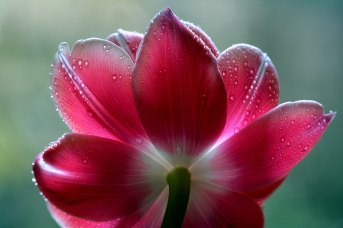
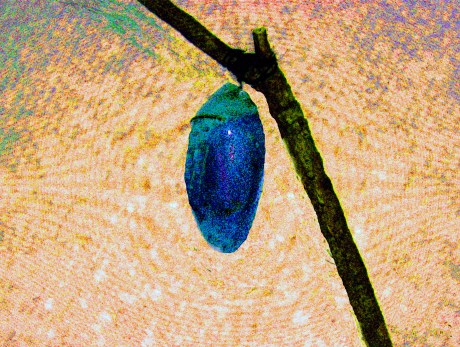
Monarch Crysallis by Gary Millar. Used with permission.
Butterfly flight sequence by Dwight Sipler. Used with permission.
Monarch larvae by Shelby L. Bell. Used with permission.
© Esther Hizsa, An Everyday Pilgrim, 2021.
Unauthorized use and/or duplication of this material without permission from Esther Hizsa is strictly prohibited. Excerpts and links may be used provided there is a link to the original content and credit is given as follows: © Esther Hizsa, An Everyday Pilgrim 2013-2021.  http://www.estherhizsa.com
Posted in Lent, Prayer, Reflections, Stories, Writing | Tagged , , , , , , , , , , | 5 Comments

What Are You Shushing?

Since my convergence last spring, I’ve lost thirty-four pounds. I’m no longer obese and hover on the edge of a healthy weight for my height. I have begun to enjoy freedoms I haven’t had for a long time–running, sleeping better, and liking my reflection in the mirror.

But then I started snacking again. What is converging for me now is the truth that I am emotionally eating. Something in me feels hurt, sad, conflicted, or afraid, and before I’m even aware of it, my body wants to comfort me with food.

One of my earliest memories is of me getting a step ladder and climbing up to the counter and the breadbox where the crackers were kept. I still remember the relief I felt when I bit into the saltine.

I’ve known for a long time that I suffer from emotional eating but knowing that didn’t change anything until I connected trauma with lament.

Many of us overeat to soothe the feelings that trigger hurts from our childhood. We experienced times in the first years of life when we didn’t get what we needed. Our young minds tried to make sense of it and (often mistakenly) believed that we were unwanted and unloved. Those feelings scared us then, and they scare us now. So when something happens in the present that causes us to experience feelings similar to those from the past, our body feels unsafe and wants to fight, fly, or freeze. Eating is a way of freezing by numbing painful feelings.

The way out is to feel them, and the first step is to notice them. I don’t even know something is bothering me until I’ve eaten a handful of nuts when I’m not even hungry.

So this year for Lent, I set an intention to feel instead of snack.

After teaching about lament as a prayer practice earlier this month, one of the Living from the Heart participants shared a personal story.

I was recovering from a difficult birth and my baby girl had colic and cried almost incessantly in the first few months. My friend came to stay and help me as I recovered. I noticed that when she picked up my daughter when she was crying, she said something different than I’d heard anyone say to my baby or any baby. Most of us were saying things like “Shhh now, it’s ok” or something like that, trying to stop the crying. But my friend would wrap her up, put her on her shoulder right up by her face, pat her back gently, and say, ‘Tell me all about it. Tell me all about it.'” Her words were so unexpected and so comforting to me, I often found myself tearing up too.

Nothing is too insignificant, too familiar, or too loud for God to hear. Nothing is shushed. I am held, heard, and my soul is comforted.

“To heal, you have to feel” keeps echoing in what I read and hear. Lament helps me express those feelings to God.

As we begin to understand the shape of the world into which we were born, we would all soon experience the “shushing’” of parents… Contained somewhere in the heart of these demands to ‘”be quiet,’” beneath the sincere attempts at comforting, lay a level of shame and the inescapable message that we should not cry out, we should not behave in such ways… At that frustrating moment we entered into the very human, fallen aspect of denial, which is the polar opposite of lament.  As a result we grew up trying to control our tears and trying to help others control theirs, thinking that in the midst of it all sometimes we might even be able to control the pain.  That single pathway through it all, the path of lament, became overgrown, lost, left off all our maps.                             —Michael Card, A Sacred Sorrow

∗ ∗ ∗

Love Mischief for the World

Our third Lenten question–What are you shushing?–invites us to lament.  If you’re looking for a song to lament with, here is one that my son-in-law wrote when his Crohn’s disease was relentless. If you’d like words to pray your lament, the psalms have a lot of them. Perhaps you’d like to paint, sculpt, dance or walk out your lament. Another option is to put pen to paper, address your lament to God, and write unfiltered to the One who inclines an ear to you.

What love mischief are you and God doing for the world?
Let me know and I will include it in an upcoming post.

Credits and References:
Story by Living from the Heart participant used with permission.
“Lament” by INTVGene. Used with permission.
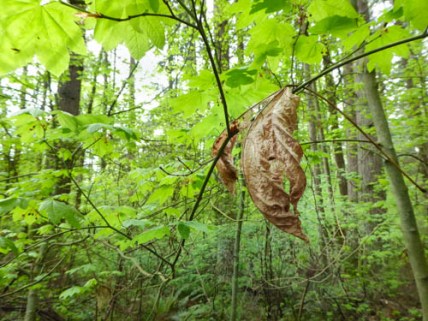
Leaf photo by Gail Purdy. Used with permission.
© Esther Hizsa, An Everyday Pilgrim, 2021.
Unauthorized use and/or duplication of this material without permission from Esther Hizsa is strictly prohibited. Excerpts and links may be used provided there is a link to the original content and credit is given as follows: © Esther Hizsa, An Everyday Pilgrim 2013-2021.  http://www.estherhizsa.com
Posted in Lent, Overeating, Prayer, Reflections, Stories, Writing | Tagged , , , , , , , , , , , , , , , , | 6 Comments

What Story Do You Need to Return to?

“Something in you gets irritated when you think about anyone being a victim,” Donna said in a focusing session hours after I wrote last week’s blog post.

“Yes. It’s like a painful ball in my throat.”

“You might want to say hello to it. Let it know you feel it and notice what more comes,” Donna said.

The ache in my throat led me back to my childhood when I was picked on by my siblings. “If I go to my mom, I’ll be a tattletale. If I don’t, they won’t stop.” I said as tears came.

This story again. How many times do I have to return to this story? I love my parents and my siblings, and they love me–a lot. I hold no anger or resentment for what happened to me as a child. I don’t blame them for what they did or didn’t do. I don’t blame myself for being too sensitive. Counselling, spiritual direction, a loving community, and prayer have brought healing and reconciliation. Yet, here I am again being led back to that old story.

“Something in you remembers what it was like to feel caught with nowhere to go.” Donna stayed right with me, reflecting back what I was feeling, helping me track how I experienced it in my body, and inviting me into a felt sense of safety whenever an emotion threatened to overwhelm me.

The constriction in my throat eased a little. I remembered, as a child, I would find a way out by going into my imagination. I was safe and happy in the stories I created.

The constriction hardened again. Something in me didn’t want to leave my body to feel safe, but the little girl in me was afraid to let down her defences. I felt her feelings in my throat. I heard her thoughts. She wanted to trust, but she was afraid that as soon as she did someone would pull the rug out from under her.

Donna and I stayed with her, listening and feeling while a calmness rose up from my feet and legs like a warm embrace. It gently welcomed her in. She came into it, panicked a bit, and went out.

Then I remembered the painting by Jaison Cianelli, a quote in the Cloud of Unknowing, and an image of my grandson as a young child with his arm around Fred’s neck, his hands in Fred’s hair. I remembered that feeling of embracing God and being embraced and melted into Love.

There was no separation between the little girl and me and God. We were colours swirling in delight and safety and wonder.

I remained there for a while. Then the constriction returned to my throat.

Donna invited me to welcomed it again, to return and feel and notice what more comes.

The image of a baby came to me. She was being held with her bottom on her mother’s arms and her cheek on her mother’s chest. I watched her startle awake, look around then flop back down. The constriction eased.

Then I saw that I was the baby and the mother was my mother. She was caressing my tiny arms and face. She was thinking, I wish this moment would never end. I breathed in the words, the picture, and the felt sense of being so loved.

“I have no actual memory of this,” I told Donna as our time come to an end. “But if I asked my mother now, I know what she’d say. She’d say, ‘Of course, it’s true. I remember that.'”

My body remembered that story too, and now I can return there again and again.

It is God, and he alone, who can fully satisfy the hunger and longing of our spirit which, transformed by God’s redeeming grace, is enabled to embrace him by love. No one can fully comprehend the uncreated God with his knowledge, but each one, in a different way, can grasp him fully through love. Truly this is the unending miracle of love: that one loving person, through his love, can embrace God, whose being fills and transcends the entire creation. —The Cloud of Unknowing

∗ ∗ ∗

Love Mischief for the World

Our second lenten question comes in a cluster of others. What story in your life is returning to you unbidden? What old feelings have come to the surface and want your attention? You may feel frustrated and disappointed, thinking you’ve moved past that old hurt. What if you haven’t regressed at all? Maybe you have moved on, but Love has something more for you. Maybe there is a part of you that got left behind, and Love wants to bring her home. Trust your body. Trust what God is doing. Be brave and ask: What story do I need to return to? Then go, but don’t go alone. Take God with you and maybe a friend, spiritual director, or counselor.

What love mischief are you and God doing for the world? Let me know and I will include it in an upcoming post.
Credits and References:
Painting by William-Adolphe Bouguereau (November 30, 1825 – August 19, 1905) photo by Thomas Hawke.
Used with permission.
“Warm Embrace” by Jaison Cianelli. Used with permission.
Quote from  The Cloud of Unknowing (14th C), Chapter 4. Author unknown, edited by William Johnston.
“The Hard Lesson” by William-Adolphe Bouguereau, 1884. Public domain.
© Esther Hizsa, An Everyday Pilgrim, 2021.
Unauthorized use and/or duplication of this material without permission from Esther Hizsa is strictly prohibited. Excerpts and links may be used provided there is a link to the original content and credit is given as follows: © Esther Hizsa, An Everyday Pilgrim 2013-2021.  http://www.estherhizsa.com
Posted in Childhood, compassion, Lent, Mystical, Prayer, Reflections, Spiritual Direction | Tagged , , , , , , , , , , | 2 Comments

What Are You Unwilling to Feel?

I can’t stand it when someone goes into victim mode and defends their right to be there.

The story goes something like this. “This woman cut in line in front of me after I’d been standing there for fifteen minutes. I hadn’t eaten all day, and I didn’t know if I’d make it home without fainting. I wanted to say something, but what’s the point? No one listens to me anyway.”

Stories like that drive me crazy. I don’t even want to be around someone who perpetuates their misery.

I’m not alone in this. Some of you are thinking, “Oh, me too. I can’t stand that either.”

But not all of you are thinking that. At least one of you is able to be compassionate and curious about the person who often feels powerless. Some of you can wonder about their story. You can allow them to be there and honour where they are in life’s journey.

You saintly folk can make me feel guilty real fast. But what if I put self-judgment aside and simply offered compassion to myself right now? What if I heard God sigh with me and say, “It’s hard for you to hear those stories.”

After I allow myself to feel what I feel without judgment and with compassion, I can listen to my irritation. What does it want me to know?

I took a moment to let go of the other person’s story and sat with God in mine. I imagined Love coming close and listening tenderly. I recalled an interview with Tara Brach. In it, she asked a question. “What are you unwilling to feel?

Under my irritation, was a feeling of being trapped and desperately wanting out. I’ve felt like that at times in my life. Dark miserable times when the words or actions of others fed my self-loathing stretched into my thirties and forties. Not many people had the patience to listen to my sad stories. But some did, and their love and acceptance allowed me to believe God loved and accepted me as well. Eventually, I found strength and a voice, and ways to not be a victim to other people’s words or actions.

What am I unwilling to feel? I don’t want to feel trapped and helpless. As I listened compassionately to my soul, I recognized that I’ve unconsciously used blame and shame to protect myself from ever feeling that way again. I don’t want to be the person I was, so I join with those who had no patience for me.

But the One who let me be a victim has endless patience and tenderness and didn’t leave my side. God loved who I was then as much as God loves who I am now.

Valarie Kaur said, “You are a part of me I do not yet know.” Her words help me take the next step. That person who was trapped in victim mode is a part of me I have not loved yet.

And God said, “Let there be Esther. And let her be vulnerable and feel afraid of feeling trapped, and let her love and accept herself just as she is.”

God spares us from nothing. Whatever it means that God takes care of us, it clearly does not mean that God prevents tragic, really cruel things from happening to us. It clearly doesn’t mean that. But what it does mean is that it’s possible to discover that God infinitely sustains us in all things. James Finley

∗ ∗ ∗

Love Mischief for the World

During Lent, I invite you to walk with some questions. In this short video clip, Tara Brach talks about the first Lenten question, “What are you unwilling to feel?” Click here for another guided meditation by Tara Brach on self-compassion.

What love mischief are you and God doing for the world?
Let me know and I will include it in an upcoming post.

Credits and References:
“Crosspatch” by Mrs eNil Used with permission.
Valarie Kaur quote is from See No Stranger
“A  girl with her cat” Niels Kliim. Used with permission.
Quote from James Finley is in a Sounds True interview with Tami Simon called James Finley: The Axial Moment Of Healing
© Esther Hizsa, An Everyday Pilgrim, 2021.
Unauthorized use and/or duplication of this material without permission from Esther Hizsa is strictly prohibited. Excerpts and links may be used provided there is a link to the original content and credit is given as follows: © Esther Hizsa, An Everyday Pilgrim 2013-2021.  http://www.estherhizsa.com
Posted in Childhood, compassion, Lent, Prayer, Reflections, Stories | Tagged , , , , , , , , , , , , , , | 3 Comments

Let

In the beginning, God created the heavens and the earth.

God said, “Let there be light,” and there was light, and God saw that the light was good.

God said, “Let there be a vault between the waters” and “let the water under the sky be gathered to one place, and let dry ground appear.” And it was so. And God saw that it was good.

Then God said, “Let the land produce vegetation” and “let there be lights in the sky” and “let the water teem with living creatures, and let birds fly above the earth across the sky”  and “let the land produce living creatures.” And it was so and God saw they were good and blessed them.

Then God said, “Let us make people in our image, in our likeness.” It was so and God blessed them, too.

At the end of the sixth day, God saw all that had been created, and it was very good. 

Excerpted from Genesis 1

I invite you to join me in a meditation on the poem Book of Genesis.

To begin, find a comfortable seat where you will not be disturbed for about 15 minutes. Take a few deep breaths in and out slowly. Allow yourself to settle into the reality that just as certainly as you feel the floor beneath your feet and the chair you are sitting on, God is here, supporting and loving you.

Now click on the link and listen to Pádraig Ó Tuama read the poem Book of Genesis by Kei Miller.

1. Take a few moments to notice:

What rises in you as you hear these words? What’s it like to imagine a “let” meant for you?  . . . to hear God speaking you into life: “Let there be (your name)?” What do you feel? Close your eyes and notice.

Can you name what you are feeling right now? Turn your awareness to the felt sensation of those feelings in your body.

2. After a few moments, listen to the poem a second time. Close your eyes again and take a few leisurely minutes to reflect.

Can you imagine a Let meant for all of who you are? Imagine God naming aspects of yourself with a sense of wonder and delight, without a hint of judgment or disapproval. For example, I hear, “Let there be Esther and let her be short and love writing and biking and Fred. Let her love clarity and perfection. Let her be brave and irritating at times. Let her be impatient and thoughtful too.”

What’s it like to feel so known, enjoyed, and accepted?

Do you hear a subtle difference between the words “let” and “make”? God lets me be impatient. God lets me be human.

What feelings emerge now? What would it be like to pronounce a Let for them, to welcome feeling accepted or whole, feeling doubt, or feeling not much of anything?

3. After a few moments, listen to the poem a third time. This time, when you close your eyes, bring to mind someone you know.

Can you imagine them hearing a Let from God? Imagine it spoken, and that person receiving self-acceptance and being liberated into wholeness. Silently, join with God in pronouncing a Let meant for them.

Close your time of prayer by recalling that, in Genesis, God said, “Let” and there was. Something came to life that had not been there before: the sun, the ocean, animals, people.

What has come to life in you now that was not there before? What would you like to say to God about this newborn part of you?

God saw all that had been created, and it was very good.
Genesis 1:31

∗ ∗ ∗

Love Mischief for the World

I was delighted to find more episodes in Poetry Unbound, the site where I discovered Kei Millier’s poem and got to know Pádraig Ó Tuama. Poetry Unbound is produced by On Being a National Public Radio broadcast that is “Pursuing deep thinking and moral imagination, social courage and joy, to renew inner life, outer life, and life together.”

What love mischief are you and God doing for the world?
Let me know and I will include it in an upcoming post.

Credits and References:
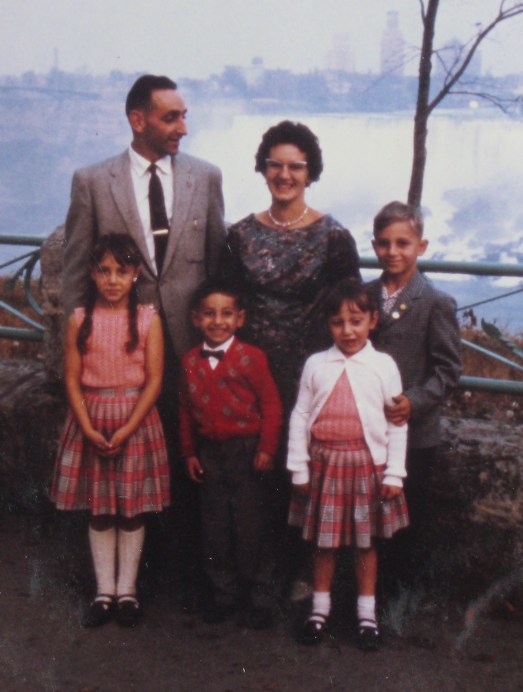
Frehner family photo at Niagara Falls, Ontario before Pete was born. I am the younger sister.
Fred and Esther biking the Icefield Parkway between Lake Louise and Jasper, Alberta, 2008. My older brother,  Harry, is in the background. Photo by my younger brother Ron Frehner.
© Esther Hizsa, An Everyday Pilgrim, 2021.
Unauthorized use and/or duplication of this material without permission from Esther Hizsa is strictly prohibited. Excerpts and links may be used provided there is a link to the original content and credit is given as follows: © Esther Hizsa, An Everyday Pilgrim 2013-2021.  http://www.estherhizsa.com
Posted in Childhood, compassion, Poetry, Prayer, Reflections | Tagged , , , , , , , , | 3 Comments

Letting Go of My Peace

I’ve never felt more at peace.

For a while now, meditation, yoga, getting outside and eating well have been a part of my daily routine. I’m able to pause as I transition between activities with a subtle sense of returning to God, the Ground of my being.

One morning, I was following a guided meditation by Thich Nhat Hanh. Partway through he says, “Breathing in, I smile. Nothing is as important as my peace, my joy. . . Breathing out I release and let go. . . Smile. Release.”

I heard: Nothing is as important as my peace, and I need to let go of it. I don’t just release my worries and tensions. I release my projects–including my projects to hold onto inner peace.

Suffering is all around me. The storming of the US capital, killing, outrage. Closer to home, people I know are grieving the deaths of a mother, a father, a husband. One friend feels relentlessly attacked by psychotic ideation. Another’s had a steady stream of bad news. I knew what they were going through, but I didn’t feel it. It was someone else’s suffering.

On Day One of The People’s Inauguration: 10 Days to Activate Revolutionary Love, Valarie Kaur invited us to look at others and “see no stranger.” She said, “They are a part of me I have not yet met. The child that is taken from his mother is my child.” I thought of Jesus’ words, “I am in my Father, and you are in me, and I am in you.” The oneness we have in Christ is a oneness we all share. “We are one in the Spirit. We are one in the Lord,” we used to sing around the campfire. “We will walk with each other. We will  walk side by side.” That means in our difficulties and our grief.

I watched an interview with Cynthia Bourgeault before Christmas. She knows a lot about meditation and inner peace. I love seeing her talk. Her face lights up with joy. She laughs easily. At the end of the interview, she said she was going downstairs to pray tonglen for the world. Every day she sits and breathes in pain and suffering and breathes out peace and joy.

This is what I need to do too, I thought. I need to awaken from the illusion of separateness, arouse my compassion, and be with those in grief, panic, and pain.

In the middle of the night, when I couldn’t get back to sleep, I decided to pray tonglen for all those I knew who were suffering.

I breathed in suffocation and breathed out fresh air.

I breathed in being tumbled by a wave and breathed out feeling my bare feet on solid ground.

I breathed in fighting to keep my head above water and breathed out floating on the surface.

I breathed in “You’ll never make it” and breathed out “You’re already there.”

I breathed in a punch in the gut and breathed out seeing the ocean for the first time.

I breathed in choking on seawater and breathed out sipping fresh lemonade.

I breathed in a stagnant pond and breathed out freshly mown grass.

I breathed in the word ‘alone’ and breathed out ‘all one.’

I breathed in night and breathed out morning.

With every in-breath, I swept scary feelings into my heart, and my heart kept enlarging to receive them. My heart in God’s heart could hold it all, sharing the weight of suffering with those who are bearing it.

With every out-breath, I sent feelings of wholeness, wonder, and hope out on the Breath of God to each one to breathe in.

In the days that followed, I noticed my reaction when a person shared something difficult. One time I continued talking about my own experience. Another time I said something I thought would make them feel better. In those responses, I pushed them and their suffering away. As I became aware of that, I realized I could circle back and open my heart to their suffering. I could ask about it. I could listen and be with them in it.

If you see a homeless person on the street, and they need food, housing, medical attention–if you can give that, do it. But at the same time, work with tonglen, because that is how you start dissolving the barrier between you and them.
— Pema Chodron 

∗ ∗ ∗

Love Mischief for the World

In this short Youtube video, Pema Chödrön explains tonglen. I encourage you to listen to this one as well if you have time. I loved her book, Fail. Fail Again. Fail Better.

What love mischief are you and God doing for the world?
Let me know and I will include it in an upcoming post.

Credits and References:
Photo of Rathtrevor Beach by Yummifruitbat Creative Commons.
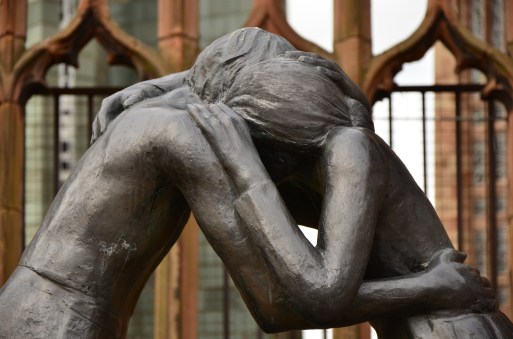
“Reconciliation by Josefina de Vasconcellos at Coventry Cathedral” by Ben Sutherland. Used with permission.
© Esther Hizsa, An Everyday Pilgrim, 2021.
Unauthorized use and/or duplication of this material without permission from Esther Hizsa is strictly prohibited. Excerpts and links may be used provided there is a link to the original content and credit is given as follows: © Esther Hizsa, An Everyday Pilgrim 2013-2021.  http://www.estherhizsa.com
Posted in compassion, Prayer, Reflections | Tagged , , , , , , , , , , , , , | 4 Comments

Drawing a Path to the Centre

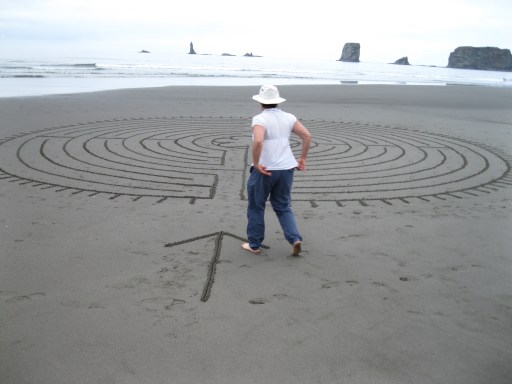
I once found a labyrinth
drawn on the sand at low tide.
The couple who created it
were delighted that someone
came at the right time to enjoy it.

I walked the winding path to the centre
and out again
with the conviction that
I would never draw labyrinths
that could be washed away by morning.

I asked the ones who drew the prayer
how they could make something that would not last.

They shrugged and smiled at each other.
“We just like drawing them,” they said.

Each day I
sit to meditate
meet Adriene for yoga
get outside
reach 10,000 steps
pause to notice
this breath
and now this one,
I am drawing a labyrinth
in the sand.

Tomorrow
I will rise and draw
another.

The present moment is filled with joy and happiness.
If you are attentive, you will see it. 
― Thich Nhat Hanh

∗ ∗ ∗

Love Mischief for the World

Is this your year to take Living from the Heart? SoulStream is offering this 9-month course in contemplative Christian spirituality in four different formats or locations. Three are in person (in an intensive format on Bowen Island, BC, and in a weekend/day format in Abbotsford, BC, and in Calgary, Alberta). One course is online in a weekend/day format, so now anyone in the world can participate. I loved taking Living from the Heart, and I’m grateful to be able to co-facilitate it. Registration is now open for the fall of 2021.

What love mischief are you and God doing for the world?
Let me know and I will include it in an upcoming post.

Credits and References:
Second Beach, La Push Washington 2011 by Fred Hizsa. Used with permission.
Tidal waves and the frothing sea by SM14, CC BY-SA 3.0 <https://creativecommons.org/licenses/by-sa/3.0&gt;, via Wikimedia Commons
Quote from Thich Nhat Hanh, Peace Is Every Step: The Path of Mindfulness in Everyday Life.
© Esther Hizsa, An Everyday Pilgrim, 2021.
Unauthorized use and/or duplication of this material without permission from Esther Hizsa is strictly prohibited. Excerpts and links may be used provided there is a link to the original content and credit is given as follows: © Esther Hizsa, An Everyday Pilgrim 2013-2021.  http://www.estherhizsa.com
Posted in Mindfulness, Poetry, Prayer, Reflections | Tagged , , , , , , , , , , , , | Leave a comment

Why Welcome Our Feelings?

“Welcome and entertain all your feelings,” Rumi says in The Guest House. Then he gets specific, “The dark thought, the shame, the malice, meet them at the door laughing and invite them in.”

Why in the world would I want to do that? I wondered when I first read this poem.

“Because each has been sent as a guide from beyond,” Rumi replied.

Over the years, as I set an intention to befriend my feelings, I’ve come to trust what Rumi said. Feelings are a part of being human. We have all kinds of feelings, and when we allow them to be seen and heard, they help us become more fully ourselves and more deeply rooted in God.

When I’m disconnected from my feelings, I do what I don’t want to do. I’m driven to overeat, overwork, obsess about relationships, worry, and numb out. But when I finally sit down with God and welcome my feelings, something shifts in me. I see something I didn’t see before. I feel something I didn’t feel before when I allow the silenced part of me to have a voice.

Welcoming my feelings can be scary. I mean, really, who wants a crowd of sorrows sweeping their house empty of its furniture? People who have experienced depression know only too well what that’s like. They may fear that if they allow their ominous feelings to be acknowledged that they will become even bigger and consume them.

I know. I’ve been there. I start thinking about how hurt I feel by what someone did, and it can escalate into dark thoughts that validate my worst fears: I’m not lovable. There’s something wrong with me. I’ll never belong anywhere. 

So welcoming my feelings doesn’t come without a risk of things getting worse.

Fear that my feelings will pull me under, makes me want to distance myself from them. I ignore or minimize them. This can be helpful in the moment by keeping me from doing something I will later regret. But feelings are persistent, and if they continue to be dismissed, they come out as anxiety, depression, bursts of anger, or impulsive behaviour.

Another strategy I have for handling my feelings is to name, judge, analyze, and control them. For example, if I feel angry, I judge that as wrong. Then I try and figure out what about the situation is making me angry, tell myself I don’t have to feel that way, articulate the reasons why, and then take steps to become a better, calmer person in the future. I love this plan and yet, I know from experience, that it doesn’t work. I know it doesn’t work because the anger doesn’t go away.

It doesn’t work because I have judged the feeling and tried to manage it. I haven’t welcomed it and listened to it.

Instead, I’m learning to set aside the desire to manage, fix, or get rid of my uncomfortable feelings. I want to step closer to them, but not so close that I become overwhelmed or identified with them. I can tell when I’m identified with a feeling when I say I am hurt, irritated, or lonely instead of recognizing that something in me feels hurt, irritated, or lonely. It helps to become the observer of my own emotions. From this place, I can listen to them calmly and compassionately. I also make sure I’m not alone when I listen to them. God and I do this together in a quiet moment or in spiritual direction.

When I tell my director about an overwhelming feeling I have (e.g. fear or loneliness), eventually she asks how I imagine God feels about me or my situation. In the silence, I hear a gentle voice say, “This is so hard.” God’s compassion brings me to tears. I gradually notice that God is calm. God isn’t upset or afraid of my feelings or disappointed with me. This helps me relax and opens me to experience love and self-acceptance while also feeling afraid or lonely. In this space where I am enveloped in love and present to my feelings,  some new awareness or freedom comes into view as if it were “a guide from beyond.”

“This being human is a guest house. Every morning there is a new arrival: a joy, a depression, a meanness.” I may not meet them at the door laughing. I may not meet them at all, today or even tomorrow. But when I find the courage to take God’s hand and open the door, those guests guide me home to my true self.

Welcome the grief. Welcome the anger. It’s hard to do, but for some reason, when we name it, feel it, and welcome it, transformation can begin. Don’t lose presence to the moment. Any kind of analysis will lead you back into attachment to your ego self. The reason a bird sitting on a hot wire is not electrocuted is quite simply because it does not touch the ground to give the electricity a pathway. Hold the creative tension, but don’t ground it by thinking about it, critiquing it, or analyzing it. —Richard Rohr

∗ ∗ ∗

Love Mischief for the World

The Welcoming Prayer practice “is a method of consenting to God’s presence and action in our physical and emotional reactions to events and situations in daily life. The purpose of the Welcoming Prayer is to deepen our relationship with God through consenting in the ordinary activities of our day. The Welcoming Prayer helps to dismantle acquired emotional programs and to heal the wounds of a lifetime by addressing them where they are stored — in the body. It contributes to the process of transformation in Christ initiated in Centering Prayer.”(Contemplative Outreach). You can find the method on Contemplative Outreach’s website. They also have a book available which is a 40-day guide.

I also want to let you know about Sounds True’s free event 10 Days to Activate Revolutionary Love hosted by Valarie Kaur. Kaur was a speaker in a similar event Sounds True presented last year at this time called the Radical Compassion Challenge which impacted my life a lot. I am looking forward to this year’s event and hearing what the other speakers (including Brian McLaren and Parker Palmer) have to say. In the meantime, you may want to listen to  Valarie Kaur’s Ted talk on Revolutionary Love.

What love mischief are you and God doing for the world?
Let me know and I will include it in an upcoming post.

Credits and References:
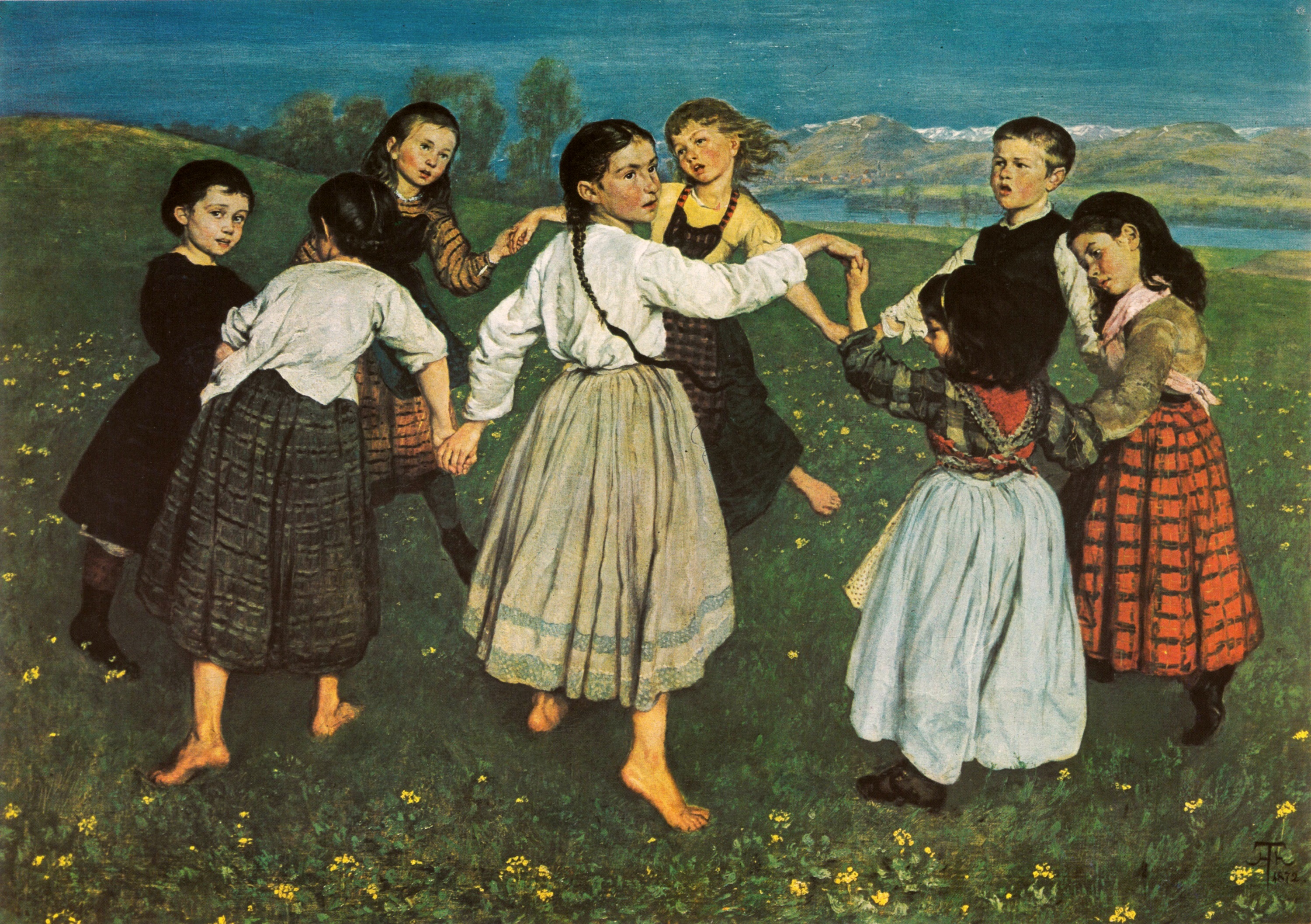
Kinderreigen (1872), Hans Thoma [Public domain], via Wikimedia Commons
The Guest House” is in The Essential Rumi by Rumi translated by Coleman Barks. Used with permission.
Richard Rohr quote from Meditation on Welcoming Prayer, September 2, 2017
Love Revolution image from Wikipedia Creative Commons
© Esther Hizsa, An Everyday Pilgrim, 2021.
Unauthorized use and/or duplication of this material without permission from Esther Hizsa is strictly prohibited. Excerpts and links may be used provided there is a link to the original content and credit is given as follows: © Esther Hizsa, An Everyday Pilgrim 2013-2021.  http://www.estherhizsa.com
Posted in compassion, Prayer, Reflections, Spiritual Direction, Stories | Tagged , , , , , , , , , , , , , , , | 3 Comments

What Would You Like to Do?

“I don’t want to be here,” my insides were shouting.

For months, I disregarded my feelings and kept doing what I should, what a good Christian would.

Then in Advent, God, who hears my thoughts and feels my feelings, asked me a question. “What would you like to do?”

Relief washed over my body as I held the possibility of not showing up. God wasn’t asking me to sacrifice what I needed for another. I’m not indispensable. I don’t have to keep trying to be what I’m not.

For a few days, I walked around with the delicious thought that I don’t have to be in this group anymore. I imagined myself not being there.

As I thought about that possibility, I felt sad. I would miss each person there.

I brought the relief of not having to go and the desire to continue to God and we listened. What was making my insides shout?

With that loving invitation to be an observer of my own story, two feelings came out of the shadows. Under my frustration, I noticed I was feeling discounted and irrelevant.

In other groups that I’m in, I’m often able to share articulately about what’s going on for me. I can tell by the way people respond that my words have opened a door for them. But in this group, I often stumble over my words, what I say falls flat, and the same questions get asked over and over.

Then I saw it. I don’t like being discounted and not making a difference in other people’s lives. It’s really uncomfortable for me. To put it more precisely, my ego doesn’t like it.

I could have gone into blame and shame, but remember, God was right there with me. I didn’t get a lecture about my ego. God said, “That’s so hard.”

I let myself feel how hard that is, and with every breath, my feelings lightened.

God asked me again. “What would you like to do?”

I listened from a deeper place in me.

I don’t want to only be in groups with people like me, that are safe and comfortable.

I wondered: What would it be like to keep going and allow those feelings of being discounted and irrelevant to be there? If I wasn’t so afraid of them, what might they offer me?

The Guest House

This being human is a guest house.
Every morning a new arrival.

A joy, a depression, a meanness,
some momentary awareness comes
as an unexpected visitor.

Welcome and entertain them all!
Even if they are a crowd of sorrows,
who violently sweep your house
empty of its furniture,
still, treat each guest honourably.
He may be clearing you out
for some new delight.

The dark thought, the shame, the malice,
meet them at the door laughing and invite them in.

Be grateful for whatever comes,
because each has been sent
as a guide from beyond.

– Jelaluddin Rumi
(translation by Coleman Barks)

∗ ∗ ∗

Love Mischief for the World

Please join me for an online weekend silent retreat and introduction to Ignatian Prayer on February 19-21. The retreat is designed for anyone who would like a silent, guided prayer retreat, for anyone who is considering participating in the Ignatian Spiritual Exercises or anyone who would like to experience these Ignatian ways of praying: Lectio Divina, Joyful Mysteries, Gospel Contemplation (Praying with your imagination) and Prayer of Examen. Go here for more information.  Here’s what participants in the last one said.

  • “This retreat offered me an opportunity to have encounters with God like never before. It has opened a door for me that I didn’t know exists.”
  • “I was guided with grace and tender wisdom. I met my God in each prayer initiative and was encouraged to listen for the heart of Jesus’ love for me, as I met with my director. Our weekend was well planned and flowed gently in the Spirit’s movements. As we shared together on Sunday, it was evident that we were met and experienced an encounter with God that was unique to each of us.”
  • “The Introduction to Ignatian Prayer retreat was a highlight of my year! Thank you for making it available online.”

What love mischief are you and God doing for the world?
Let me know and I will include it in an upcoming post.
Credits and References:
“Sad_Creature” by quantum bunny. Used with permission.
“The Guest House” is in The Essential Rumi by Rumi translated by Coleman Barks. Used with permission.
“Dog & Cat” by 紫流. Used with permission.
“Let there be light” by Sylvia Sassen. Used with permission.
© Esther Hizsa, An Everyday Pilgrim, 2021.
Unauthorized use and/or duplication of this material without permission from Esther Hizsa is strictly prohibited. Excerpts and links may be used provided there is a link to the original content and credit is given as follows: © Esther Hizsa, An Everyday Pilgrim 2013-2021.  http://www.estherhizsa.com
Posted in community, compassion, False Self, Ignatian Spirituality, Poetry, Prayer, Reflections | Tagged , , , , , , , , , , , , , , | 8 Comments

At the Edge of the Year

I stand
at the edge of a virgin year,
hallowed with a light dusting of snow.

Skates in hand,
I hope
the ice is thick enough
the surface smooth enough
my ankles strong enough
to do something beautiful.

But I’m not a skater.
I’m a writer
and sitting on my couch
in the silence and spaciousness of morning,
I can write myself
into any metaphor I choose.

But this is the one that came,
even though
I don’t own a pair of skates
and the lakes rarely freeze.

I stand on the frosty edge of a still perfect year
with a gut load of I-can’ts
don’t-haves
and should-have-started-sooners.
My aging body isn’t tricked so easily
into believing that
a fresh start
is all I need to stay upright,
never mind move with grace.

I can write myself across any frozen lake
with ease and confidence
and take my readers with me.
I know how to do that.

But I don’t know how to do this–
to be the me that’s being formed
minute by minute,
hour by hour.

I haven’t met her yet.

Sometimes I get glimpses
of what I think she’ll look like,
and when I do,
I trip and fall.

Teilhard de Chardin said,
“Only God could say what this new spirit gradually forming within you will be.”

So with my skates laced tight,
I put on my mittens
and give You my hand.

Above all, trust in the slow work of God. We are quite naturally impatient in everything to reach the end without delay. We should like to skip the intermediate stages. We are impatient of being on the way to something unknown, something new.  And yet it is the law of all progress that it is made by passing through some stages of instability—and that it may take a very long time.

And so I think it is with you; your ideas mature gradually—let them grow; let them shape themselves, without undue haste. Don’t try to force them on, as though you could be today what time (that is to say, grace and circumstances acting on your own good will) will make of you tomorrow. Only God could say what this new spirit gradually forming within you will be. Give Our Lord the benefit of believing that His hand is leading you, and accept the anxiety of feeling yourself in suspense and incomplete.

— Pierre Teilhard de Chardin, SJ

∗ ∗ ∗

Love Mischief for the World

What love mischief are you and God doing for the world?
Let me know and I will include it in an upcoming post.

The principal, David Ward, asked my husband, Fred, to dress up for his sendoff. So, as you can see, he did. For the past four years, Fred has been the facility manager of John Knox Elementary School. Whenever he went into the school to do one or two jobs, he was given one or two more; they were so delighted by all he could do. He moved lockers, hung bulletin boards, fixed doors that wouldn’t close properly, contracted roofers and plumbers, and reset 56 clocks–twice a year. Fred received many handmade cards, gifts, and accolades. Wendy Pertulla, Director of Curriculum, called Fred gold and had a long list of what they appreciate about him, particularly his diligence, patience, and ability to troubleshoot problems and communicate well–and with a sense of humour. As one of the students wrote: Thank you, Mr. Fred. You came, you sawed, you fixed.

Credits and References:
Frozen lake by Tony Webster from Minneapolis, Minnesota, United States, via Wikimedia Commons.
Ice skates by Benson Kua. Used with permission.
Photo of alien Fred used with permission.
© Esther Hizsa, An Everyday Pilgrim, 2020.
Unauthorized use and/or duplication of this material without permission from Esther Hizsa is strictly prohibited. Excerpts and links may be used provided there is a link to the original content and credit is given as follows: © Esther Hizsa, An Everyday Pilgrim 2013-2020.  http://www.estherhizsa.com
Posted in False Self, Poetry, Reflections, Writing | Tagged , , , , , , , , , , , , , , | 10 Comments