Here

Sometimes being here
feels like I’m in the wrong place
as if I could look at a map and backtrack
to where I’m supposed to be.
But there’s no map for the contemplative journey,
let alone my contemplative journey.

“Here,” the wise ones say,
“is the only place to be.
It’s the only place we can be.”

Well, that sucks
because here isn’t there
where tears bear witness to divine encounters,
where God’s voice springs forth from the page,
where my Christmas cactus isn’t limp and dying,
and compulsions don’t mesmerize.

If I have to be here,
I want to fix it up, at least,
and need help with that
so I ask three times to take the thorn away

but You don’t.

Here is good in many ways
and yet–

That “and yet” feels so big
and so lonely until

someone else says they’re here, too
and tears fill my eyes.

As a mother comforts her child, so I will comfort you.
–Isaiah 66:13 NRSV

∗ ∗ ∗

Love Mischief for the World

So often I hear from readers that they’ve felt comforted to know that I’ve experienced what they’re going through. It’s a relief to know you are not the only one who struggles with distracted prayer, self-doubt or discontent. These relieved readers thank me for my willingness to be vulnerable and share my struggles. Do you hear an invitation to be vulnerable and share your struggles with someone? Perhaps you will hear from them a relieved, “Me, too.” Perhaps you will be Mother God to them offering them company in a lonely place.

What love mischief are you and God doing for the world?
Let me know and I will include it in an upcoming post.
Credits and References:
“Alone” by Mark Harrington. Used with permission.
Poem “Here” by Esther Hizsa.
“Me too” by Menachem Ganon. Used with permission
Image of two hands from PxHere. Creative Commons.
© Esther Hizsa, An Everyday Pilgrim, 2021.
Unauthorized use and/or duplication of this material without permission from Esther Hizsa is strictly prohibited. Excerpts and links may be used provided there is a link to the original content and credit is given as follows: © Esther Hizsa, An Everyday Pilgrim 2013-2021.  http://www.estherhizsa.com
Posted in community, compassion, Poetry, Reflections | Tagged , , , , , , , | Leave a comment

The Infinite Love that Loves Us So Unexplainably

For the past three months, James Finley has been my spiritual guide. As soon as I wake up in the morning, I walk in a nearby park and listen to a podcast from Turning to the Mystics. Then I sit for twenty minutes of centering prayer.

I was inspired and encouraged by Finley’s meditations on Thomas Merton. But when I listened to his reflections on Teresa of Avila’s The Interior Castle, I found myself getting discouraged. I don’t love God or pray unhindered by distractions the way Teresa could, even in the fourth mansion (if that is where I am), never mind the seventh.

Even though I have experiences of God’s presence in my day, my silent prayer is full of distracting thoughts. They never let up. They take me up and out of the present moment, and I lose the awareness that it’s even happening. This is not new, and I’m not new at this way of praying. I’ve been practicing centering prayer for sixteen years. Shouldn’t I be further along by now?

Then I heard Finley say that one of the habits which Teresa calls “reptiles” is discouragement. 

It isn’t just that when we got into the castle, we were careless of these reptiles; that is, these habits got in with us. But we realized that we’re raising them as pets . . .  these little ongoing habits that we know compromise the fullness of the love that we’re called to, to surrender ourselves over to in the love of God. And I also think that what happens in all of this then is that we’re being asked by this love to give up the ideology of perfectionism; that is, the ideology of our inner peace being dependent on our ability to measure up to the standard of love we feel called to. We’re being asked to give that up and handing all that over to being surrendered over to the infinite love that loves us so unexplainably in the midst of these unresolved matters that we have not yet been able to work through. And so, this is the gift of tears, see? This is the gift of tears is this being invincibly loved and being so unexplainably precious in the midst of so many, very real, tangible shortcomings and unresolved things that end up compromising ourselves and others and not responding to the love of God. 

What I heard in Finley’s words is that I need to give up measuring myself and surrender my progress to God. I also heard that God wants me to surrender my inability to pray or love better and to rest in the reality that I am being invincibly loved and am unexplainably precious to God in the midst of my unresolved habits and unpassionate love for God.

I can offer myself compassion. I can put my hand over my heart and say to myself, “This is hard. You thought you would be in a different place right now and you are disappointed that you aren’t. We all get discouraged when we don’t see ourselves progressing. But you’re not in charge of this, and God isn’t disappointed. God’s infinite love unexplainably loves you right here, right now in the midst of your discouragement and distractions. Breathe in that love. Breathe out that love.”

Be joyful in hope, patient in affliction, faithful in prayer.
–Romans 12:12(NIV)

∗ ∗ ∗

Love Mischief for the World

In this short video, James Finley, clinical psychologist, former monk, and Center for Action and Contemplation faculty member, encourages us be lovingly present to the overwhelmed, reactive, and flooded parts of ourselves and others during the COVID-19 crisis. To touch this suffering with love is to dissolve it, revealing the deep peace of God that depends on nothing but upon which everything depends. (Center for Action and Contemplation)

What love mischief are you and God doing for the world?
Let me know and I will include it in an upcoming post.
Credits and References:
Image of boy with gecko from Snappy Goat. Free public domain/CCO images 
Quote by James Finley from Turning to the Mystics, Teresa of Avila Session 2
Blackberries by Ed Dahl. Used with permission. 
© Esther Hizsa, An Everyday Pilgrim, 2021.
Unauthorized use and/or duplication of this material without permission from Esther Hizsa is strictly prohibited. Excerpts and links may be used provided there is a link to the original content and credit is given as follows: © Esther Hizsa, An Everyday Pilgrim 2013-2021.  http://www.estherhizsa.com
Posted in compassion, Creation, Mystical, Reflections | Tagged , , , , , , , , , , , , , , , , | Leave a comment

Borderline

On a run, I wondered what I would share for my check-in that afternoon at the peer supervision group I attend with other spiritual directors. Typically when we check in, we don’t just share what’s at the surface of our lives, but what’s going on in our souls. What is said is often tender and held with deep gratitude.

At first, I couldn’t think of anything to say because I feel like I haven’t landed anywhere. I’m in an in between place, so that’s what I decided to share.

I talked about being borderline on the autism spectrum, that I kind of have it and kind of don’t.

“I noticed I got anxious when I read Katherine May’s book in which she discovers she has ASD. I was nervous of finding myself like her and nervous of finding I wasn’t.” I paraphrased this quote by May.

Perhaps I am hoping to excuse myself. Perhaps I’m hoping that people will love me a tiny bit more for knowing that I can’t help it, that I’ll never be able to access the easy patience that I see in everyone else. Perhaps I’m hoping for a better life story, a coherent, tidy narrative arc that finally draws my scattergun life together into a kind of sense. I sometimes feel as though I’m asking for a privilege, to be allowed to say that I’ve watched my friends sail past me into competent adulthood, while I’ve stuttered and stalled, but that it’s not my fault. it’s beguiling to think that I could shake it all off that easily.

I notice, now as I write, that this quote makes me anxious. It names my desire for an excuse or explanation as to why I’m not like other people, but I doubt many people would see how I’ve “stuttered and stalled.” Then I think, don’t we all stutter and stall? And then I want to cry.

I slow down and listen to my gathering tears. There is something in me that wants to be heard and seen. I’m not neurotypical, yet I don’t have seven out of the ten top traits of autism. I’m on the borderline between two worlds, and I don’t live in either.

The day after my peer supervision group, I brought my in-between feelings to a focusing session, I pictured myself on a steep ridge. I could see open landscapes to my left and to my right. I listened to my desire to get off the ridge on one side or the other and rest there. I felt the futility of knowing neither side had rest for me. A lump formed in my throat.  As I stayed present to it, I felt invited to sit down and find comfort in that narrow, in-between space.

As I felt myself relax there, I began to feel hope. I remembered something that happened in peer supervision. This month, it was my turn to bring a situation I was dissatisfied with during a spiritual direction session. I told them I was angry for a directee who was stuck in internalized shame she picked up from how she’d been treated by others. I felt frustrated that my anger robbed me of my ability to feel compassion and be present with her where she was.

One of my peers gently offered that those on the autism spectrum can find it difficult to hold two strong feelings at a time. Perhaps that’s why my feeling of compassion was blocked. I sat with that for a moment and sensed Jesus’ compassion for me. I heard, “That was so hard for you. It was all you could do, and you wanted to do more.”

Here was Jesus offering me what May articulated in that quote: It’s not your fault. I felt my shoulders soften as warm acceptance enfolded me.

Now that I know about this tendency in myself, I can notice a strong feeling and wonder what other feelings might want to be heard. Allowing them a voice, enables me to make choices without being dominated by one strong emotion.

Naming what is true about me (for now, anyway) relieves the tension of having to be what I’m not. So what am I?

What it’s like for me to be between neurotypical and autistic? I named a few traits that I noticed last year. Here is what I’m noticing now.

  1. I need a heads-up and time to adapt to some changes. An unexpected change  can turn certainty into chaos. I suddenly feel unsafe and don’t know what I can count on.
  2. I need things spelled out for me. I often feel like I didn’t get the memo about what’s expected in a certain situation.
  3. I need a lot of down time. Being in groups of people for any length of time overstimulates me emotionally. I don’t get overstimulated by a lot of noise or bright lights but by all the verbal and nonverbal messages I’ve picked up. I manage okay in the moment but afterward, I feel anxious and overwhelmed. I ruminate over what I heard and saw, trying to understand what confused me. I have to pick off the burrs of judgment that tell me I’ve done something wrong.
  4. I need you to not take it personally when I have a meltdown, but I also need you to hear what made me meltdown. It doesn’t happen often, and I’m not as loud and dramatic, as Dr. Shaun Murphy in The Good Doctor, escalating, fists clenched, “No. No! NO!!!” But I can relate to him. I can see what he wishes he could calmly ask for.
  5. I need to wonder. I tend to feel one strong feeling at a time. Experiencing anger, elation, compassion, hurt, or any other feeling by itself has led me to make a decision I later regret. I need to wonder. What else might I be feeling?
  6. Above all, I need self-compassion. It’s hard to accept the limitations I have that many others don’t. So I can be gentle with myself and give myself the understanding, space, and rest I need.

Autism, by definition, is on a spectrum. We may not all have ASD, but I wonder if we all have HSD: Human Spectrum Disorder. We all have limitations being who we are. What would you list as your top six needs to be who you are?

Do not run or fly away in order to become free.
Rather go deep into the narrow space given you.
There you will find God and all things.
–Gustave Thibon

∗ ∗ ∗

Love Mischief for the World

I cannot overemphasize the importance of offering ourselves compassion. We can be so hard on ourselves. Kristin Neff helps us understand why we need self-compassion and what it can do for us.

What love mischief are you and God doing for the world?
Let me know and I will include it in an upcoming post.

Credits and References:
“Border” by Jo. Used with permission.
Katherine May quote from The Electricity of Every Living Thing p 257
“The Spine of Devil’s Backbone” by Mitch Barrie. Used with permission.
© Esther Hizsa, An Everyday Pilgrim, 2021.
Unauthorized use and/or duplication of this material without permission from Esther Hizsa is strictly prohibited. Excerpts and links may be used provided there is a link to the original content and credit is given as follows: © Esther Hizsa, An Everyday Pilgrim 2013-2021.  http://www.estherhizsa.com
Posted in autism, compassion, Mindfulness, Reflections, Stories | Tagged , , , , , , , , , , , , , , | 3 Comments

It’s Time to Sing the Mourning Songs

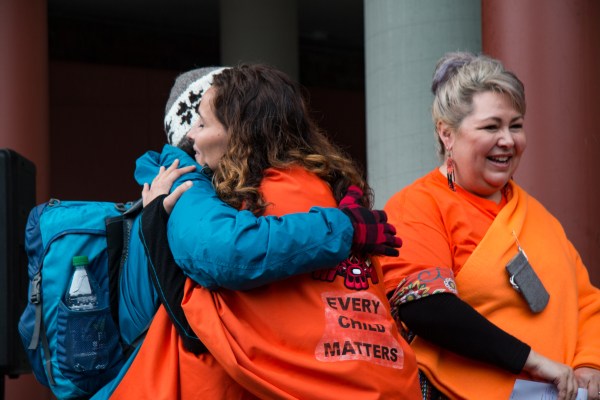
Take a moment and listen to the experience of Emma Baker, a 84-year-old survivor of the Kamloops residential school. I knew about the residential schools and how bad things were, but this hits harder than any of the presentations, courses, books, plays or movies about the experiences of indigenous families in Canada.

I have heard this discovery called “Canada’s George Floyd Moment” and what happened to First Nations people in Canada referred to as genocide. The news of the uncovered remains of 215 children buried on the grounds of the former Kamloops residential school is shocking. Here is an excerpt about it from the CBC news.

“Preliminary findings from a survey of the grounds at the former Kamloops Indian Residential School have uncovered the remains of 215 children buried at the site, the Tk’emlúps te Secwépemc First Nation said Thursday (May 27).

“The First Nation said the remains were confirmed last weekend near the city of Kamloops, in B.C.’s southern Interior. 

“In a statement, Tk’emlúps te Secwépemc said it hired a specialist in ground-penetrating radar to carry out the work, and that its Language and Culture Department oversaw the project to ensure it was done in a culturally appropriate and respectful way. The release did not specify the company or individual involved, or how the work was completed. 

“‘To our knowledge, these missing children are undocumented deaths,’ Tk’emlúps te Secwépemc Kukpi7 (Chief) Rosanne Casimir said in the statement. ‘Some were as young as three years old. We sought out a way to confirm that knowing out of deepest respect and love for those lost children and their families, understanding that Tk’emlúps te Secwépemc is the final resting place of these children’.” (CBC News)

We need to feel outraged about this We need to recognize the horrific impact residential schools has had on our First Nations’ sisters and brothers. I am grateful for this Ted Talk by Ginger Gosnell-Myers of Nisga’a and Kwakwaka’wakw heritage and this Guided Walk in the Spirit of Reconciliation.

I am grateful too for this pastoral letter from the Anglican Diocese of New Westminster and this Facebook post from my friend, Kim, whose father-in-law attended the Kamloops residential school. It says what non-Indigenous people can do right now.

I hope you will take the time to read this poem by Abigail Echo-Hawk, a Pawnee artist and poet. I will close with some of her words: may “our voices sing the mourning songs with the trees. the wind. light sacred fire ensure they are never forgotten as we sing JUSTICE.”


.

© Esther Hizsa, An Everyday Pilgrim, 2021.
Unauthorized use and/or duplication of this material without permission from Esther Hizsa is strictly prohibited. Excerpts and links may be used provided there is a link to the original content and credit is given as follows: © Esther Hizsa, An Everyday Pilgrim 2013-2021.  http://www.estherhizsa.com
Posted in compassion, Justice, Reflections, Stories | Tagged , , , , , , , , | Leave a comment

What You Didn’t Know When You Woke Up That Day

Last week, I was in a classroom in Austin, Texas, where a girl who was apparently going through a really rough spell at home wrote a poem that was definitely tragic and comic both, about—everybody was yelling at her in the poem, from all directions. She was just kind of suffering in her home place and trying to find peace, trying to find a place to do her homework. But she wrote this in such a compelling way that when she read it—and read it with gusto and joy—there was such joyousness in her voice, even though she was describing something that sounded awful—when she finished, the girls in her classroom just broke into wild applause.

And I saw her face—she lit up. And she said, “Man, I feel better.” And I thought, yeah, that’s—this is such a graphic example of putting words on the page. That feeling of being connected to someone else, when you allow yourself to be very particular, is another mystery of writing. —Naomi Shihab Nye in an interview with Krista Tippet

Those paragraphs could have been a poem. Maybe they eventually became one called “She Lit Up” or “Man, I Feel Better.” I reread this story and breathed in the wonder of that moment: the tragic comedy, the gusto, the wild applause. It was a holy moment of connection. And it happened just last week.

You never knew when you woke up that day
you’d find
a burning bush on the walk to the store
or see
a holy man feeding five thousand with the peanut butter and jam sandwiches
you dropped off at the shelter.

Or what about the Saturday
when you came home again to
a loneliness so old and hard that it cracked
and God spilled out?

Or yesterday, when you happened upon
a raccoon on the fence,
tulips taking the next shift as the daffodils retire,
and eagles cresting, calling, urging you to fly?

You don’t know, when you wake up each day,
what moment is waiting
to become a poem
that wants to be read
again and again.

. . . poems hide. In the bottoms of our shoes,
they are sleeping. They are the shadows
drifting across our ceilings the moment
before we wake up. What we have to do
is live in a way that lets us find them.
–Naomi Shihab Nye
from “Valentine for Ernest Mann”

∗ ∗ ∗

Love Mischief for the World

In the On Being podcast I quoted above, Naomi Shihab Nye talked about the transformative power of poetry–of reading it and writing it. Her love mischief with poetry led her to read a poem to her son each day when he woke up. After a conversation Nye had with a principal, he began sharing a poem to the entire school as a part of the daily announcements. “One thing I’ve tried to say to groups over the years, groups of all ages, is that writing things down—whatever you’re writing down, even if you’re writing something sad or hard—usually, you feel better after you do it,” Nye said. “Somehow you’re given a sense of, OK, this mood, this sorrow I’m feeling, this trouble I’m in—I’ve given it shape. It’s got a shape on the page now. So I can stand back; I can look at it. I can think about it a little differently—what do I do now? And very rarely do you hear anyone say they write things down and feel worse. They always say, ‘I wrote things down. This isn’t quite finished. I need to work on it’—but they agree that it helped them see their experience, see what they were living. And that’s definitely a gift of writing that is above and beyond any sort of vocational—how much somebody publishes. It’s an act that helps you, preserves you, energizes you in the very doing of it.” 

What love mischief are you and God doing for the world?
Let me know and I will include it in an upcoming post.

Credits and References:
Photo of sunrise from Pexels. Creative Commons.
“What You Didn’t Know When You Woke Up That Day” by Esther Hizsa.
Photo of raccoon by Andy Langager. Used with permission.
© Esther Hizsa, An Everyday Pilgrim, 2021.
Unauthorized use and/or duplication of this material without permission from Esther Hizsa is strictly prohibited. Excerpts and links may be used provided there is a link to the original content and credit is given as follows: © Esther Hizsa, An Everyday Pilgrim 2013-2021.  http://www.estherhizsa.com

Posted in Creation, Poetry, Reflections, Stories, Writing | Tagged , , , , , , , , , , | Leave a comment

Love Your Body Now

Let me share my earworm. It’s a riff of a Backstreet Boy’s song

Everybody (yeah, yeah)
Love your body (yeah, yeah)
Love your body now.

Adam Sud should have died. Seriously addicted to amphetamines and fast foods, his body and soul were in rough shape. Feeling defeated, he attempted suicide. In an interview with John Robbins, Adam said that when he survived, he grasped how hard his body fought to keep him alive. From that moment on, he decided to give back, to take care of the body that had taken care of him. He began to love his body. At 350 pounds, Adam said he didn’t love how his body looked; he loved what his body did for him. That love turned his life around.

Recently, a friend asked me how I found the time to get outside and exercise daily. “I don’t know,” I said. “It just happened.” But as I thought more about it, I realized, it didn’t “just happen.” Something changed. I had begun to love my body as much as I loved work.

For decades, I’ve been addicted to work. I love doing and accomplishing–the more the better. Then, when we were away for a week on Vancouver Island in March, I noticed how much I enjoyed not working. When we got home I didn’t want to go back to the same old same old. I made sure that every day, I took a mini-vacation. I got outside.

This isn’t the first time I’ve noticed this desire. When I worked as a pastor and had a few weeks off, I felt like I’d stepped off a fast-moving train. I remember feeling afraid that I wouldn’t get back on. I believed that getting on that train and pushing myself to accomplish more was what I needed to do to be a faithful Christian. I also believed I wouldn’t have worth if I didn’t.

But I don’t believe that anymore. God isn’t asking me to push myself, do more, and sacrifice my body to serve the kingdom. I’m not indispensable, and I don’t need to prop up my ego by doing things to prove my worth. I have worth because I’m a child of God, and what God loves God cares for and wants us to care for as well.

When I was obese, I didn’t like what I saw in the mirror. I believed I was a beautiful person, and I tried to see my physical appearance as beautiful, but I didn’t know how to equate my state of unhealth with any sense of objective beauty.

I think it’s because my body saw what I was doing to it and didn’t like it. It also didn’t like what it heard from me. I gave a clear and consistent message: I don’t like you. I criticized my body, frowned at it, fought with it, berated it, and ignored it. The only way I could conceive of loving my body was to love how it looked (and I couldn’t lie) or give in to its cravings (and that would be disastrous). I knew on some level that my body wanted to be fed nutritious foods and get a good night’s sleep and regular exercise, but it was hard to believe it really wanted that because none of those things made my body sing. Not at first, anyway.

But that wholesome desire was there. When I saw others my age losing a significant amount of weight, I thought, “If I ever lose the extra weight, I’d be able to bike farther and faster.” More than looking good, I wanted to feel good when I moved. I knew what that felt like, and I wanted more of it. That’s when the pounds started to come off. Adam Sud helped me understand what was happening to me. I had begun to appreciate my body for all it did for me. I felt compassion for it, and I wanted to take care of it.

I hear time and time again from wellness experts that we think we can improve ourselves by being critical, and if we let up on ourselves we’ll become fat and lazy. “But the opposite is true,” experts say. “What you love you will care for.”

I love my body. I love what I see in the mirror. I’m grateful for how my body moves with energy and ease. I thank my body for all it does for me and am learning to ask it, “What can I do for you?”

The first law of healing: We want to care for the things we love. The first step in toppling Galatea from Pygmalion’s pedestal is for you to love your own body just as it is now. To love your face, your skin, your shape, size, age. To love it first, and then to let your self-care arise naturally from the love and respect you have for who you are, not for who you should be in the eyes of others. We want to care for the things we love. Most of us have it backward: I’ll love my body if it’s thinner, if my thighs don’t jiggle, if I change the way I look–my nose, my hair, my skin my breasts, my neck, my belly. We diet or exercise or buy products in hopes that maybe one day we will love what we see in the mirror. We regard the body as if it’s a problem to be solved, as if there is something fundamentally wrong and it’s up to us to bully ourselves into lovability. And because the motivation to care comes from the outside, from someone else’s standard of acceptability, we cannot apply the first law of healing. 
Elizabet Lesser, Cassandra Speaks: When Women Are the Storytellers, the Human Story Changes

∗ ∗ ∗

Love Mischief for the World

Elizabeth Lesser is the co-founder and senior adviser of Omega Institute, the largest adult education center in the United States focusing on health, wellness, spirituality, and creativity. She is one of Oprah’s SuperSoul 100. She is the author of Broken Open: How Difficult Times Can Help Us Grow, A Seeker’s Guide: Making Your Life a Spiritual Adventure, Marrow, and her latest book, Cassandra Speaks: When Women Are the Storytellers, the Human Story Changes. There are a number of interviews with Lesser about Cassandra Speaks. Here is one by Banyen Books. Once you hear this Ted Talk you will want to hear her other one, Take “the Other” to Lunch

What love mischief are you and God doing for the world?
Let me know and I will include it in an upcoming post.
Credits and References:
Workoutlove by Reliv International. Used with permission.
Stick person in front of mirror by Tsahi Levent-Levi. Used with permission.
Quote from Elizabet Lesser, Cassandra Speaks: When Women Are the Storytellers, the Human Story Changes, p 68-69
© Esther Hizsa, An Everyday Pilgrim, 2021.
Unauthorized use and/or duplication of this material without permission from Esther Hizsa is strictly prohibited. Excerpts and links may be used provided there is a link to the original content and credit is given as follows: © Esther Hizsa, An Everyday Pilgrim 2013-2021.  http://www.estherhizsa.com
Posted in Aging, compassion, Overeating, Reflections | Tagged , , , , , , , , , , , , , | Leave a comment

Love Letters from God

I’m here. I love you. I don’t care if you need to stay up crying all night long, I will stay with you. If you need the medication again, go ahead and take it—I will love you through that, as well. If you don’t need the medication, I will love you, too. There’s nothing you can ever do to lose my love. I will protect you until you die, and after your death I will still protect you. I am stronger than Depression and I am braver than Loneliness and nothing will ever exhaust me.
Elizabeth Gilbert, Eat, Pray, Love

When Elizabeth Gilbert heard God speak to her, she felt so known and loved that she began to listen for that voice every day. 

“Imagine what God, a loving person, or your future self might say to you,” Tara said to listeners of The Radical Compassion Challenge. “Write it down in a letter and ask a trusted friend to read it back to you, twice.” 

This is what I wrote on the heels of last week’s post. 

Dear Esther,

I see you. I see your desires, your struggles, your victories, and your disappointments. I see your anxiety, confusion, and fear. I see your openness to love and your desire to be open. I see your beauty, your heart. I see all that others love about you, and I get it. I know why people want to be with you and have you as a friend, mother, spiritual director, wife. And I see that you don’t see it.

I can see who you would be if you believed there was nothing wrong with you. And I am giving you my eyes to see that.

Forgive yourself for not being who you think you should be. Come home to who you are. I am right here. It’s okay that you don’t understand, that you can’t do what others do, that you don’t know what they know. Not being them means that you are being you. When you do that you come home. You are home. I’m right here.

–God

Tears came as I wrote these words that spoke of my fears and longings. Brené  Brown says our deepest need is to be known, and I felt known by the One who matters most to me.

I believed these were God’s words, but some doubt remained until I listened to a trusted friend read this letter back to me twice. “It’s true,” she said, then she got specific and provided proof. 

In a podcast about Teresa of Avila, James Finley said “. . . what happens to one of us in
the order of grace belongs to all of us in the mystical body.” I take that to mean that what was given to Elizabeth Gilbert and what was given to me was also given to you. God feels the same way about you. God knows you, sees you, is with you, and will never leave you.

I wonder what words God would use to express that to you? What are you longing to hear from God? I’m sure God would be delighted to write a love letter to you.

As the Father has loved me, so have I loved you. Now remain in my love.
–John 15:9

∗ ∗ ∗

Love Mischief for the World

I have rarely hear a sermon on Acts 8:26-40 (Philip and the Ethiopian Eunuch), let alone one that is so lifegiving and inspiring. I am grateful to Eric Mason of St. Laurence Anglican Church in Coquitlam for delving into the background of this text and listening to how it relates directly with the people in his church and in our lives. Love mischief, indeed.

What love mischief are you and God doing for the world?
Let me know and I will include it in an upcoming post.

Credits and References:
Girl Reading a Letter by an Open Window  by Jan (Johannes) Vermeer (1659) by cea +. Used with permission.
Note about Elizabeth Gilbert from an interview with Tara Brach during the Radical Compassion Challenge.
The Love Letter (Chie Yoshii) photo by June Yarham. Used with permission.
© Esther Hizsa, An Everyday Pilgrim, 2021.
Unauthorized use and/or duplication of this material without permission from Esther Hizsa is strictly prohibited. Excerpts and links may be used provided there is a link to the original content and credit is given as follows: © Esther Hizsa, An Everyday Pilgrim 2013-2021.  http://www.estherhizsa.com
Posted in Reflections | Tagged , , , , , , , , , , , , , , , , , , , | Leave a comment

The Song That Is My Life

Do not try to save
the whole world
or do anything grandiose.
Instead, create
a clearing
in the dense forest
of your life
and wait there
patiently,
until the song
that is your life
falls into your own cupped hands
and you recognize and greet it.
Only then will you know
how to give yourself to this world
so worthy of rescue.
Martha Postlethwaite

It happened again. I was asked to do something that I was particularly gifted for. I got excited about it and jumped in. Months later, I realized my ego had talked me into this. I was caught again by the lure of seeing the person I wanted to be and following a shortcut to it.

Eight years ago, when I began this blog with a quote from Frederick Buechner: “Listen to your life.” “Notice what you notice,” Father Elton said as he listened to my life with me when I prayed the Ignatian Spiritual Exercises. In Advent, Jan Richardson challenged me to let go of what other people tell me I should want.  At the edge of the year, I considered Teilhard de Chardin’s claim, “Only God could say what this new spirit gradually forming within you will be.”

If I have been doing one thing in my weekly writing it is this. Paying attention. Listening. Noticing. Waiting for the song of my life to fall into my cupped hands.

Recently I noticed that my first reaction when any social gathering is cancelled is relief. The same week, I noticed that the last visitor in my day is a ping of anxiety in my chest just before I fall asleep.

I have also begun to notice how often I don’t understand some aspect of what’s going on in a situation. Eventually, I figure it out, but I wonder how much energy that has taken accumulatively. It makes sense now why I like going back to vacation places I’ve been to before. No wonder I like long stretches of time alone. Then I don’t have to figure out why that person said what they did and what I was supposed to get.

For my whole life, I’ve learned to function well by looking outside myself to discover what a good person is, does and feels. I’ve become accomplished at it. People like that me. But who will I find as I continue to look inside myself? What song will I sing when I fall into my own cupped hands?

Tears are streaming down my cheeks as I write this.

I hear Love say, Fall. I will catch you. 

I don’t know what life I will greet. So far it has far more noes in it than yeses. It will disappoint people. It disappoints me. So many good things I will not do. So many people I will not be.

I got my COVID shot at the Anvil Centre in New Westminster two weeks ago. The building was liberally signed, and assistants were clearly identified and ready to direct. I needed directing. More than once. And when I thought I knew how it worked and where to go, I was wrong.

There was an elderly woman in front of me who, I suspect, didn’t speak English. She needed even more help than I did. She stood there not even knowing she was not where she was supposed to be until an attendant came and moved her along.

She didn’t know she didn’t know. I think I have lived a lot of my life that way.

I left the vaccination centre feeling fragile.

So often I think I’ve reached the bottom of my cup of self-compassion only to find Love filling it up again. This is hard, I hear You say.

So often, I think I’ve rested too long, and I need to get doing something. But You’re not moving me on from these still waters.

You wait with me in the clearing. You can hear the song that is my life falling into our hands. You close your eyes and smile.

And so, now our dilemma then becomes something intimate, for now we see our tendency not to see the divinity of ourselves that alone is real as a capacity to be actualized. That is, I am this because God says so. This is who I am. I am the beloved. God is seeing me here now. God’s seeing you here now, through and through and through and through, as precious as God is precious, as vast as God is vast, in your nothingness without God, in my nothingness without God. This is true. –James Finley, Turning to the Mystics, Teresa of Avila 1

∗ ∗ ∗

Love Mischief for the World

The City of Burnaby has proclaimed May 10th, 2021 as A Day of Action Against Asian Racism.  In light of the over 300% increase in anti-Asian hate crimes in Burnaby over the last year, members of the Burnaby Together Table, Burnaby Inter-Faith Committee and the City of Burnaby are looking at ways to address this issue within our City. Burnaby resident and Stand With Asians Coalition (SWAC), Doris Mah wirites, “The National Day of Action Against Anti-Asian Racism is a nationwide movement that was initiated by a group of grassroots activists in Burnaby, BC. Organizers include residents of Burnaby, Vancouver, Toronto and Ottawa. Event description: https://www.facebook.com/events/322523849293072. May is Asian Heritage Month. . . . SWAC is organizing a National Day of Action Against Anti-Asian Racism E Rally on Zoom on May 10 at 5 -6 PM PT/ 8 -9 PM ET. Sign up herehttps://docs.google.com/forms/d/e/1FAIpQLSe8REOUWaRhNCYW9NwoYCa1-w7WMC6asOW82hrcalXMTsjZlw/viewform?vc=0&c=0&w=1&flr=0&gxids=7628

What love mischief are you and God doing for the world?
Let me know and I will include it in an upcoming post.

Credits and References:
“Clearing” by Martha Postlethwaite used with permission. Note that what I have above is an earlier version of her poem. She has since revised it. The line that was “the song that is your life” is now “the song that is yours alone to sing.” Thanks, Martha!
Girl Seated on Hillside Overlooking the Water by Winslow Homer, 1878. Public domain, via Wikimedia Commons 
366 • 36 • Two hands, one cup” by Svein Halvor Halvorsen. Used with permission.
© Esther Hizsa, An Everyday Pilgrim, 2021.
Unauthorized use and/or duplication of this material without permission from Esther Hizsa is strictly prohibited. Excerpts and links may be used provided there is a link to the original content and credit is given as follows: © Esther Hizsa, An Everyday Pilgrim 2013-2021.  http://www.estherhizsa.com
Posted in Aging, compassion, Reflections, Stories | Tagged , , , , , , , , , , , , , , , , , | 2 Comments

You Can’t Always Get What You Want

. . . we start to notice the dynamics of this welling up [of the longing for God] out of the most fundamental day-by-day realities of our life, in our daily intimacy or lack thereof, our physical health or lack thereof, our security or lack thereof, our direction in life or lack thereof. And in the midst of it, if we don’t panic, we can start to see kind of underlying continuity at the same rhythm of a deepening invitation to hand ourselves over to God’s care who is achieving this work in us that we don’t understand in ways that we don’t understand, and I think this is the purgative process, this kind of unraveling of ourselves on our own terms. —James Finley, Turning to the Mystics, Thomas Merton 6

What if the COVID numbers keep going up and the health authorities close the campgrounds? What if there aren’t enough registrations for Living from the Heart, and I don’t get to cofacilitate this fall? What if I get sick or injured and am unable to walk or bike?

Just thinking about the possibility of these losses makes me anxious. I was grateful to hear on April 22 that the campgrounds are still open, but new travel restrictions were put in place and Fred and I can’t go camping on Vancouver Island in May. I can take comfort in the possibility that we could camp locally (though it is strongly discouraged). I can tell myself that the registration deadline for Living from the Heart is months away and that my bones and body are fine. But the idea that I wouldn’t be fine if I couldn’t camp, cofacilitate, or be active lingers.

I was eleven years old when The Rolling Stones released “You Can’t Always Get What You Want.” All I remember of the lyrics is that one line.

We can’t always get what we want, and if we don’t panic, Finley says, we can start to see God working in what is, “delivering us and carrying us beyond the boundaries of everything less than love and enfolding it in our heart in the midst of our situation.”

It’s what John of the Cross speaks of in the dark night of the soul and what Ignatius is getting at in his principle and foundation.

In everyday life, then, we must hold ourselves in balance before all of these created gifts insofar as we have a choice and are not bound by some obligation. We should not fix our desires on health or sickness, wealth or poverty, success or failure, a long life or a short one. For everything has the potential of calling forth in us a deeper response to our life in God.

When I don’t get what I want, I feel disappointed, uncared for, and restless. Getting what I want brings me pleasure, and I feel adrift without it.

I don’t like those feelings, and my first instinct is to regain what I’ve lost. But if I don’t panic, and befriend those feelings of disappointment and loss, I may begin to see a gift in not getting what I want. Sometimes, it’s simply the gift of seeing how much I was relying on someone or something to make me happy.

Noticing is freedom. If I were to get a tattoo, I would ink those words onto me. Because when we see our attachments, they begin to lose their power over us.

I listened to the Rolling Stones song again. The next line after “You can’t always get what you want” is “but if you try sometimes you find you’ll get what you need.”

I think of what I’ve had to let go of during COVID. I miss being physically close to people I love, seeing their whole faces and hugging them. I miss gathering as a faith community, passing the peace, and sharing the Eucharist. I miss the freedom of being able to cross borders or get on a plane to see my sister and brothers or vacation on the Oregon coast. I miss life without a pandemic and the fears it generates.

I think of what I’ve found during COVID that I’ve needed–a new relationship with my body and the earth, a boundary that keeps me from endlessly giving myself away, communication  through technology with those farther away that I wouldn’t have considered, a bluer sky and greener earth.

I love to camp, cofacilitate, and move my body outside. I would be very sad and irritable if I lost those things. But if I don’t panic, I might remember that why these things are so important to me is that they are the places in my life where I meet God. That meeting doesn’t depend on any thing or any place to happen. What I need is God, and that’s what I always have and always will.

We cannot arrive at the perfect possession of God in this life. That is why we are traveling and in darkness. But we already possess Him by grace; and, therefore, in that sense, we have arrived in our dwelling in the light. But, oh, how far I have to go to find You in whom I have already arrived.
Thomas Merton, The Seven Story Mountain

∗ ∗ ∗

Love Mischief for the World

I have begun adding “Pronouns: she/her/hers” under my name in emails. The link takes those curious enough to click on it, to an article by Rachel Garrett called As A Cisgender Woman, Here’s Why I Share My Pronouns In My Email Signature. Being assumed to be one thing and having that one thing judged as more acceptable than the thing you actually are is an oppressive way to live. I don’t want to perpetuate that oppression. I hope my bit of love mischief makes it easier for you to add the pronoun that liberates you.

What love mischief are you and God doing for the world?
Let me know and I will include it in an upcoming post.

Credits and References:
“Giving Hands” by Artotem. Used with permission.
“Kodiak and the butterfly” by doug ellis. Used with permission. 
“Different” by Christopher Owen. Used with permission.
© Esther Hizsa, An Everyday Pilgrim, 2021.
Unauthorized use and/or duplication of this material without permission from Esther Hizsa is strictly prohibited. Excerpts and links may be used provided there is a link to the original content and credit is given as follows: © Esther Hizsa, An Everyday Pilgrim 2013-2021.  http://www.estherhizsa.com
Posted in Ignatian Spirituality, Mystical, Poverty of Spirit, Prayer, Reflections | Tagged , , , , , , , , , , , , , , , , , , | 2 Comments

The Right Road

But I believe that the desire to please you does in fact please you. And I hope I have that desire in all that I am doing. I hope that I will never do anything apart from that desire. And I know that if I do this you will lead me by the right road though I may know nothing about it. –-Thomas Merton, Thoughts in Solitude

Maybe I wasn’t clear enough, I thought when something went wrong. But as I considered what led up to this, I remembered that we’d had a conversation about it. I was clear. 

I let it go. 

Maybe he was trying to tell me he wanted to do things differently? I sat with that question and thought of this capable person. He could ask for a change if he wanted it.

I let it go again. 

A third time I returned to what happened and thought about how this misunderstanding may have affected him. It bothered me. I felt responsible even though I wasn’t.

I listened to that thought: I felt responsible even though I wasn’t. Doing something about it felt like the right road, but it wasn’t.

I heard it. I felt it and told Cherie about it when we met together to do some focusing

In the opening guided meditation, Cherie invited me to sense my solar plexus and my personal power there. I felt a surge of energy. The words I HAVE A CHOICE popped up in capital letters. I wanted to leave my body and live in those liberating words, but when Cherie asked me to notice what wanted attention in my body. I felt a gnawing in my stomach. As I welcomed that sensation, a picture of myself as a toddler curled up in a ball came to mind. 

“If something is wrong and no one owns it, and there is a shred of a possibility that it might be my fault, I take responsibility for it. I have to fix it. I can’t relax until someone owns or fixes what’s gone wrong.” 

I sat longer with the image and feelings and allowed that scared little girl to be there. She crawled into my arms and snuggled into my neck. She felt heard and understood.

After our session, Cherie and I talked about how regularly I experience this. “No wonder I get angry when people don’t own up to their mistakes. No wonder I want them to. But they can’t always do it, and it’s often complicated. But I have a choice. Even though something’s gone wrong and the one responsible for it isn’t admitting it, I can let it go. I don’t have to take responsibility for it.” 

Noticing is freedom. 

Over the next few days, when things didn’t go the way I’d hoped. I noticed how I felt responsible. With that awareness, I began to see the right road I had known nothing of. I had a choice. I could do something to make things better or I could let it go and trust. 

You are true to your name, and you lead me along the right paths.
–Psalm 23:3

∗ ∗ ∗

Love Mischief for the World

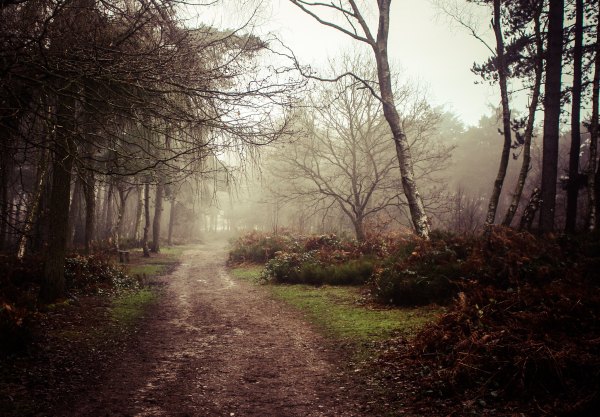
The poet Rumi said, “Let the beauty we love be what we do. There are hundreds of ways to kneel and kiss the ground.” Giving ourselves to beauty allows us to honour the way we’re made, the Creator of all, and creation itself. April 22 was Earth Day. We care for the earth when we see its beauty, when we open our eyes and see.

Today’s photos are by Mike Beales who also took the photo that’s on the cover of my first book, Stories of an Everyday Pilgrim. I am so grateful for Mike and all the other photographers who share their work through Flickr or other sources. They help us see the world’s beauty.

What love mischief are you and God doing for the world?
Let me know and I will include it in an upcoming post.
Credits and References:
“Which Way to Artlegarth?” by Mike Beales. Used with permission.
“Forest Road” by Mike Beales. Used with permission.
“More of the Alpines” by Mike Beales. Used with permission.
Rumi quote from The Essential Rumi, translated by Coleman Barks.
© Esther Hizsa, An Everyday Pilgrim, 2021.
Unauthorized use and/or duplication of this material without permission from Esther Hizsa is strictly prohibited. Excerpts and links may be used provided there is a link to the original content and credit is given as follows: © Esther Hizsa, An Everyday Pilgrim 2013-2021.  http://www.estherhizsa.com
Posted in Reflections | Tagged , , , , , , , , , , , , | Leave a comment