Wide and Deep

Contemp group & my book
I finally received my first royalty cheque from Amazon over a year after I published Stories of an Everyday Pilgrim. The amount? One hundred dollars and seventy-five cents. Humbling.

I always wanted to write a book. Praying the Ignatian Exercises as a retreat in daily life clarified and affirmed my vocation as a writer. I joined a community of writers, dedicated myself to this call, and took seriously my vows to accept critique, edit and forsake other loves.

On October 6, 2015, I submitted my work to the world not knowing how it would be received. To date, there are about four hundred copies of my book in circulation. Not exactly a bestseller.

Why is that? Because of my ability or content? Because I didn’t market it enough? Have I have fallen short in some way? Feeling the weight of my responsibility in this holy calling drove me to produce the best book I could.

Now, when I consider what God is doing–or not doing–with my offering, I remember something Maxine Hancock said. Hancock, an award-winning author, once told this to a class of writers, “It’s God’s job to go wide; it’s our job to go deep.”

This encourages me to keep doing what I’m doing: continue to come to the altar of my laptop with courage and honesty, trusting that what I do is enough.

In response, God asks, “And will you trust that what I do is enough? That this is how wide I want to go and that it’s accomplishing all I want it to? Will you also believe that I am pleased with what you’ve given?”

I think again of what I received from my Ignatian retreat. More than an affirmation of my calling, I received a knowing, deep in the core of my being that I am loved. I am loved by God who is Love loving, the one who changes the world by planting seeds and stories one by one and watching them grow. And that is more than enough.

bookshelf

If I had a message to my contemporaries, it is surely this: Be anything you like, be madmen, drunks, and bastards of every shape and form, but at all costs avoid one thing: success . . . If you are too obsessed with success, you will forget to live. If you have learned only how to be a success, your life has probably been wasted.–Thomas Merton, Love and Living

* * *

Love Mischief for the World

“There were so many things in the [Ignatian Spiritual] Exercises that changed me and transformed me, that showed me who I was… and where I believe God wants me to be,” said actor Andrew Garfield in an interview for America. When Garfield landed the lead role as a Jesuit priest in Martin Scorsese’s Silence, he decided to pray the Ignatian Exercises to prepare himself for the part. Interviewer Brendan Busse writes, “When I asked what stood out in the Exercises, [Garfield] fixed his eyes vaguely on a point in the near distance, wandering off into a place of memory. Then, as if the question had brought him back into the experience itself, he smiled widely and said: ‘What was really easy was falling in love with this person, was falling in love with Jesus Christ. That was the most surprising thing.’”

What love mischief are you and God doing to care for the earth?
Let me know and I will include it in an upcoming post.

Credits and References:
Photo of friends from our Imago Dei group by Fred Hizsa. Used with permission.
Photo of my bookshelf by Fred Hizsa. Used with permission.
Photo of Andrew Garfield by Eva Rinaldi [CC BY-SA 2.0 (http://creativecommons.org/licenses/by-sa/2.0)%5D, via Wikimedia Commons.
© Esther Hizsa, An Everyday Pilgrim, 2017.
Unauthorized use and/or duplication of this material without permission from Esther Hizsa is strictly prohibited. Excerpts and links may be used provided there is a link to the original content and credit is given as follows: © Esther Hizsa, An Everyday Pilgrim 2013-2017.  http://www.estherhizsa.com
Posted in Ignatian Spirituality, Reflections, Stories, Stories of an Everyday Pilgrim | Tagged , , , , , , , , , , , , | 2 Comments

In the Flow

2200867505_a26a8df0e8_o

“Have you found a job yet?” I asked “Kyle” (not his real name) who has been sober for three months now. Kyle’s been through treatment and recovery a few times in the past seventeen years and never lasted more than six months before he started drinking again. He told me he lives in a homeless shelter, eats at soup kitchens, walks for hours and swims a couple of kilometres nearly every day. In the small town where he lives, the city allows anyone on income assistance to use the recreation centre free of charge.

“No. I’m not looking for work right now,” he said. Over the course of a long, frank conversation, I learned why.

“I don’t want to push the river,” he said. “I’ve gotten out of treatment before and went full steam ahead making good money and six months later I was drinking again. This time I’m trying to stay in the moment and pay attention to what I’m thinking and feeling. The other day, I was in a lineup to open a bank account and started to have a panic attack. I had to leave the bank and try again another day.”

“I try to stay positive,” Kyle went on to say. “I get out in nature and walk the trails and look for opportunities to do a good turn every day. Where I live, everyone on the street knows everyone else, and we look out for each other. But sometimes I get thinking about where I would be right now if I hadn’t wasted my life. I get down on myself and those feelings are brutal. But I’m not shutting them down anymore; I’m learning to let them pass.”

“Yeah. Me, too,” I said.

“I’ve got a place to live lined up next week and a full-time job waiting for me in the spring. But for now, I walk and swim. When I’m in the pool, immersed in water and buffered from sounds, it’s like zen meditation. But I don’t accomplish much in a day,” he said.

I suspected he knew that he was accomplishing a great deal, but couldn’t quite believe it.

“You’re in the flow,” I said. “You’re listening and being kind to yourself and others, and those are not small things.”

He smiled. “You’re right. I’m not doing too bad for a homeless guy.”

4894208219_74683fe04b_bFaith does not need to push the river because faith is able to trust
that there is a river. The river is flowing. We are in it.
Richard Rohr, Everything Belongs

* * *

Love Mischief for the World

ken-and-lou-1-copy

The King of Kensington, Ken Ryan passed away on January 11, 2017. He will be greatly missed by family and friends as well as those who received so much practical support through Ken’s volunteer work in North Burnaby. While Ken was in hospice, his friend Shirley Hatch and his son Brad started a GoFundMe campaign for Ken’s wife, Lou. Here people can donate money to help Lou pay her rent and for funeral expenses. The Burnaby Now described the extent to which Ken has given time, energy and money to help others. His “laundry list of accomplishments” included receiving the Queen Elizabeth II Gold Jubilee medal for his volunteer efforts. Now we have the opportunity to give back.

What love mischief are you and God doing to care for the earth?
 Let me know and I will include it in an upcoming post.

Credits and References:
“At dead man’s chest” by Nadya Peek. Used with permission.
“river neath waterfall” by Peter Castleton. Used with permission.
Photo of Ken Ryan used with permission.
© Esther Hizsa, An Everyday Pilgrim, 2017.
Unauthorized use and/or duplication of this material without permission from Esther Hizsa is strictly prohibited. Excerpts and links may be used provided there is a link to the original content and credit is given as follows: © Esther Hizsa, An Everyday Pilgrim 2013-2017.  http://www.estherhizsa.com
Posted in Poverty of Spirit, Reflections, Stories | Tagged , , , , , , , , , , , , , , , | Leave a comment

Choosing Life

drops-carlos
In the past month, I’ve had conversations with a number of people addicted to alcohol and drugs who are now sober. One day at a time, they are rebuilding their bodies, their lives and their relationships.

Each one–whether they’ve been sober for weeks or years–was humble, honest and afraid: they know how easy it is to start using again.

“Does it ever get easier?” I asked “Art” (not his real name), who’s been sober twenty-nine years. He shook his head. A young woman explained. “The longer it’s been since you’ve stopped drinking, the farther the memory of how bad it was and the reasons you stopped. That’s why I work with newcomers to AA. They remind me what my life was like before I quit.”

“I’d be dead if it wasn’t for them,” she went on to say. “Art and his wife adopted me soon after my first meeting.”

She wasn’t exaggerating. Every one of them knew people who died from an overdose or alcohol poisoning.

And every one of them give back. “I try to do a good turn every day,” said one man. Another, who used to attend our Wednesday Lunch Club, is ten months sober and working. He returned a couple of times to visit and gave two hefty donations even though he barely makes ends meet.

“I can’t tell you how many lives Art’s saved,” the woman said. I suspected it was true of all of them.

It’s no coincidence that these conversations have taken place as I start the new year literally bearing the weight of my own addiction. God has brought these people to me for my good. They have much to teach me about the cost of denial, the worth of humility, and the value of friendship.

They are giving me the courage to choose life.

19525563172_ce87b707e3_k

Choose for yourselves this day whom you will serve.
–Joshua 24:15

* * *

Love Mischief for the World

wm_paul_young_author_of_the_shack

God has done some incredible love mischief in William Paul Young‘s life. His book The Shack, has sold over 20 million copies and is one of the top 40 bestselling books of all time. It transformed many lives, including mine, because it transformed our view of God. In conferences and interviews, Paul tells the story of how God met him as he faced the truth about his own brokenness and began to believe that he was deeply loved. His recovery led to reconciliation with his wife and the writing of The Shack, which was originally given as a gift to their six children. Young has also written Cross Roads, Eve and the foreword to Richard Rohr’s new book The Divine Dance: The Trinity and Your Transformation.  The Shack, the movie, is due to be released in March.

What love mischief are you and God doing to care for the earth?
 Let me know and I will include it in an upcoming post.

Credits and References:
“…drops” by Carlo Scherer. Used with permission.
“Last Day” by Rachel Titiriga. Used with permission.
Photo of Wm Paul Young by Tylerwardis (Own work) [CC BY-SA 4.0 (http://creativecommons.org/licenses/by-sa/4.0)%5D, via Wikimedia Commons
© Esther Hizsa, An Everyday Pilgrim, 2017.
Unauthorized use and/or duplication of this material without permission from Esther Hizsa is strictly prohibited. Excerpts and links may be used provided there is a link to the original content and credit is given as follows: © Esther Hizsa, An Everyday Pilgrim 2013-2017.  http://www.estherhizsa.com
Posted in Overeating, Reflections, Stories, Wednesday Lunch Club | Tagged , , , , , , , , , , , , , | 2 Comments

DIY Retreat #8: God: Almighty Gentleness

Here is another one-day prayer/silent retreat outline prepared by my friend Joy Richardson, a spiritual director in Coquitlam. You’ll find the introduction to DIY group prayer retreats here and other outlines under resources.

moonbeams Jessie Wilcox Smith

GOD: ALMIGHTY GENTLENESS

After people have gathered, begin with a time of quiet. Light the candle and welcome God’s presence.

Group Time

  1. As we take turns reading the following passages, open yourself to the presence of God. Take in the words and the overall flow of the passages. In the silence that follows, continue to open yourself to the Spirit of God.

There is no fear in love, but perfect love casts out fear; for fear has to do with punishment, and whoever fears has not reached perfection in love. We love because he first loved us. —1 John 4:18-19 (NRSV)

 There is no fear in love [dread does not exist]. But perfect (complete, full-grown) love drives out fear, because fear involves [the expectation of divine] punishment, so the one who is afraid [of God’s judgment] is not perfected in love [has not grown into a sufficient understanding of God’s love]. We love, because He first loved us. —1 John 4:18-19 (Amplified Bible)

God is love. When we take up permanent residence in a life of love, we live in God and God lives in us. This way, love has the run of the house, becomes at home and mature in us, so that we’re free of worry on Judgment Day—our standing in the world is identical with Christ’s. There is no room in love for fear. Well-formed love banishes fear. Since fear is crippling, a fearful life—fear of death, fear of judgment—is one not yet fully formed in love.  We, though, are going to love—love and be loved. First we were loved, now we love. He loved us first. —1 John 4: 17-19 (The Message)

Joy is measurable by Funky bug

Excerpts from Let Yourself Be Loved by Phillip Bennett:

Sometimes when we are feeling most trapped in our fear and self-frustration . . .  a wave of light breaks into our darkness and it is as though a voice were saying: You are accepted. You are accepted by that which is greater than you. Do not try to do anything; do not perform anything; do not intend anything. Simply accept the fact that you are accepted. If that happens to us, we experience grace.

Grace can break in when we least expect it. God’s love is stunning, sometimes disorienting as it streams into our darkness, accepting us as we are. As we open to love, we find something surprising: instead of ironing out the wrinkles of our character—our neurotic wounds, our anxieties, our peculiar psychic dead-ends—love comes to enliven us as we are. We are breathed into by the Spirit of Life, set upon our feet to stand before God and the world in all the glory and vulnerability of our true selves. We had imagined we would become some other sort of person—that we could escape the bedeviling flaws of our character. Instead, we discover that those ‘flaws’ are the very openings through which love can touch us to the core of our being. (p 57)

Our own attempts at chiseling away our own anxieties and distractions never succeed, but we are promised that the fullness of love alone can cast out our fears. This casting out continues over our lifetime. The key is not to judge our fears or try too hard to get rid of them. Only by befriending the fears in our hearts do we give up trying to control them and simply open our hearts so that love may work its deep healing within us. (p.8)

By placing ourselves in the presence of unconditional Love— through prayer, meditation, reading, being with and serving others—we return to the mysterious Center beyond our ego control and comprehension. This alone can calm our fears and ground us deeply in reality. In subtle ways we find ourselves becoming more loving, less fearful and grasping. Slowly, like water wearing down a stone, the steady drops of love are washing away our fears. As we place ourselves daily under the stream of divine mercy, the living waters of love flow through us, slowly penetrating our fearful, dark recesses. The change that is wrought within us is gradual but deep; slow and subtle, but always profound. (p. 7)

  1. On the second prayerful reading, is there a word or phrase that God is drawing you to?  Perhaps you would like to share it.


Individual Prayer Sessions:

Please choose whichever sessions God draws you to or ignore them all. Be sure to take a couple of chunks of time to go for a walk, knit, eat lunch, or do some other quiet activity to give yourself some down time. These sessions can be as brief or as long as you wish. If you want to do a couple of them in the same time period, that is fine.
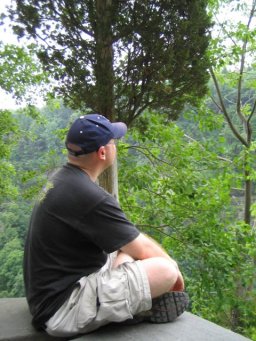
ponderingSession 1

Complete the Lectio.

Respond: On the third reading, listen for how the passage connects to your life.  Allow yourself  to be with God in this place. Take all the time you need.

Rest: On the fourth reading, simply rest in the love that God has for you. Let the words wash over you. Allow God’s Spirit to draw you close and fill you with God’s love, grace and peace. Linger in this place.


Session 2

coffee-with-a-friendBennett says, “Only by befriending the fears in our hearts do we give up trying to control them and simply open our heart so that love may work its deep healing in us.”

What does it mean to befriend our fears? My spiritual director led me into a time of doing just this. I want to share this process with you.

What are two things you like to do with friends? (e.g. have coffee, go for a walk). Picture yourself doing one of these with your fear. (e.g. your fear is sitting across the table from you at a café). If you are able to, name that fear. How do you feel? If a friend was sitting across from you, how would you treat them? Can you treat your fear the same way? Spend time here. Can you listen to your fear as you would listen to a friend? Take more time visiting with your fear. What do you notice? How do you feel?


Session 3

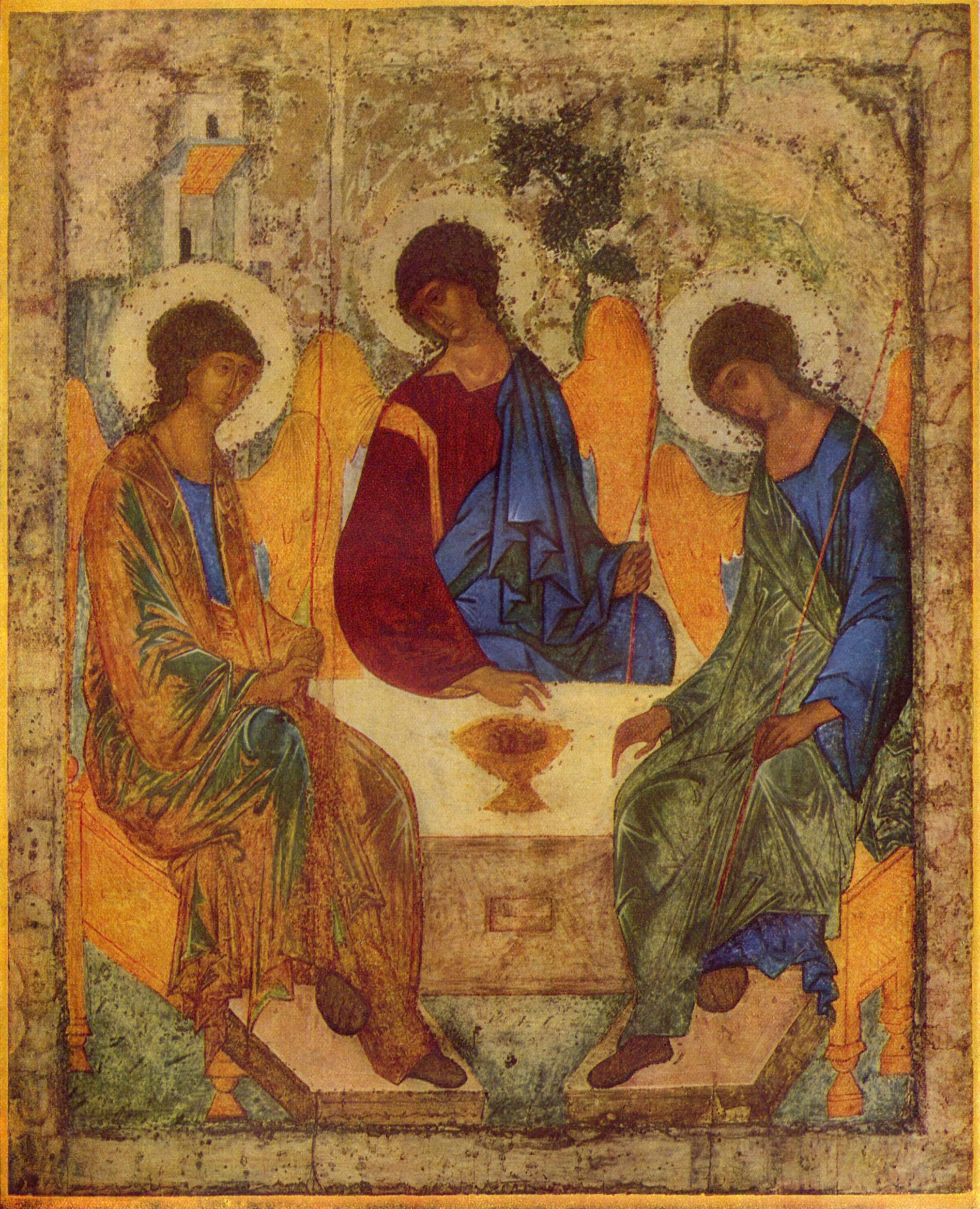
andrej_rublev_001At a contemplative gathering one evening, the leader talked about taking different parts of ourselves (e.g. our fears and anxieties) and bringing them to Jesus in communion. I wanted to be with Jesus with my fear. If you choose to, you can too.

Take your fear, and place it at the communion table with you and Jesus. (Some folks like to place themselves at the table with the Trinity in Rublev’s icon of the Trinity.) What does your fear look like? Be with Jesus as He serves your fear the bread and wine. How does Jesus look at the fear? What is His attitude to the fear? Does Jesus say anything to your fear? Does the fear say anything to Him? Be with this. Jesus now serves you the bread and wine. How does He look at you? Does He say anything to you? Do you say anything to Him? Be in this place. After Jesus has served you the bread and wine, look at your fear again. What does your fear look like now? Has it changed at all? How? Notice how you feel as you look at your fear now? Does your fear need anything? If this fear comes again, will you treat it any differently than you treated it today? Will you connect with it over coffee? Can you befriend it a little—or not really? What might befriending  it look like?


Session 4

Respond creatively any way you wish to something from your time with God. One possibility is to sift through the pictures or use crayons and paper. Make a collage or colour a picture of your fear before Jesus serves it communion, and then another of it after it has experienced Jesus giving it communion. Notice your feelings and thoughts during this time

crayons.

Optional reading for a longer retreat: Here are additional quotes from Phillip Bennett. Rest with Jesus and savour this time with Him as you sit with them.

By placing ourselves in the presence of unconditional Love—through prayer, meditation, reading, being with and serving others—we return to the mysterious Center beyond our ego control and comprehension. This alone can calm our fears and ground us deeply in reality. In subtle ways we find ourselves becoming more loving, less fearful and grasping. Slowly, like water wearing down a stone, the steady drops of love are washing away our fears. As we place ourselves daily under the stream of divine mercy, the living waters of love flow through us, slowly penetrating our fearful, dark recesses. The change that is wrought within us is gradual but deep; slow and subtle, but always profound.

But when we realize that our need for love is at the root of all fears, we can slowly open ourselves to the inflowing of love, letting ourselves be loved AS WE ARE, NOT AS WE WISH TO BE.


Credits and References:
Let Yourself Be Loved by Phillip Bennett, 1997.
Thank you to Sharon Chila for sharing Bennett’s quotes with Joy and others so it could become the basis for this retreat.
“Moonbeams” by Jessie Wilcox Smith (September 6, 1863 – May 3, 1935)
“Joy Is Measurable” by Funkybug. Used with permission.
“Pondering” by Karl Kaufman. Used with permission.
“Coffee with a friend” by Andrew Hyde. Used with permission.
Icon of the Holy Trinity by Andrei Rublev (1360-1430) [Public domain], via Wikimedia Commons
“Crayons” by Cinnamon Funch. Used with permission.
© Esther Hizsa, An Everyday Pilgrim, 2017.
Unauthorized use and/or duplication of this material without permission from Esther Hizsa is strictly prohibited. Excerpts and links may be used provided there is a link to the original content and credit is given as follows: © Esther Hizsa, An Everyday Pilgrim 2013-2017.  http://www.estherhizsa.com


Posted in Prayer Retreat Outline | Tagged , , , , , , , , , , , , , , , , , , , , | Leave a comment

Christmas Spent

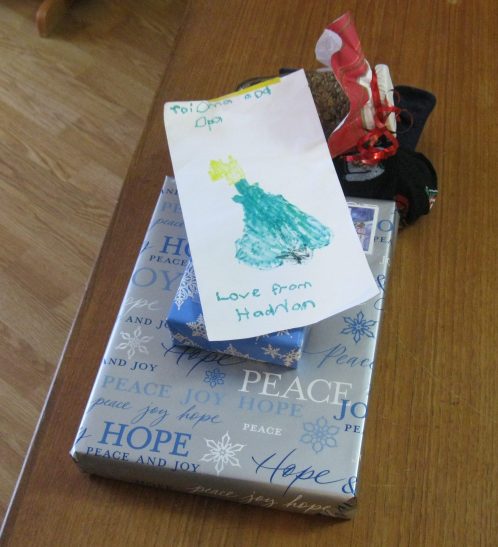
under-the-christmas-treeI didn’t intend to have an unsentimental Christmas. It just turned out that way. I enjoyed gatherings with friends and family, giving gifts of homemade granola, and watching A Charlie Brown Christmas again. But the tinsel and romance of the season left me cold.


This was the first Christmas–except for the three years when we sailed around the worldthat we didn’t decorate a tree. Instead, we took the drawing of a Christmas tree that our grandson made for us when he was five and put some presents under it.

We have a sort of minimalist, half vegan family with married children who have in-laws, children and their own traditions. So “doing Christmas” isn’t straight forward. What made it even more of an enigma this year was my musing on our All Vulnerable God who came needy and helpless. I was frustrated by carols in which Jesus’ humble birth was  overshadowed by his soon to unfold kingly vocation. Add to that my annual angst over how we’re conditioned to celebrate Christmas versus how it happens.

When Boxing Day arrived, I felt a mixture of relief and sadness, having experienced Advent and Christmas somewhat as an outsider.

But before I fell asleep on Christmas night, as I opened myself to God, thoughts came to mind that brought tidings of comfort and (a minimal amount of) joy:

In a Christmas Eve sermon, April, our priest, said we often idealize the Christmas of our childhoods, even though many mothers can’t get through the stressful day without a melt-down.

On Christmas morning, I listened to Richard Rohr talk about the unsentimental self-emptying love of the Trinity that is like a water wheel constantly filling up and pouring out. The Incarnation reminds us that we are meant to be filled up and poured out for others.

Later that morning, Fred and I loaded into the car food, paper plates, napkins, and Christmas music and headed over to New Life Community Church. There we and others hosted a Christmas dinner for those in the Wednesday Lunch Club who are homeless or at risk of homelessness and would otherwise be alone for Christmas. My co-hosts were generous and the meal was a feast, but I hardly sat down. There were too many things to attend to. When it was all done, I was spent.

On Christmas night, Fred said, “It was a good day.” He too was exhausted. He had shovelled ice from the walk, coaxed a stubborn furnace to give us heat, set up tables and chairs, cleared dishes, and transported people. He had also had the challenge of cooking some donated venison. It turned out well, and he was able to sit back and enjoy the compliments and conversations.

But I found it hard to enjoy myself. I’m not a person who comes alive in the kitchen or gets a thrill out of organizing an event–even a small one like this. But I am a person who does it anyway because I love the people who come.

Linus would say, “That’s what Christmas is all about, Charlie Brown.”

charlie-brown

This is my commandment, that you love one another as I have loved you.
–John 15:12

∗ ∗ ∗

Love Mischief for the World 

coeur-yThis is Coeur-y, the sheltie that saved our Christmas turkey. His human, Gail, who was cooking the bird for our Wednesday Lunch Club Christmas dinner, put it in the oven at 3 a.m. and set her alarm to wake in two hours to check it. Two hours later, she got up, checked the turkey and reset the alarm for two more hours. “About 45 minutes before the alarm was set to go off again, Coeur-y started barking and barking–loud enough to wake the dead,” Gail said. “I got up, followed the dog into the kitchen where it the smelled of cooked turkey. It was done. If Coeur-y hadn’t barked, the turkey would have been overcooked and dry. Yep, I had set the heat to 400° instead of 350.” Coeur-y’s registered name is “Sound of My Heart” and when we tasted that turkey, we could attest that he lived up to his name.

What love mischief are you and God doing to care for the earth?
Let me know and I will include it in an upcoming post.

Credits and References:
“Presents Under the Tree” by Fred Hizsa. Used with permission.
Charlie Brown and Linus postage stamp photo by John Flannery. Used with permission.
“Coeur-y” by Gail Koombes. Used with permission.
© Esther Hizsa, An Everyday Pilgrim, 2016.
Unauthorized use and/or duplication of this material without permission from Esther Hizsa is strictly prohibited. Excerpts and links may be used provided there is a link to the original content and credit is given as follows: © Esther Hizsa, An Everyday Pilgrim 2013, 2014, 2015, 2016.  http://www.estherhizsa.com
Posted in Christmas, Homelessness, Reflections, Stories | Tagged , , , , , , , | 2 Comments

From Weakness to Weakness

3600836516_ab924c6729_bThere is a dog in Loyola House that soothes the aching soul.

Perhaps you’ve heard of the “balm in Gilead that makes the wounded whole”? Apparently someone at Loyola House in Guelph, Ontario has a dog who does the same thing.

People who go there for a thirty-day silent retreat to pray the Ignatian Spiritual Exercises sometimes find their prayers empty and their hearts in desolation. When the director, who is leading them through the exercises, has no words left to offer, they ask the retreatant if they’d like to take the dog for a walk or even keep it with them for the night.

I can identify with both the director and the retreatant. I too am weak–powerless to change my prayers, myself, or the suffering of others. I need God by my side, like a faithful hound, to walk with me in this.

I feel a tug on the leash and recall a quote by Jean Vanier,

Our lives are a mystery of growth from weakness to weakness—baby to dying person, with sickness, fatigue, accidents, along the way.

I am comforted. I’m not supposed to be able to skip over weakness as if life were a game of hopscotch. And God knows that when I “go through the valley of Baca,” I can’t “make it a place of springs” (Psalm 84:6). God understands how frustrating that is.

Vanier goes on to say,

Some people are infuriated by weakness . . . but weakness can also open us to compassion and concern for the well-being of another.

I don’t like the angst I feel when I have no words to free others trapped in difficulty. All I can do is sigh like a hound and say again, “This sounds so hard.”

In my growth from weakness to weakness, sometimes I’m given the dog and sometimes I am the dog given to others.

doginmanger

The virgin will conceive and give birth to a son,
and they will call him Immanuel (which means “God with us”).
–Matthew 1:23 (NIV)

 Some Advent Love Mischief:

  • Who has been a companion to you in your weakness?
  • How has this opened you to compassion?
  • To whom are you being given?
Credits and References:
“Dog” by David Locke. Used with permission.
Jean Vanier, Belonging: The Search for Acceptance Windborne Production Video.
“Dog in Manger” taken in New York, Saint Patrick’s cathedral by Jackie Bouchard. Used with permission.
© Esther Hizsa, An Everyday Pilgrim, 2016.
Unauthorized use and/or duplication of this material without permission from Esther Hizsa is strictly prohibited. Excerpts and links may be used provided there is a link to the original content and credit is given as follows: © Esther Hizsa, An Everyday Pilgrim 2013, 2014, 2015, 2016.  http://www.estherhizsa.com
Posted in Advent, Christmas, Poverty of Spirit, Reflections, Stories | Tagged , , , , , , , , , | 2 Comments

Weakness: The Heart of Belonging

6792590782_ef735a41d8_b

My old friend, Insecurity, showed up again when I attended a two-day SoulStream board meeting. Even though I was among people who are open, accepting, and kind, I felt uneasy. Someone mentioned a book I hadn’t read or music I hadn’t heard. I noticed I was outside a playful interaction between two people. I said the wrong thing and had to apologize. I fell short again and again. I wanted to hide, but instead I kept trying to redeem myself by saying something clever or coming up with a good idea. It only  seemed to increase my self-critical thoughts and distance me from others.

Whatever feelings we experience–even if it’s a crowd of sorrows–the poet Rumi tells us to, Welcome and entertain them all. This is what I tell my directees, and now it was time to follow my own advice. Begrudgingly, I let Insecurity be there. I gave it a corner of the couch and made sure God saw this magnanimous gesture.

The uneasiness didn’t let up, but as we continued to discuss what was on the agenda openly and honestly, I noticed that each person there brought uninvited guests: fears of all shapes and sizes. I saw that my friends had fears too and I felt compassion for them as well for as myself.

Before the board meeting ended, in a private conversation, one person explained what was under their fears. It was a painful, beautiful story.

Then they turned to me and said, “So, tell me something about yourself that I don’t know.”

The question took me by surprise. I could have told them that I spent a year in Zimbabwe on student exchange. I could have told them that I learned morse code and at one time had a shortwave radio licence. But instead I told them how insecure I’d felt for the past two days.

Not long afterwards the same person said this in an e-mail, “Thanks for gifting us with your presence on the board. I love being with you. You are warm and bring a feeling of safety to a room.”

I read the e-mail twice. Then read it to Fred. Even with my weakness–or maybe because of it!–I belonged.

Jean Vanier, founder of L’Arche communities for developmental disabilities, said,

Power and strength can separate people; whereas weakness and recognition of weakness and the cry for help brings people together. When you are weak, you need people. It’s very easy. When you are strong you don’t need people, you can do everything on your own. So, somewhere the weak person calls people together. And when the weak call forth the strong, what happens is they awaken what is most beautiful in a human person–compassion, goodness, openness to another and so on. Our weakness brings people together. . . Weakness is at the heart of belonging.

1024px-hugo_van_der_goes_002

But the Lord said to me, “My grace is sufficient for you, for my power is made perfect in weakness.” Therefore I will boast all the more gladly about my weaknesses, so that Christ’s power may rest on me.–2 Corinthians 12:9

Some more Advent Love Mischief:

  • There is a depth of wisdom embedded in 2 Corinthians 12:9. Can you describe what gifts are rooted in your weakness? What do you risk by embracing your weakness.
  • Vanier says, “Weakness is at the heart of belonging.” How do you feel about that?
Credits and References:
“Dolly Rainbow” by Aimee Ray. Used with permission.
Jean Vanier, Belonging: The Search for Acceptance Windborne Production Video.
“The Adoration of the Shepherds Hugo van der Goes (circa 1440-1482) [Public domain], via Wikimedia Commons.
Thanks to Doug Schroeder, director of SoulStream community for leading us in a retreat on the weakness of God. My reflections and questions have risen out of that retreat.
© Esther Hizsa, An Everyday Pilgrim, 2016.
Unauthorized use and/or duplication of this material without permission from Esther Hizsa is strictly prohibited. Excerpts and links may be used provided there is a link to the original content and credit is given as follows: © Esther Hizsa, An Everyday Pilgrim 2013, 2014, 2015, 2016.  http://www.estherhizsa.com
Posted in Advent, Christmas, Poverty of Spirit, Reflections, Stories | Tagged , , , , , , , , , , , , , | Leave a comment

The God We Got

178341575_9c34ef4d16_b

God could have come with battle lines drawn,
an army of trumpeting archangels,
and a legion of patriarchs.
But God came in vulnerability,
a baby without a home . . .
–from “The Arrival” by Ann Siddall

Why did God choose to come this way–so helpless, needy and vulnerable? For centuries Israel had been waiting for the Messiah to rescue them from exile and oppression. But, when God finally arrives, he’s powerless.

This is not the God I want. I want a big God who will end injustice and suffering, particularly in the lives of the people I love.

Yet, this little God is what we got.

When I wonder why God cried and needed to be changed, nursed and comforted, it finally dawns on me: God wants to be held. Perhaps, this was what the Trinity had been waiting for.

If God is not rescuing us in the way we’d hoped, it has to be because God With Us is doing something better. The nativity story tells me that having God with us in exile and oppression is better than being rescued from it.

I can picture the joy and exhilaration my friends would experience if they were delivered from their suffering. Jesus’ relationship with Mary must have been more wonderful than that.

Once, when Jesus was preaching, a woman in the crowd called out, “Blessed the womb that carried you, and the breasts at which you nursed!” Jesus replied, “Even more blessed are those who hear God’s Word and guard it with their lives!”

That’s us Jesus is talking about! We too can experience an intimacy with God even more blessed than what Jesus shared with Mary.

Imagine being so content with loving God and being loved by God that we forget about ourselves and just love one another. Perhaps that’s how those Messianic prophesies are being fulfilled. Perhaps that’s how God’s kingdom comes.

The Nativity 1890 1910 by Franz Mayer&Co (detail) by Plum Leaves

Dear Lord, as I come to you today,
fill my heart and my whole being
with the wonder of your presence.
–from Sacred Space

Some Advent Love Mischief:

  • The story of advent does not tell us God rescues us from problems. It tells us God is with us in our problems. Is it good enough for God to be with you in the midst of your life’s circumstances? How do you feel about this?
  • Can you imagine God present with you now in whatever circumstance you are presently living? What feelings emerge as you consider that being with you is what God desires most of all?
  • God wants to be held. How can we hold baby Jesus? With our imaginations. In a prayer that Ignatius of Loyola called Contemplation of Place, we can imagine ourselves in any gospel story. Picture the nativity and enter the stable. Take in the sights, smells, sounds and textures. Do you see Mary and Joseph? Do you see Jesus? Do they see you? What happens next?
Credits and References:
“Holding Hands” by Dave & Lorelle. Used with permission.
Luke 11:27,28 (The Message).
“The Nativity” 1890-1910 by Franz Mayer & Co (detail) photo by Plum leaves. Used with permission.
Thanks to Doug Schroeder, director of SoulStream community for leading us in a retreat on the weakness of God. My reflections and questions have risen out of that retreat.
© Esther Hizsa, An Everyday Pilgrim, 2016.
Unauthorized use and/or duplication of this material without permission from Esther Hizsa is strictly prohibited. Excerpts and links may be used provided there is a link to the original content and credit is given as follows: © Esther Hizsa, An Everyday Pilgrim 2013, 2014, 2015, 2016.  http://www.estherhizsa.com
Posted in Advent, Christmas, Poverty of Spirit, Reflections, Stories | Tagged , , , , , , , , , , , , , , | 2 Comments

God Became Weak

10194703106_2df2501230_k

“O come, o come, Emmanuel, and ransom captive Israel,” we sing. We too “mourn in lowly exile here” until the Son of God appears. We long for God to come in power and right our injustice, heal our ills, dispel our confusion, and fill our loss. Yet, the nativity story tells us that God came in weakness.

This tiny God could do nothing for himself, let alone anyone else. God With Us needed to be fed, carried and clothed. God needed to be changed, held, rocked and soothed. God was needy.

God needy?! My Christian education never put those two words together. Neediness repels me. I want to fix needy people or avoid them. I don’t want to be needy myself. And yet, I was. If I’m honest, I still am.

I don’t like to remember it, but there was a period of my life–eight long years–full of injustice, fear and loss. The pain was so unbearable that it spilled into most conversations, causing people to judge me and distance themselves. Thankfully, enough people stayed close and gave me the support I needed to survive. But when life became bearable again, I knew I never want to be that emotionally needy again.

To know that God chose to be needy brings a lump to my throat and tears to my eyes. I struggle to put words to what is going on in me. I feel . . .  accepted.

Jesus was needy and divine. The Son of God needed to be held and comforted, just like I did in those eight long years. God is not repelled by my neediness, but endeared to it, in the same way a parent is enraptured by the neediness of their newborn child.

When God looks back on those awful years, I don’t hear God calling them awful or identifying me as a problem. I sense God saw God’s self in me and was filled with compassion and love. And God still is.

6398436389_dd7835513a_o

Why lies He in such mean estate,
Where ox and ass are feeding?
–“What Child Is This?” by William Chatterton Dix, 1865

Some Advent Love Mischief:

  • Remember a time when you were needy. What feelings emerge now as you remember it?
  • Imagine God looking back at that difficult time. How did God feel about you then? How does God feel about you now?
Credits and References:
“Cry of Life” by Sander van der Wel. Used with permission.
“Madonna Mary and Baby Jesus 21” by Waiting For The Word. Used with permission.
© Esther Hizsa, An Everyday Pilgrim, 2016.
Unauthorized use and/or duplication of this material without permission from Esther Hizsa is strictly prohibited. Excerpts and links may be used provided there is a link to the original content and credit is given as follows: © Esther Hizsa, An Everyday Pilgrim 2013, 2014, 2015, 2016.  http://www.estherhizsa.com
Posted in Advent, Christmas, Poverty of Spirit, Reflections, Stories | Tagged , , , , , , , , , , | 3 Comments

A Patch of Fog

4454752004_8e5d43bf3a_b“Turn on your lights and slow down,” Fred said. The fog on the road was so thick, we couldn’t see more that a few metres in front of us.

I drove slowly, silently, looking for red tail lights and road signs while keeping an eye on the edge of the road. I focussed my attention on what might come into view, so I had time to respond safely.

Eventually, the fog dissipated and we resumed our speed and conversation.

“I can’t figure it out,” I said, referring to a recent experience I had while offering spiritual direction. As I listened to my directee that day, I suddenly found myself in a patch of fog. I couldn’t see the road ahead and didn’t know what to do. I had no choice but to slow down, let things unfold before me and inch forward until the way became clear.

“I don’t like that feeling and I wish I knew what caused it, so it doesn’t happen again,” I lamented. Fred was sympathetic, but God wasn’t helping me one little bit.

What God did do, over the next few days, was listen. God listened with me as I heard why I needed to figure out what caused the fog: I wanted that confident feeling of knowing what to do in any situation and assumed this confidence would better enable me to help others. As I continued to listen, I remembered a humbling experience I had had which showed me that the opposite can also be true.

A thought entered my mind: What if that foggy moment of uncertainty was a gift? Perhaps God simply wanted me to focus my attention on what was coming into view.

Then I had another thought: Much of the time, my mind is preoccupied with learning from the past or planning for the future so that I can know what to do in any eventuality. But what if I don’t always need to know what to do? And what if thinking I know what to do keeps me from responding to what God is actually doing?

Then a third thought emerged: What if being present is more important to God than knowing what to do? What if being present is even more important than doing things well?

image2

Stand still. The trees ahead and bushes beside you
Are not lost. Wherever you are is called Here,
And you must treat it as a powerful stranger,
Must ask permission to know it and be known.
–from the poem “Lost” by David Wagoner

∗ ∗ ∗

Love Mischief for the World

library-books-choose-meThe person in charge of maintenance at John Knox Christian School (aka my husband, Fred) was asked to repair a rocking chair in one of the classrooms. When Fred had a look at the glider-rocker, he discovered the bearings were gummed up and worn out from the countless number of hours teachers and educational assistants had spent rocking children and reading to them. Now that’s some great love mischief.

 What love mischief are you and God doing to care for the earth?
 Let me know and I will include it in an upcoming post.

Credits and References:
“Super Thick Fog leaving Montalvo” by Houston Marsh. Used with permission.
“Heavy Fog” by Anne Yungwirth. Used with permission.
School library books by bravelittlebird used with permission
© Esther Hizsa, An Everyday Pilgrim, 2016.
Unauthorized use and/or duplication of this material without permission from Esther Hizsa is strictly prohibited. Excerpts and links may be used provided there is a link to the original content and credit is given as follows: © Esther Hizsa, An Everyday Pilgrim 2013, 2014, 2015, 2016.  http://www.estherhizsa.com
Posted in Reflections, Spiritual Direction, Stories | Tagged , , , , , , , , , , , , , | 2 Comments