Here is another one-day prayer/silent retreat outline I put together for our contemplative group. You’ll find the introduction to Do It Yourself group prayer retreats here and other outlines under resources.

Living Out Our God-Created Identity
Introduction:
Gather together, light a candle and take time to rest in God’s spacious and generous love in silence or as you listen to music.
Read aloud the following texts and poem:
You have heard that it was said, ‘You shall love your neighbour and hate your enemy.’ But I say to you, Love your enemies and pray for those who persecute you, so that you may be children of your Father in heaven; for he makes his sun rise on the evil and on the good, and sends rain on the righteous and on the unrighteous. For if you love those who love you, what reward do you have? Do not even the tax collectors do the same? And if you greet only your brothers and sisters, what more are you doing than others? Do not even the Gentiles do the same? Be perfect, therefore, as your heavenly Father is perfect. –-Matthew 5:43-48 (NRSV)
“You’re familiar with the old written law, ‘Love your friend,’ and its unwritten companion, ‘Hate your enemy.’ I’m challenging that. I’m telling you to love your enemies. Let them bring out the best in you, not the worst. When someone gives you a hard time, respond with the energies of prayer, for then you are working out of your true selves, your God-created selves. This is what God does. He gives his best—the sun to warm and the rain to nourish—to everyone, regardless: the good and bad, the nice and nasty. If all you do is love the lovable, do you expect a bonus? Anybody can do that. If you simply say hello to those who greet you, do you expect a medal? Any run-of-the-mill sinner does that.
“In a word, what I’m saying is, Grow up. You’re kingdom subjects. Now live like it. Live out your God-created identity. Live generously and graciously toward others, the way God lives toward you.” –-Matthew 5:43-48 (The Message)

With That Moon Language
-Hafiz
Admit something:
Everyone you see, you say to them,
“Love me.”
Of course you do not do this out loud;
otherwise,
someone would call the cops.
Still though, think about this,
this great pull in us
to connect.
Why not become the one
who lives with a full moon in each eye
that is always saying,
with that sweet moon
language,
what every other eye in this world
is dying to
hear.
What goes on in you as hear this teaching of Jesus or read this poem? What feelings arise?
PERSONAL PRAYER PERIOD #1

36 One of the Pharisees asked Jesus to eat with him, and he went into the Pharisee’s house and took his place at the table. 37 And a woman in the city, who was a sinner, having learned that he was eating in the Pharisee’s house, brought an alabaster jar of ointment. 38 She stood behind him at his feet, weeping, and began to bathe his feet with her tears and to dry them with her hair. Then she continued kissing his feet and anointing them with the ointment. 39 Now when the Pharisee who had invited him saw it, he said to himself, “If this man were a prophet, he would have known who and what kind of woman this is who is touching him—that she is a sinner.” 40 Jesus spoke up and said to him, “Simon, I have something to say to you.” “Teacher,” he replied, “speak.” 41 “A certain creditor had two debtors; one owed five hundred denarii, and the other fifty. 42 When they could not pay, he cancelled the debts for both of them. Now which of them will love him more?” 43 Simon answered, “I suppose the one for whom he cancelled the greater debt.” And Jesus said to him, “You have judged rightly.” 44 Then turning toward the woman, he said to Simon, “Do you see this woman? I entered your house; you gave me no water for my feet, but she has bathed my feet with her tears and dried them with her hair. 45 You gave me no kiss, but from the time I came in she has not stopped kissing my feet. 46 You did not anoint my head with oil, but she has anointed my feet with ointment. 47 Therefore, I tell you, her sins, which were many, have been forgiven; hence she has shown great love. But the one to whom little is forgiven, loves little.” 48 Then he said to her, “Your sins are forgiven.” 49 But those who were at the table with him began to say among themselves, “Who is this who even forgives sins?” 50 And he said to the woman, “Your faith has saved you; go in peace.” –Luke 7:36-50
Option #1:
- Read this passage and picture the story taking place. Imagine the details of sight, sound, smell, taste, and touch, but do it in a very specific way: put yourself in Simon’s place. You are a person of high standing. This is your house and you have invited Jesus to visit you. Imagine how you might look forward to this meal with Jesus. What goes on for you when this “enemy” pushes her way in uninvited? How do you feel when Jesus shows her such love and honour? Notice the tone in Jesus’ voice as he speaks of her and to her as well as when he speaks with you. What emerges in you as you hear what he says?
- The gospel story stops here, but your story doesn’t. Knowing how deeply Jesus loves you and always works for your greater good, what happens next? What do you and Jesus do or talk about?
- How do you feel toward your “enemy” now? Talk honestly with Jesus about this.
Option#2:
- Think of a recent, specific event in which you found it difficult to love someone. Using your imagination return to that moment with Jesus. What happens? How does Jesus care for you and for them?
- How do you feel toward your enemy now? Talk honestly with Jesus about this.
IMPORTANT NOTE FOR BOTH OPTIONS AND ALL PRAYERS:
When our actions fall short, we often see Jesus in two ways that are false. We may see Jesus colluding with us and joining us in disliking our enemy or we may see Jesus shaming us into becoming what we “should” be. But there is a truer way Jesus wants to be with us. Jesus looks at us honestly and lovingly. He knows how and why we fall short of loving others. Instead of judging us, he wants to give us more love and awaken us to live out of our “God-created identity.” Is there some compassion, graciousness, or generosity awakening in you for yourself and for your enemy?
PERSONAL PRAYER PERIOD #2
- Re-read Luke 7:36-50 (above)
Option #1:
- Imagine the scene again, but this time put yourself in the place of the sinful woman (your “sin” would be unique to you). Now you are the person who has been uninvited, judged and disrespected. Yet you are determined to anoint Jesus and express your love for him. What goes on for you as you hear Jesus accept, honour and defend you?
- The gospel story stops here, but your story doesn’t. Knowing how deeply Jesus loves Simon too, what happens next? What do you and Jesus do or talk about?
- How do you feel toward your “enemy” now? Talk honestly with Jesus about this.
Option #2:
- Recall a time when an “enemy” belittled, judged, dismissed or disrespected you. Invite Jesus to return with you to that moment. How do you feel as he stands up for you the way he stood up for the “sinful woman”?
- Take a good amount of time with Jesus to soak in his love and acceptance.
- Knowing how deeply Jesus loves Simon too, how do you feel toward your enemy now? Talk honestly with Jesus about this.
PERSONAL PRAYER PERIOD #3
- Ask the Holy Spirit to bring to mind someone who feels like an enemy to you. It can be the same person you thought of earlier (if you did) or someone else.
- Imagine yourself in a favourite place with Jesus. Take some time to consider what that enemy did to you that hurt you so much and tell Jesus about it. Notice his compassion for you. How does he express his disdain for this injustice? Are there new details about this relationship that Jesus is bringing into the light?
- Take a leisurely amount of time to receive all the love and compassion Jesus wants to give you.
- When you are ready, talk to Jesus about the fact that he loves every one of us in the same way as his Father loves him. While it may be hard to believe that he loves your enemy that much, you know on some level that he does. Now ask Jesus to show you how he sees your enemy. What does he enjoy about them? How does this person, who is also made in God’s image, reflect Christ’s character?
- Instead of judging yourself or your enemy, Jesus wants to give you more love and awaken you to live out of our “God-created identity.” Is there a little compassion, graciousness, or generosity rising in you for yourself and for your enemy?

Credits and Resources:
“With that Moon Language” by Hafiz (1325–1389) translated by Daniel Ladinsky in Love Poems from God, 2002. Used with permission.
The sculpture Reconciliation by Vasconcellos, showing two former enemies embracing each other, was erected in 1995 in the north aisle of the ruins of St Michael’s Cathedral, Coventry. (Destroyed during fire bombs during the Coventry Blitz on 14 November 1940). The text on the pedestal is in English and in Japanese. The English text reads: In 1995, 50 years after the end of the Second World War this sculpture by Josefina de Vasconcellos has been given by Richard Branson as a token of reconciliation. An identical sculpture has been placed on behalf of the people of Coventry in Peace Garden, Hiroshima, Japan. Both statues remind us that in the face of destructive forces, human dignity and love will triumph over disaster and bring nations together in respect and peace. Photo by Martinvl (Own work) [CC BY-SA 4.0 (http://creativecommons.org/licenses/by-sa/4.0)%5D, via Wikimedia Commons)
“Charlie Brown Christmas Charlie Has Hope” by John Flannery. Used with permission.
“Christ in the House of Simon” by Dieric Bouts (circa 1420-1475) [Public domain], via Wikimedia Commons.
“Dog & Cat” by紫流. Used with permission.
© Esther Hizsa, An Everyday Pilgrim, 2017.
Unauthorized use and/or duplication of this material without permission from Esther Hizsa is strictly prohibited. Excerpts and links may be used provided there is a link to the original content and credit is given as follows: © Esther Hizsa, An Everyday Pilgrim 2013-2017. http://www.estherhizsa.com



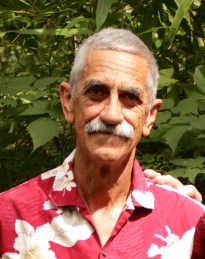 Today is my husband, Fred’s birthday. This behind-the-scenes guy goes out of his way to make life easier or more fun for others. Fred does Costco runs and picks up Cobs Bread donations to be distributed to those in need. He plays Hide-and-Seek in the dark with our grandkids and me and knows how to die very ungracefully when he loses at Exploding Kittens (to the great delight of our grandchildren). This man’s love mischief knows no bounds. My Handsome Fellow makes great curry, fixes the car, maintains my bike and reads every post I write before it’s published. He also gives sweet kisses.







 Here’s Marina making the seafood crepes in the picture above for one of our monthly Scrabble and dinner nights. Marina, Wendy, Ingrid and Ed are excellent cooks. They enjoy creating delicious meals that are a delight to see, smell and taste. Although I am somewhat intimidated by their enthusiasm and artistry, their love of cooking doesn’t keep them from appreciating and enjoying what I cook too. They inspire me to have as much fun preparing food as I do finding seven letter words.

 Bianca Schiavone teaches fitness at