Where Do You Want to Live?

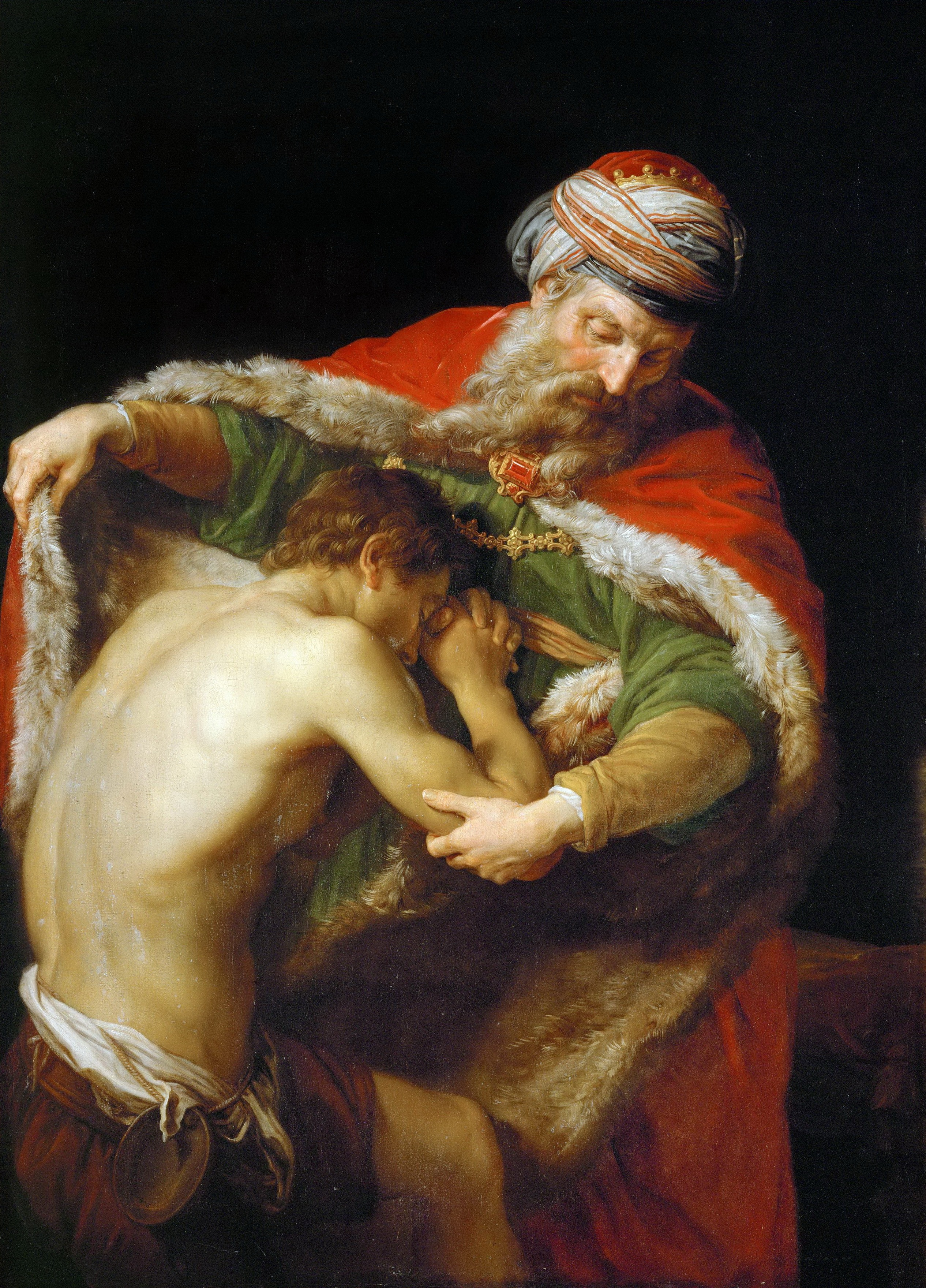
I have no doubt that God was speaking to me—in the incident with my cell phone, in conversations with friends, and in the scriptures I read. The message is clear: “You are precious to me. I will look after you, no matter what happens. I will be your safe place.”

I like what God is saying, but why is God telling me this?

Lord, what have you seen and heard in my life that prompted you?

jesus-calms-the-storm (1)

As I think about that question, I am drawn to the story of Jesus calming the storm.

The disciples follow Jesus into a boat to cross the Sea of Galilee. Peter, Andrew, James and John are seasoned fishermen living in a culture that historically fears the sea. They know how precarious this crossing can be; they have their superstitions. But Jesus’s parables are changing their world view. And his miracles!  Jesus healed so many people. If he can do that, he can do anything. With budding confidence they relax and set sail. Jesus, exhausted from the crowds, falls asleep with his head on a pillow.

Dark clouds appear on the horizon. The wind picks up; waves slap against the hull of the boat. The disciples reef the sail. A few minutes later in the driving rain, they take it down all together. Waves spill over the gunwale and threaten to swamp the boat. Chilled to the bone, the disciples bail water as fast as they can. But they can’t empty the boat of their panic. As Anthony Bloom put it in Beginning to Pray, the storm that is raging around the disciples now rages inside them.

The disciples grab Jesus and shake him. “Master, save us. Don’t you care if we drown?”

Jesus wakes up, takes stock of the situation, and looks at them. The disciples read his face: he’s not afraid, but he’s not happy either. He rebukes them for their lack of faith, then stands up and tells the storm to pipe down.

Then there is “a great calm” (Mark 4:39 ESV). The disciples turn to each other and say, “Who is this guy?”

What was God saying to the disciples as they listened to their lives that day? What is God saying to me?

Was the point that God is asleep, and when we are in trouble we’d better wake God up or we’ll die? If that were true, Jesus would have thanked the disciples instead of scolding them.

And if they were just supposed to trust Jesus in everything, why did he calm the storm? Why didn’t Jesus just say, “Don’t worry, you can trust me. We’ll weather this storm together”?

I am sure there is more than one reason why Jesus calmed the storm—the main one being to answer the question: “Who is this? Even the wind and the waves obey him!” (Answer: God.)

But I begin to see another reason why Jesus did it.

Jesus wanted the disciples to have faith and trust in him. But maybe the disciples had no clue what that kind of trust looks like… or feels like. So Jesus showed them.

In way he was saying to them (and to me):

storm4   breath

“That’s what’s in you.                                       This is what’s in me.

Now, where do you want to live?”

© Esther Hizsa, An Everyday Pilgrim 2013
Unauthorized use and/or duplication of this material without permission from Esther Hizsa is strictly prohibited. Excerpts and links may be used provided there is a link to the original content and credit is given as follows: © Esther Hizsa, An Everyday Pilgrim 2013 http://www.estherhizsa.wordpress.com.
Posted in Helpful Images, Popular Posts, Stories | Tagged , , , , , , | 1 Comment

Hidden in the Cleft of the Rock

One Friday I misplaced my cell phone.

I went back to Heidi’s place where I thought I had left it. I was about to go inside to find it when Fred said, “Look down.”

My cell phone was in the gravel behind our car. There was no doubt that we’d driven over it. I picked it up, wiped off the dust, and tested it out. It still worked!

Roadkill

I couldn’t believe it. It must have fallen into a hollow of gravel, so the full force of the car didn’t crush it.

In the days that followed the incident kept coming to mind, as if God wanted me to notice something about it. as if God was saying something in it.

Monday in a prayer retreat I was drawn to Psalm 62. It speaks of God being our refuge and our fortress. At the close of that retreat, I mentioned what happened with my cell phone and a friend said, “It’s like you’ve been placed in the cleft of the rock.”

She was referring to Exodus 33 when God hid Moses in the cleft of the rock while his glory passed by or Song of Songs when the lover finds his beloved in the cleft of the rock and delights to see her face and hear her voice. The image of the cleft in the rock speaks of a God who protects us, delights in us, and cherishes us. That was Monday.

Tuesday I mentioned what happened with my cell phone to my spiritual director. “It reminds me of that Bible verse about God being with us when we pass through deep waters.”

“The verse in Isaiah,” she said.

heart stones Portone Pallatin Flikr

“Yes. I think God is telling me: ‘Even if you feel like you’ve been run over by a car, I will be with you. You’ll be all right.’”

Thursday morning three scriptures “happened” to be in my daily reading. The first one was Psalm 28:7, “The Lord is my strength and my shield; my heart trusts in him, and he helps me.”

The second one was 2 Corinthians 4:16-18, Therefore we do not lose heart. Though outwardly we are wasting away, yet inwardly we are being renewed day by day. For our light and momentary troubles are achieving for us an eternal glory that far outweighs them all. So we fix our eyes not on what is seen, but on what is unseen, since what is seen is temporary, but what is unseen is eternal.”

And the third one was (you can see this coming)…

Rushing water Simon Varwell

Isaiah 43:2,
“When you pass through the waters,
I will be with you;
and when you pass through the rivers, they will not sweep over you.
When you walk through the fire,
you will not be burned;
the flames will not set you ablaze.”

Do you think God was trying to tell me something?

Credits:
“Cell Phone” by Fred Hizsa. Used with permission.
“Heart Stone” by Portone Pallatin. Used with permission.
“Rushing Waters” by Simon Varwell. Used with permission.
© Esther Hizsa, An Everyday Pilgrim 2013
Unauthorized use and/or duplication of this material without permission from Esther Hizsa is strictly prohibited. Excerpts and links may be used provided there is a link to the original content and credit is given as follows: © Esther Hizsa, An Everyday Pilgrim 2013 http://www.estherhizsa.wordpress.com.
Posted in Helpful Images, Popular Posts, Stories | Tagged , , , , , , , , , , | 3 Comments

The Dead Alternator Speaks

Frederick Buechner once said that if he were to sum up in a few words the essence of everything he was trying to say both as a novelist and as a preacher, it would be this: Listen to your life.

So I’m listening to my life, particularly what God might be saying to me in the incident I wrote about last week when our alternator died.

When that happened I was reading Living Gently in a Violent World by Jean Vanier, founder of L’Arche communities, and Stanley Hauerwas, a professor of theological ethics. They made compelling arguments for the importance of creating and maintaining diverse, unhurried, and stable communities where each person feels accepted and celebrated. The problem of the dead alternator not only illustrated what Vanier and Hauerwas were saying but emphasized the extent to which God goes to create these communities.

A violent world has taught me to value efficiency, economy, and independence above all. If I can solve a problem quickly, cheaply, and without asking anyone for help, I will have “done it right.” But that day in Mazama, Jesus seemed to be saying, “Really? And what does that get you? Proud and alone with a little more money in your wallet. Wouldn’t you rather slow down, admit you need help, and get to know your neighbour?”

Core members of L’Arche community are developmentally disabled. To join this community you need to be willing to slow down and take two hours to eat a meal with a core member or bathe them. Hauerwas dares us to believe that “we have all the time we need to do what needs to be done.”

Thus endeth the lesson of the dead alternator.

Or so I thought. A week later it spoke again.

I spent a sleepless night. I had hoped a certain well-known author would consider writing a foreword for my book. But the long silence after the second e-mail said the one word I didn’t want to hear: no. Disappointment hounded me until I remembered all the kind people that had stopped at the Mazama store that I asked for a ride to Omak. They had all said no.

On retrospect I was glad they did. Their collective “no” spared us from needlessly making the trek home to get the spare alternator and agonizing over how to get a rental car over the border. A no can be a good thing, a good gift.

I went to sleep comforted by that thought.

The next day the dead alternator had still more to say to me.

I was biking home from seeing my spiritual director when I ran over a two-inch nail. It went right the tire and out the sidewall. I turned my bike over and, with a fair bit of effort, pulled out the nail. I replaced the inner tube then biked the remaining twenty-two kilometres back feeling proud of my accomplishment.

When I got home and showed the nail to Fred, he was amazed I made it home with two holes in my tire.

“Good thing we have a spare tire,” I said.

That’s when we discovered we didn’t. In fact, we travelled our whole vacation without a spare along and my tires are 650s and hard to find.

I was pretty ticked off. “You promised you would always bring a spare along when go on bicycling trips. What if this happened when we were on a big ride with my brothers and sister?”

Then I caught myself worshipping the idol of  “efficiency, economy and independence” again. What if that had happened? Would that have been so bad? The dead alternator reminded me that Jesus is with us in every eventuality—and that he often brings a surprise along.

photo by AY

 “Listen to your life. See it for the fathomless mystery it is. In the boredom and pain of it, no less than in the excitement and gladness: touch, taste, smell your way to the holy and hidden heart of it, because in the last analysis all moments are key moments, and life itself is grace.”
                     – Frederick Buechner, Now and Then: A Memoir of Vocation

Photo Credits:
“Jean Vanier and John Smeltzer of L’Arche Daybreak” from Wikipedia Commons.
“Misty Road” by Anne Yungwirth. Used with permission.

© Esther Hizsa, An Everyday Pilgrim 2013
Unauthorized use and/or duplication of this material without permission from Esther Hizsa is strictly prohibited. Excerpts and links may be used provided there is a link to the original content and credit is given as follows: © Esther Hizsa, An Everyday Pilgrim 2013 http://www.estherhizsa.wordpress.com.

Posted in Ignatian Spirituality | Tagged , , , , , , , , | 2 Comments

It Takes a Dead Alternator to Raise a Village

leduc-family1

My stomach felt queasy. How was this was going to work out?

We were camping in Washington State when the alternator of our ’91 Mazda died. At least that’s what Fred suspected after he checked under the hood.

“The kicker is that I have a spare alternator sitting at home,” he sighed.

Home was three hundred kilometres away and Winthrop, the nearest town, was thirty. We placed the dead alternator in a bike pannier, put on our biking clothes, and headed south to Winthrop to find a mechanic.

Ten kilometres away we discovered Mazama and its amazing general store with a gas station, locally roasted coffee, ice cream, pottery, organics, freshly baked bread, bike rentals—and a pay phone with a phone book, no less. We called the only garage in Winthrop and found out that the mechanic wouldn’t be in until Monday. It was Friday and we needed to be in Canada to meet up with my siblings by Monday. Before Fred hung up, he asked about car rentals. The nearest agency was in Omak, a hundred kilometres east.

“The part won’t likely be in until Tuesday,” Fred surmised. “ A new one costs a couple of hundred dollars and shipping would double the price. I guess I’ll have to hitchhike to Omak, rent a car, and go home and get the spare.”

My heart sank. “Maybe someone could bring it down to us?” I suggested.

“Not likely.”

“It’s worth a try.” I swallowed my pride and phoned our daughter.

“Ooh, that would be fun. Call me back in twenty minutes; I need to check a few things,” she said.

For twenty-five minutes I enjoyed the idea of my daughter and her family joining us for the weekend. But that feeling evaporated when Fred called her back. “That’s all right,” he said. “Don’t feel bad. We’ll manage.”

God, I know that you are with us in this. What should we do?

I made a few more calls, but no one was available to make the drive.

Time was ticking, so I began approaching anyone and everyone who stopped at the store and asked them for a ride to Omak. But no one was going east. 

Meanwhile, Fred struck up a conversation with another cyclist. “I’ve hitch-hiked for years in this area and it’s very difficult to get a lift that way,” he said. “And if you do, there is no guarantee you would want to ride with the person offering to take you. I’d drive you myself, but I have guests coming from Seattle.”

“Maybe someone around here would loan us their car,” I said wondering if this fellow might.

The cyclist looked at me hard. “Most people around here keep to themselves. I lived here two years before someone would loan me their car. You don’t have two years.” He paused to let that sink in then continued. “I know who can help you: Liam, the mechanic. He can fix anything. He’ll get you on the road in no time.”

Yeah, but at what cost? I thought.

“I’ll call him,” he said, but he didn’t have Liam’s number. Nor did the staff inside the store that sees him come in every day for coffee. “No worries,” the cyclist said, “I’ll bike down to his place. It’s just five miles down the road. I’ll get him to call you. Stay by the phone.”

Twenty minutes later, I was about to call Heidi back and plead our case when I heard a fellow say, “You must be Fred.”

After a short conversation and a look at the faulty alternator, Liam was on the phone to an auto parts store in Twisp, a town just south of Winthrop.

“They can get the part in tomorrow at 9 a.m. It’s kind of pricey though,” Liam said. “A hundred and twenty bucks.”

“And the shipping?” I asked.

“That includes the shipping,” he said. “Would you like them to order it?”

“Yes!” we said.

Liam offered to drive us down the next day to pick it up, and he didn’t want more than the cost of the gas to do it.

“You’ve been generous with your time already. “ I said. “ It’s OK. We can bike down and get it.”

Liam sized up the grey-haired couple he was talking to and looked sceptical.

“Really, it’s not that far,” I said.

Fred offered to give Liam something for his time, but he wouldn’t hear of it. He left us his phone number and instructions about what to do if the car still didn’t run with the new alternator.

We biked back to the campsite somewhat relieved.

After supper Shirley and EJ came over from two campsites down. We met them the night before when they needed help getting their thirty-year-old Coleman stove to work. When I had heard they planned to hike up Cutthroat Pass, I asked them about the snow levels and wondered if it was still too early in the season to get up to the pass. But they were confident. “We’ll come by tomorrow and tell you how things go,” Shirley said.

Over a glass of wine, we heard about the hike and their lives. Both women are in their sixties. EJ teaches special education in Hawaii and has travelled extensively. Shirley teaches classes in justice at the University of Western Washington and has recently won a humanitarian award for years of advocating for refugees. When they heard about our day they said they’d drive us down Twisp to pick up the new alternator.

“We’re too tired to go on another hike tomorrow anyway,” EJ said.

Was I detecting a theme? God’s intentions couldn’t have been more obvious.

Once again I swallowed my pride. “That would be great,” I said.

The next morning we got into EJ’s old Toyota and shared stories all the way to Twisp and back. Before the women went on their way, we exchanged e-mail addresses and hugs.

Fred installed the new alternator and started the engine. No warning lights. He wiggled a happy dance behind the wheel.

We talked about what happened for the rest of the weekend. “You know, if we’d just stayed calm and thought things through, we could have solved the problem ourselves without needing anyone’s help,” I said. “But I’m kind of glad we didn’t figure it out.”

“Otherwise we never would have met four incredible people,” Fred replied. “And that would have been a shame.”

I couldn’t have agreed more.

Photo Credit:
LeDuc family. Used with permission.
© Esther Hizsa, An Everyday Pilgrim 2013
Unauthorized use and/or duplication of this material without permission from Esther Hizsa is strictly prohibited. Excerpts and links may be used provided there is a link to the original content and credit is given as follows: © Esther Hizsa, An Everyday Pilgrim 2013 http://www.estherhizsa.wordpress.com.
Posted in Stories | Tagged , , , , , , , , | 2 Comments

This Journey Begins

When we pray, God is usually silent. This makes relating to God awkward, to say the least.  Books have been written over the centuries that tell us how to overcome this problem, but few show us. No matter how many books on prayer I read, I continued to cry out, “But what does that look like for me right now?”

God heard my prayer and answered by showing me the stories in my life. As I paid attention to these stories, I learned a lot about how God speaks and what he/she has to say. Over the past ten years I have collected over sixty true stories, essays and poems that describe how I have interacted with God on life’s journey and entitled the collection: Stories of an Everyday Pilgrim. I hope to publish this book soon, and I will keep you posted on its progress. Click on “Published Works” to read a few of the stories.

But in the meantime life keeps happening and I keep bumping into God.

Ed Dahl

I’m guessing you have similar experiences. So why don’t we journey together? We can share our stories about how we hear the still small voice of God in our day-to-day life.

Our stories help each other—especially the tired, discouraged, or disillusioned—find our way home to God. We can down a story in five minutes, digest it while we get dressed and brush our teeth. And while we’re teaching a class, standing in a line up, or preparing a meal, something in the story we just read makes its way into our bloodstream, flows through the heart of our experiences and—when we least expect it—emerges with a gift.

So, at least weekly, I will post a story, poem, or thought that I suspect has come from God. I look forward to hearing what that leads to in your life.

BTW the background photo is by Ed Dahl who also happens to be an amazing chef and musician. Thanks, Ed & Ingrid, for the great 5 course mushroom extravaganza Wednesday night. It almost made losing at Scrabble ok.

Photo Credit:
Ed Dahl. Used with permission.
© Esther Hizsa, An Everyday Pilgrim 2013
Unauthorized use and/or duplication of this material without permission from Esther Hizsa is strictly prohibited. Excerpts and links may be used provided there is a link to the original content and credit is given as follows: © Esther Hizsa, An Everyday Pilgrim 2013 http://www.estherhizsa.wordpress.com.
Posted in Popular Posts, Stories | Tagged , , , , , , , , , | 30 Comments