Living Out of Our Stories

“We live out of our stories,” Monty Williams, SJ said to our little group of Ignatian directors. We listened intently to this wise, amiable priest who was born in Guyana seven decades ago.

Father Williams explained that each of us has a blessed history made up of experiences that make us feel good. These stories affirm that God knows, loves and values us.

We also have a conversion history. This history contains the difficult circumstances or events we lived through. We look back at what happened and see how God worked in it to transform us or the situation.

In addition to these histories, we have an unredeemed history. This one contains the stories that are unresolved in our lives. Awful things happen to us that tell us we are worthless, unlovable, ugly or bad. Some of these stories have no happy endings and continue to rob us of life.

“In the first week of the Ignatian Exercises, the retreatants who pray the exercises see how they live out of their unredeemed stories and how those stories trap them. In their prayers, they become overwhelmed by sin–theirs, other people’s, our culture’s and humankind’s. They discover that they don’t and can’t control their lives or protect themselves from horrors or terrors. Their security in themselves or their system falls apart and they become aware of their utter dependencies.” When that happens, he explained, they can feel like they’ve lost themselves, like they’re falling off a cliff, about to drown or be shattered into a million pieces. “Yet, in that moment, as they continue to wait on God in prayer,” Williams says, “they discover that they are held.”

“You can’t give someone the experience of being held by God,” he says. “You can only give them the space to discover it for themselves.”

I sat there with the other directors, riveted to his words.

I know that moment of feeling shattered and then discovering that I’m held. While offering spiritual direction, I’ve sat with others as they have discovered it, too. It doesn’t just happen in the Ignatian Exercises; it happens in everyday life. I wrote about it before I even understood it.

Water II

will I
be poured out?   am I
available?   can I
be used   overlooked   undervalued?

as I
wonder
will I?   am I?   can I?
I am
dropped
and
splatter
everywhere

outside myself
I devise ways
I could have fallen
without
falling apart

while you
collect my
droplets in the mist

* * *

Love Mischief for the World

Geoffrey “Monty” Williams, SJ’s love mischief is getting people excited about a five-century old document called the  Spiritual Exercises of Ignatius of Loyola. Williams is a highly regarded priest, scholar, and guide to Ignatian spirituality. He serves as a faculty member at Regis College at the University of Toronto and is Co-Chair in the Diploma in Ignatian Spirituality at the same school. Williams, a frequent retreat leader and speaker, travels around the world and has written many books including his newest one, The Way of the Faithful: The Dynamics of Spiritual Desire (2017).

What love mischief are you and God doing to care for the world?
Let me know and I will include it in an upcoming post.

Credits and References:
“Forlorn” by wan mohd. Used with permission.
Water II reprinted from Stories of an Everyday Pilgrim by Esther Hizsa © 2015
“Droplet” by Anne Yungwirth. Used with permission.
Photo of Geoffrey “Monty” Williams, SJ used with permission.
© Esther Hizsa, An Everyday Pilgrim, 2017.
Unauthorized use and/or duplication of this material without permission from Esther Hizsa is strictly prohibited. Excerpts and links may be used provided there is a link to the original content and credit is given as follows: © Esther Hizsa, An Everyday Pilgrim 2013-2017.  http://www.estherhizsa.com 
Posted in Ignatian Spirituality, Prayer, Reflections, Spiritual Direction | Tagged , , , , , , , , , , , , | 1 Comment

Saved

O Sapientia

I cannot think unless I have been thought,
Nor can I speak unless I have been spoken.
I cannot teach except as I am taught,
Or break the bread except as I am broken.
O Mind behind the mind through which I seek,
O Light within the light by which I see,
O Word beneath the words with which I speak,
O founding, unfound Wisdom, finding me,
O sounding Song whose depth is sounding me,
O Memory of time, reminding me,
My Ground of Being, always grounding me,
My Maker’s Bounding Line, defining me,
Come, hidden Wisdom, come with all you bring,
Come to me now, disguised as everything.

© Malcolm Guite from Sounding the Seasons,
Canterbury Press 2012 www.malcolmguite.com

I began my morning prayer with this sonnet by Malcolm Guite. In it, I heard the wonderful truth that God is the source of my becoming.

After I returned from my retreat at Queen of Peace monastery, I felt conflicted and unsettled, despite having had many sweet encounters with Jesus in my prayers.

In spiritual direction, I described the joyous, committed way of life and worship of the Dominican nuns. Their beautiful desire to be wholly God’s included a willingness to humble themselves, beat their breasts and ask forgiveness for the sins that were “my fault, my own grievous fault.”

I attended mass and sung prayers daily in the stunning sanctuary, but I wasn’t drawn in.

“I felt like I didn’t belong there,” I told my director.

I knew this was significant, but I didn’t know why until I sat with this poem and a memory returned from my retreat.

In one of my prayers, I was with Mary at the Annunciation. After Angel Gabriel left, Mary and I marvelled that God was coming to save everything.

I said, “God’s going to save the rich and the poor, the outcast and the proud, our nation, our families. . .”

“And you too,” Mary added.

I was perplexed and astonished. God has already saved me and God is still saving me.

Now I know why I felt conflicted. The sisters’ ardent devotion somehow led me to believe that I was responsible for my transformation. If I’m not the person I should be, then who’s to blame? Certainly not God.

I’d begun to wonder if I’d missed out on so much more in life because of my sin, my stubbornness, my pride.

But that morning, the Spirit told me not to give it another thought. I cannot thwart God’s good work. I can trust that, in Christ, I’m becoming my true self.

How is it that I can be told what I already know and my throat throbs and tears come as if I’ve never heard it before?

I sat there with tears rolling down my cheeks over the good news that Jesus is saving me and he’s doing it perfectly.

My soul magnifies the Lord,
  and my spirit rejoices in God my Saviour.
–Luke 1:46,47

* * *

Love Mischief for the World

Malcolm Guite’s work and presence is inspiring and impacting the world. Malcolm is a priest, chaplain, and teacher at the University of Cambridge. He’s also a poet and singer-songwriter. His publications include What do Christians Believe? (Granta 2006); Faith, Hope and Poetry (Ashgate 2010, paperback 2012); Sounding the Seasons: Seventy Sonnets for the Christian Year (Canterbury 2012); The Singing Bowl: Collected Poems (Canterbury 2013); Waiting on the Word (Canterbury 2015); and Parable and Paradox (Canterbury 2016).

What love mischief do you see God doing with others to care for the earth?
Let me know and I will include it in an upcoming post.

Credits and References:
“Annunciation” by Fra Angelico, 1437. Wikimedia. Non-commercial usage allowed.
“The Nativity” 1890-1910 by Franz Mayer & Co (detail) photo by Plum leaves. Used with permission.
“O Sapientia” © Malcolm Guite from Sounding the Seasons, Canterbury Press 2012 www.malcolmguite.com and photo of Malcolm Guite used with permission.
© Esther Hizsa, An Everyday Pilgrim, 2017.
Unauthorized use and/or duplication of this material without permission from Esther Hizsa is strictly prohibited. Excerpts and links may be used provided there is a link to the original content and credit is given as follows: © Esther Hizsa, An Everyday Pilgrim 2013-2017.  http://www.estherhizsa.com
Posted in Christmas, Ignatian Spirituality, Prayer, Reflections | Tagged , , , , , , , , , , , , | Leave a comment

Live the Question

The most striking image I had during my eight-day retreat came when I prayed with the Nativity. After the Holy Child was born, Joseph delivered the placenta. He held this once vital organ in his hands and didn’t know what to do with it. What did people do with placentas in the first century?

Never mind that; why was the placenta in the scene at all? I’ve imagined this story hundreds of times but never thought about the placenta–even after watching six seasons of Call the Midwife. That made me pay attention to this detail. Perhaps something once life-giving is no longer needed.

The same message was repeated two more times. In a homily at Queen of Peace, our Director, Father John O’Brien, pointed out that manna came to the Israelites only when they ran out of the bread they’d brought from Egypt. When I prayed with the Wedding at Cana, I noticed that Jesus turned water into wine only when the host ran out of his supply.

I had more curious encounters in my prayers and wondered how they all fit together.

At Jesus’ presentation at the temple, Anna turned to me said, “You too are a woman called to prayer.”

As I sat by the Jordan deliberating whether I should heed John’s call and be baptized, Jesus grabbed me by the wrist and echoed the words I just prayed. “You say you want to see me clearly, love me dearly and follow me nearly. Well, you do. So, come on. Let’s do it.”

We both went under the water, and I wondered, What am I dying to? What am I rising to?

I keep thinking about the placenta. What is unnecessary in my life? Is it control? Anxiety? Half-heartedness? Is it something I own or do? Nothing touches a big Yes in my soul.

I have to leave you hanging. I really don’t know. And it’s pointless to try to figure out what God hasn’t revealed. As Rilke says, “Do not now seek the answers, which cannot be given you because you would not be able to live them. . .  Live the questions now.”

Be patient toward all that is unsolved in your heart and try to love the questions themselves, like locked rooms and like books that are now written in a very foreign tongue. Do not now seek the answers, which cannot be given you because you would not be able to live them. And the point is, to live everything. Live the questions now. Perhaps you will then gradually, without noticing it, live along some distant day into the answer.― Rainer Maria Rilke

* * *

Love Mischief for the World

This week I’d like to honour the love mischief of questions. We ask: Why isn’t God healing me? How come I didn’t see this before? Should I leave my job? An answer doesn’t come readily, yet as we live that question, like water in a river, it widens our banks and opens us to new possibilities. Sometimes there is a question under the question. Someone may ask, “How can I deal with my anger?” And God asks, “What are you angry about?”  Another may ask, “I used to love going to church, but now it does nothing for me. What’s wrong with me?” And God may say nothing until you ask a different question.

What love mischief are you and God doing to care for the earth?
Let me know and I will include it in an upcoming post.

Credits and References:
“The Nativity” by Gerard van Honthorst 1592–1656 from Wikipedia Commons.
“Closed until further notice” by abhijit chendvankar. Used with permission.
“That is the question” by Alan Levine. Used with permission.
© Esther Hizsa, An Everyday Pilgrim, 2017.
Unauthorized use and/or duplication of this material without permission from Esther Hizsa is strictly prohibited. Excerpts and links may be used provided there is a link to the original content and credit is given as follows: © Esther Hizsa, An Everyday Pilgrim 2013-2017.  http://www.estherhizsa.com
Posted in Ignatian Spirituality, Prayer, Stories | Tagged , , , , , , , , , , , , | Leave a comment

Sin, Hell and Roller Derby

“I’d like you to pray with #50 in the Spiritual Exercises: the sin of the angels,” my director instructed on the third day of my eight-day retreat. He also assigned three more prayer periods focussing on sin and hell, mine in particular.

I groaned inwardly. I’ve never liked praying with these particular exercises, let alone assigning them to others. It’s hard not to believe that Ignatius wants to scare us into compliance.

I confessed that I didn’t have a literal view of hell; he assured me one wasn’t required. We both agreed that living in the illusion that we are on our own in this world is hell enough.

“I guess I’ll just have to trust Ignatius,” I said, causing the newly ordained Jesuit to raise an eyebrow.

I went back to my room at the retreat house at Queen of Peace monastery, closed the door and re-read Ignatius’ instructions.

As I sat in the silence, I pictured angels happily answering prayers, sitting by bedsides, and whispering God-thoughts.

Meanwhile, the angels who’d fallen were bitter and resentful. Their sense of abandonment compelled them to needle people until they woke up to the “reality” that they too are on their own.

How often have I been blinded by the illusion that God has abandoned me? I would have never admitted that or even thought it, but my actions spoke for me. And those actions hurt others.

I’ve fallen into hell. Yet every time I have, Jesus rescued me. I couldn’t imagine that he won’t also redeem the angels.

But I know enough about Ignatian prayer not to get caught up in theological arguments. Ignatius invites us to open ourselves to encounter God personally. What sin has been casting me into hell?

At one point on my bike ride to the monastery, I unintentionally went off the pavement onto gravel. I knew, with Gracie’s skinny tires, if I turned too quickly to get back up onto the pavement I could fall. I knew this from experience.

Once Fred and I were riding together when that happened; I ended up with cuts and bruises. I lost my temper and blamed Fred for misguiding me. That memory returned to me now in prayer along with other memories when I yelled at Fred or needled him with criticism. I felt ashamed and sorry for my actions.

Tears came–not from contrition–but from the realization that God and Fred had already forgiven me. For years now, God has been snatching me from the hell of my misbeliefs, quieting my anger and helping me be kind.

It wasn’t my confession that saved me from hell. It was God. Awareness of the impact of my actions was given long after God listened to the fear that drove my anger.

“Fred’s so good to me,” I told my director the next day. “He got up early to take my bike down the stairs for me.” Tears flowing, I told him what happened in my prayer.

He listened intently then gently pointed out that if I were Catholic and he was hearing my confession, he would assign a penance. “Is there something special you could do for Fred?”

A week after I returned home, we went back to Squamish to cycle the roads I’d told him about. But I still hadn’t told him about praying with #50 in the Spiritual Exercises.

As we strolled through the town, we saw a poster with an image of a woman dressed in a hooded red robe and roller skates. An event called The Squamish Inquisition was on that very evening.

“Roller Derby!” Fred exclaimed.

“Uh-huh,” I replied. “You want to go to this?”

“Yeah, yeah, yeah,” he said. “My grandmother and I used to watch it on television when I was a kid.

“Okay,” I said, mustering up a smile. “Let’s do it.”

I finally confessed to him what happened in my prayers and that going to roller derby with him was my penance.

He thought this was hilarious. “You need to write a blog post about this,” he said.

Penance number two. Now you owe me one, Fred.

Love Mischief for the World

Today, Fred, my siblings, and I ride the final leg of our 300 km bike trip from Jasper to Banff. Tonight, all being well, we’ll be soaking in the hot springs and recalling all we’ve seen: marmots, elk and bears; steep canyons, waterfalls, and emerald-blue lakes; and of course miles and miles of trees with one peak after another coming into view. I’m grateful for the love mischief of Parks Canada for protecting these beautiful places for all to enjoy.

What love mischief are you and God doing to care for the earth?
Let me know and I will include it in an upcoming post.

Credits and References:
“Angel Reloaded” by Carlo Scherer. Used with permission.
Banner photo of roller derby from Wikipedia Commons.
© Esther Hizsa, An Everyday Pilgrim, 2017.
Unauthorized use and/or duplication of this material without permission from Esther Hizsa is strictly prohibited. Excerpts and links may be used provided there is a link to the original content and credit is given as follows: © Esther Hizsa, An Everyday Pilgrim 2013-2017.  http://www.estherhizsa.com
Posted in Ignatian Spirituality, Prayer, Reflections, Stories | Tagged , , , , , , , , , , , | 2 Comments

Come Away

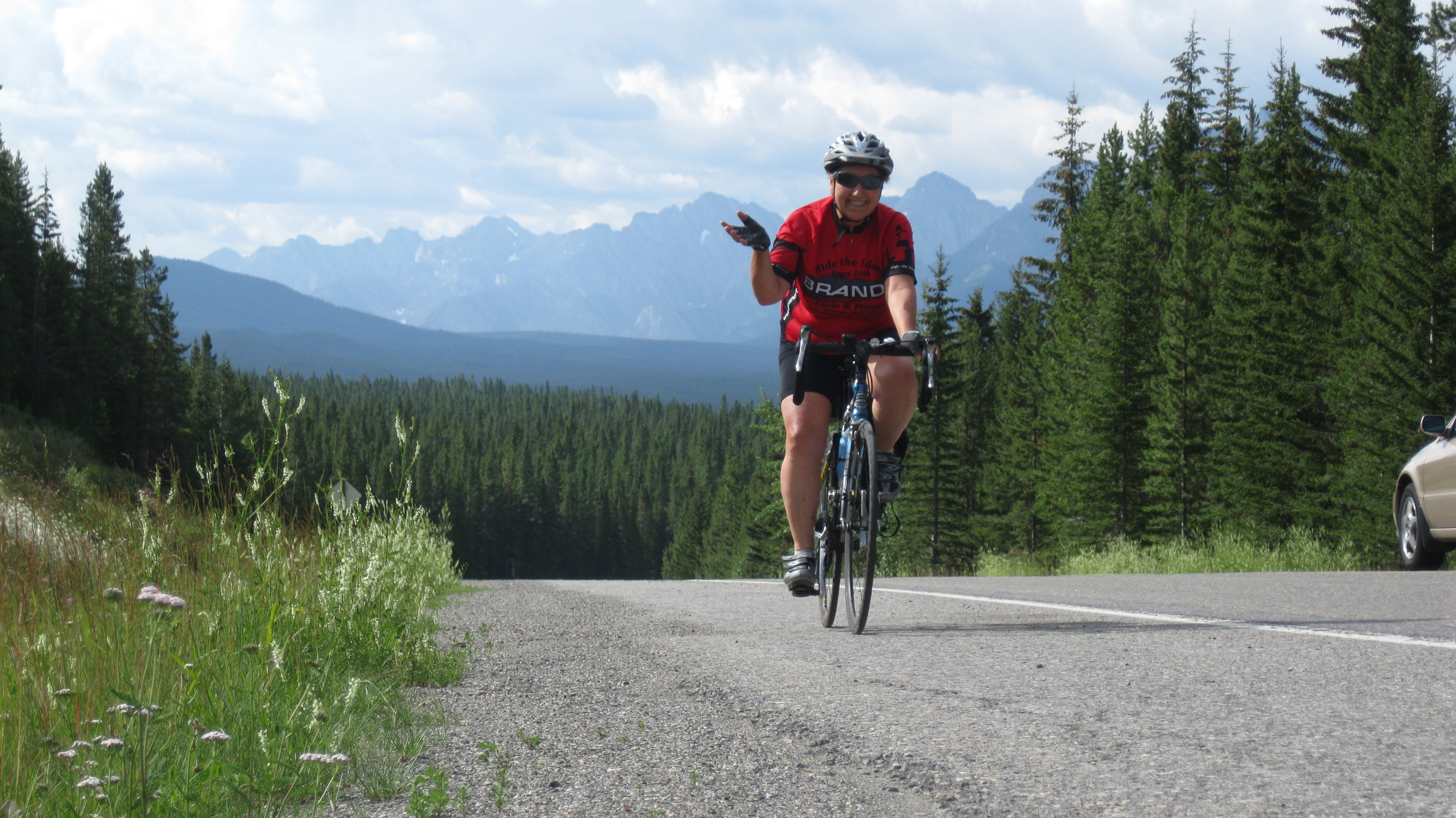
On July 6, I woke up oh darn early, packed my breakfast and lunch and kissed Fred goodbye. I took Gracie (my bike) onto the Skytrain then bus to Horseshoe Bay.

At 7:40 am, I clicked into her pedals and rode north with the Pacific Ocean on one side of me and trees, mountains, and streams on the other. Oh yes, and there were plenty of vehicles rumbling by on Highway 99 to Whistler and plenty of hills, too–forty kilometres of them. But there were less of both on the last leg of my pilgrimage along the bike paths to Brackendale and up Squamish Valley Road.

Sister Mary Regina had warned our little group coming to Queen of Peace for a retreat that bears were about, so I made sure to ring my bell occasionally.

This was going to be my third eight-day retreat with the other Ignatian directors. As in previous retreats, we would be in silence. Like the others, each day I’d see a director who’d assign four or five one-hour prayer periods. And once again, I had no control over what might or might not happen. My job was simply to open myself to God in the solitude and wait.

Glacier laden peaks came into view time and again as I cycled along the Cheakamus River. Aspen and fir trees shaded me from the midday sun and delivered me to the Dominican monastery on Cloudburst Crescent. I passed beehives, vegetable gardens, and meadows on the property then walked Gracie up the steep driveway to the monastery.

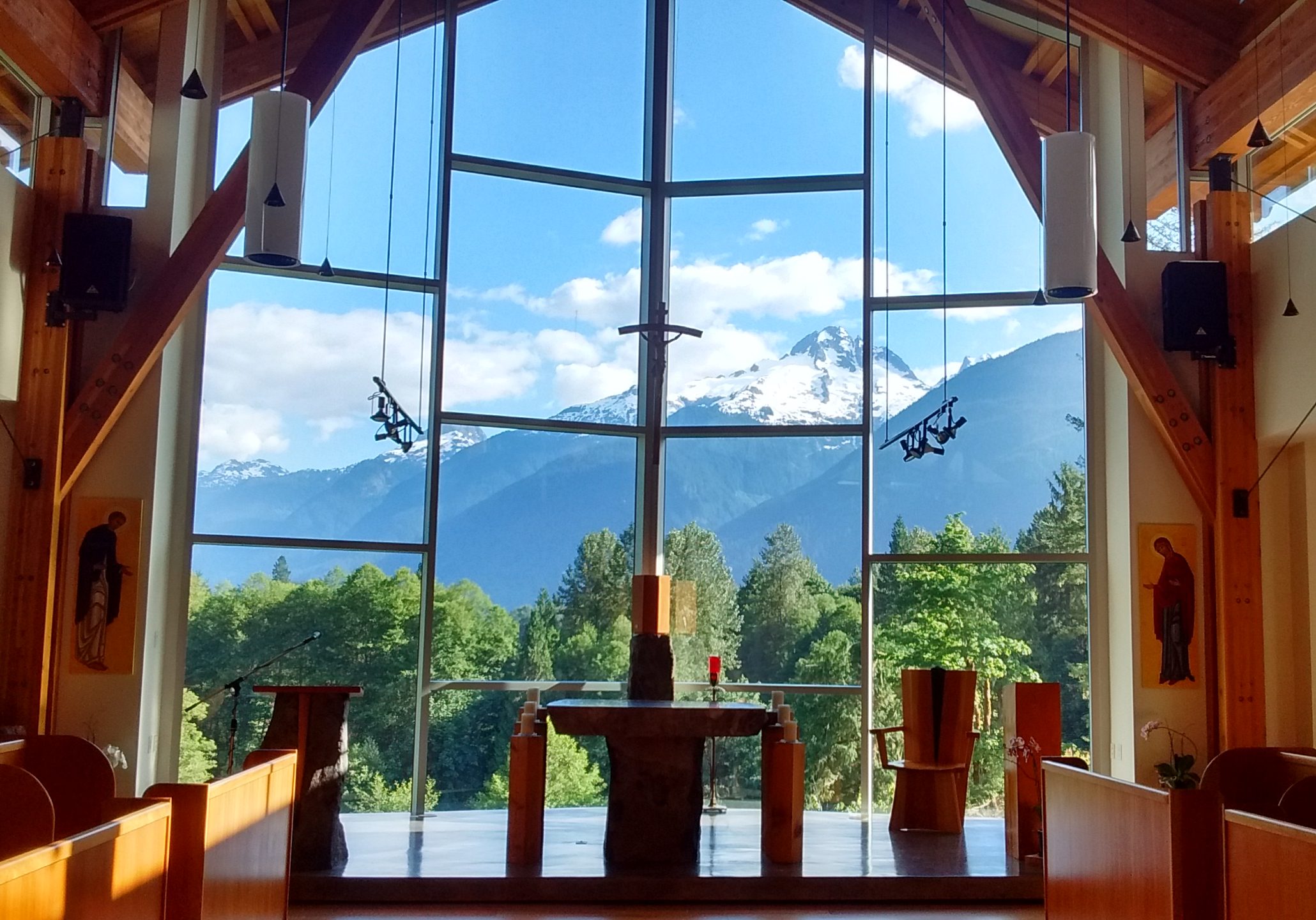
Sister Jean-Marie welcomed me in and suggested I sit in the chapel for a moment to catch my breath. I took off my cycling shoes and entered the sanctuary crafted from wood and stone. I was dumbstruck by the floor to ceiling window that framed the Tantalus mountains.

As I made my way to the retreat house, I was enfolded by even more beauty: flowers and hummingbirds, a bench by a cool stream, paths to explore and a spacious retreat house with big windows and another spectacular view.

But that was for later; all I wanted now was a shower. I stripped out of my sweaty spandex and lingered under the warm water grateful that my sixty-year-old body had gotten me here safely.

Dressed in fresh clothes and feeling deliciously clean and tired, I laid back on the couch and closed my eyes to rest.

I hadn’t even begun to pray, but God had already wooed me.

Come away, my beloved,
    and be like a gazelle
or like a young stag
    on the spice-laden mountains.
–Song of Songs 8:14

***

Love Mischief for the World

It’s one thing to come away on retreat for a week; it’s quite another to be called to a cloistered life. But God has done much love-mischief through the Dominicans who are an order of preachers. So it’s not surprising that both Sisters Mary Regina and Jean-Marie have written books. But so much of what the nuns do is preached without words. “We offer monastic welcome to those who are seeking a time of silence and prayer (cf. Monastic Welcome),” the sisters write. “By providing a beautiful sacred space where people can get away from the ‘rat race’ they experience the ancient monastic rhythm of life with its ebb and flow of liturgical prayer and silence. It is fitting that we should choose a place where the Creator of the Universe can speak to hearts in the midst of Canada’s awesome natural beauty.”

What love mischief are you and God doing to care for the earth?
Let me know and I will include it in an upcoming post.

Credits and References:
“Riding on Gracie” (in the Kananaskis, Alberta) by Fred Hizsa. Used with permission.
Photo of Queen of Peace monastery by Esther Hizsa.
Photo of nuns from the Queen of Peace Website. Used with permission.
© Esther Hizsa, An Everyday Pilgrim, 2017.
Unauthorized use and/or duplication of this material without permission from Esther Hizsa is strictly prohibited. Excerpts and links may be used provided there is a link to the original content and credit is given as follows: © Esther Hizsa, An Everyday Pilgrim 2013-2017.  http://www.estherhizsa.com
Posted in Ignatian Spirituality, Prayer, Reflections | Tagged , , , , , , , , , , , | 2 Comments

The Surprise in the Story

“What’s the surprise in the story?”

That’s the question I’ve learned to ask when I read the parables of Jesus. Darrell Johnson, who taught preaching when I was a student at Regent College, explained that “parable” means something thrown alongside another. Parables are stories about familiar things–baking bread, sowing seed, tending sheep–but with a twist. Something in the story is not what the listener expects to hear.

Take the parable of the friend at midnight. We often miss the surprise, but Kenneth Bailey, who spent forty years in the middle east and studied the culture of that time and place, said that when the neighbour at first refuses to extend hospitality, Jesus’s listeners would have been shocked. It would have been laughable, because in the middle east, especially in the first century, no one would do that. The surprise leads us to the point: to think that God would not get up and give us what we need is laughable.

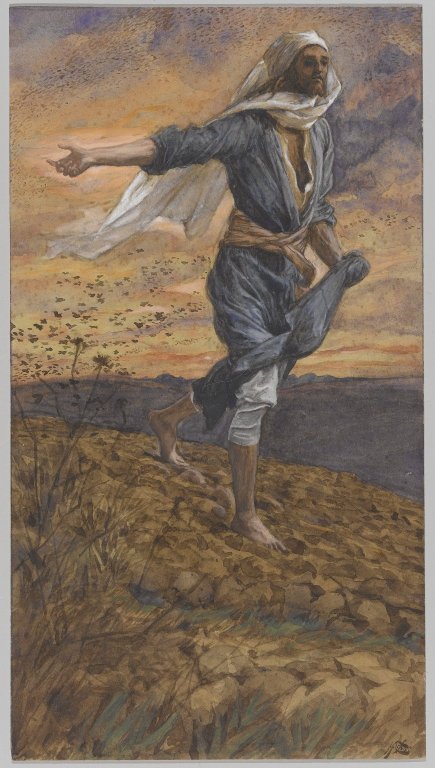
What about the parable of the sower? What’s the surprise in that story?

Perhaps it’s the fact that the sower bothered to scatter seed where it had such little chance of growing.

Perhaps it’s the outrageous statement that the seed could produce thirty, sixty or a hundred fold. Apparently, the best you can hope for is seven.

I pick up these surprising truths that Jesus has thrown alongside me.

God wants to give us what we need.
God keeps coming to the hard-hearted, the shallow, the distracted.
God produces an amazing harvest in us when we open ourselves to Love.

Then I hold those truths even closer:

God wants to give me what I need.
God keeps coming to me as I am: hard, shallow, and distracted.
God invites me to open myself to Love and receive an abundance of God’s self.

 I have come that you might have life and have it to the full.
–Jesus

Love Mischief for the World

On the website Radical Hospitality for the Rest of Us, Elizabeth talks about her love mischief for the world. “I have a passion for building community and one of my great joys is sitting around a dinner table with an eclectic group of people and seeing how really different people find surprising connections as they pass the potatoes.” This passion led Elizabeth to ask: What does Christian hospitality look like for ordinary people who have families or full-time jobs? How can every Jesus follower live this out in their various spheres of influence? This video shares what she learned when she asked those questions.

What love mischief are you and God doing to care for the earth?
Let me know and I will include it in an upcoming post.

Credits and References:
“The Sower”by  James Tissot (1836-1902) [No restrictions or Public domain], via Wikimedia Commons.
Matthew 13:1-9, Luke 11:5-8, John 10:10
“Wheat” by  FarbenfroheWunderwelt. Used with permission.
© Esther Hizsa, An Everyday Pilgrim, 2017.
Unauthorized use and/or duplication of this material without permission from Esther Hizsa is strictly prohibited. Excerpts and links may be used provided there is a link to the original content and credit is given as follows: © Esther Hizsa, An Everyday Pilgrim 2013-2017.  http://www.estherhizsa.com
Posted in Stories | Tagged , , , , , , , , , , , , , , , | 3 Comments

Led Into the Storm

If you haven’t already noticed, I love efficiency. I often look back on the chaotic, haphazard way I’ve arrived at a solution and–with a sigh–see a simpler, more direct route. It’s easy to assume that I did something wrong, it’s bad, and I’m to blame.

I’m thinking along these lines as I pray with the scripture of Jesus calming the storm. Two things stand out when I see myself in the story.

First, I know a storm will come. I’ve read this text so many times, it’s hard for me to imagine it happening for the first time, so I don’t. I get into the boat, fully aware of the inevitable.

The second detail I notice is that the disciples follow Jesus into the boat. He leads them into the storm.

Often I think storms come up because I’ve mismanaged things: if only I’d been more sensitive, if only I’d stopped and thought about that. But in this story, I know I didn’t cause the storm, I’m not responsible for it, and Jesus does nothing to avoid it.

I look back at a recent tempest in my life and see the ridiculous regret that I have: I wished I had acted out of the wisdom I received only after I’d gone through the storm.

Once again, I follow Jesus into the boat; I follow him into the storm.

Last time I prayed with this gospel narrative, I was invited to have faith that Jesus is looking after everything. So this time, I sit down by my sleeping Jesus and trust that he knows what he’s doing.

I sit peacefully on the floor of the boat with my back against the bench where Jesus is sleeping. We’re so close I can hear his breathing. The winds and waves are still, but a tiny storm of emotion rises from my belly into my chest and tears come. I struggle to name what I’m feeling.

It’s not anxiety, not regret, not sadness.

It’s love–love for God.

If you could do it, I suppose, it would be a good idea to live your life in a straight line–starting, say, in the Dark Wood of Error, and proceeding by logical steps through Hell and Purgatory and into Heaven. Or you could take the King’s Highway past the appropriately named dangers, toils, and snares, and finally cross the River of Death and enter the Celestial City. But that is not the way I have done it, so far. I am a pilgrim, but my pilgrimage has been wandering and unmarked. Often what has looked like a straight line to me has been a circling or a doubling back. I have been in the Dark Wood of Error any number of times. I have known something of Hell, Purgatory, and Heaven, but not always in that order. The names of many snares and dangers have been made known to me, but I have seen them only in looking back. Often I have not known where I was going until I was already there. I have had my share of desires and goals, but my life has come to me or I have gone to it mainly by way of mistakes and surprises. Often I have received better than I deserved. Often my fairest hopes have rested on bad mistakes. I am an ignorant pilgrim, crossing a dark valley. And yet for a long time, looking back, I have been unable to shake off the feeling that I have been led–make of that what you will.  
–Wendell Berry,
Jayber Crow

***

Love Mischief for the World

My friend Sean drives a bus in greater Vancouver. He greets each person that boards and bids them goodbye when they leave. We are greeted daily by bus drivers, cashiers, librarians, and receptionists. Often we greet them back without making eye contact or we don’t hear them at all. Hafiz says, “Why not become the one who lives with a full moon in each eye that is always saying, with that sweet moon language, what every other eye in this world is dying to hear.” Hmm. That sweet moon language says, “I see you. You matter. You are loved.”  If we did that, Sean would want to make us passenger of the week.

What love mischief are you and God doing to care for the earth?
Let me know and I will include it in an upcoming post.

Credits and References:
“Friendliest Bus Driver in Vancouver” by The Dewolfs. Used with permission.
Mark 4:35-41
“Tempest Sedata” unable to find artist.
Tempest Sedata Icon, Source unknown.
© Esther Hizsa, An Everyday Pilgrim, 2017.
Unauthorized use and/or duplication of this material without permission from Esther Hizsa is strictly prohibited. Excerpts and links may be used provided there is a link to the original content and credit is given as follows: © Esther Hizsa, An Everyday Pilgrim 2013-2017.  http://www.estherhizsa.com
Posted in Ignatian Spirituality, Prayer, Reflections | Tagged , , , , , , , , , , , , | 1 Comment

Rocks in My River

It may be that when we no longer know what to do
we have come to our real work,
and that when we no longer know which way to go
we have come to our real journey.
The mind that is not baffled is not employed.
The impeded stream is the one that sings.
—Wendell Berry

The last line of this Wendell Berry quote caught my attention. The impeded stream is the one that sings. It’s the rock in the river that allows the water to make such a beautiful sound.

Wendell, are you kidding me? Rocks in my river make me swear. I hate it when I’m about to go out and can’t find my keys (again).  A squealing noise in my car, complicated instructions, discovering I’m missing an ingredient in a recipe after I’ve just gone shopping–they all bring out the worst in me.

And those are small rocks, never mind the biggies.

I get it that God often chucks rocks in our river to divert the flow or dislodge new life. I get that I can welcome God’s work in all things. But I hate bumping into rocks and being thrashed about by the turbulence, and I don’t do it gracefully.

Not long after Wendell’s words floated downstream to me, a directee told me about the rocks in her river and her frantic attempts to rest in the flow.

“I feel like I’m a whirlwind,” she said.

“And where is Jesus?” I asked.

“In the middle of it, in the middle of me.”

Minutes before, she told me how she’d experienced Jesus speaking Psalm 139 to her personally. He told her she was knit together wonderfully and that he would be with her no matter where she was.

I pictured Jesus standing in the eye of her stormy being, looking with wonder and delight at the whirling dervish he’d knit together.

That’s how he sees me too. He doesn’t just tolerate me until I come to my senses. He loves me when I’m a senseless brute.

I swear and he hears singing.

I say, “I’m such an idiot” and he says, “That’s my Esther. Isn’t she amazing?”

I was senseless and ignorant;
    I was a brute beast before you.
Yet I am always with you;

you hold me by my right hand.
–Psalm 73:22,23

* * *

Love Mischief for the World

At a potluck barbecue, a woman in our contemplative group asked me about SoulStream‘s Living from the Heart. I told her about the structure and content of the course. “But if you want to know what it was like, you can ask someone who took it,” I said looking at our friend Mei. “It changed my life,” she replied. It changed mine too when I took it ten years ago. A recent participant summed it up this way, “At Living From The Heart, I found a God I could love; as I continued on in the course, I found a God who loved me.”
What love mischief are you and God doing to care for the earth?
Let me know and I will include it in an upcoming post.

 Credits and References:
“Vulcan Stream” by Reza. Used with permission.
“Donkey” by Thomas Breher at Pixabay. Used with permission.
 © Esther Hizsa, An Everyday Pilgrim, 2017.
Unauthorized use and/or duplication of this material without permission from Esther Hizsa is strictly prohibited. Excerpts and links may be used provided there is a link to the original content and credit is given as follows: © Esther Hizsa, An Everyday Pilgrim 2013-2017.  http://www.estherhizsa.com
Posted in Popular Posts, Reflections, Spiritual Direction | Tagged , , , , , , , , , , , | 2 Comments

At This Table

“I’ll start,” says one spiritual director after we blessed the lunches we brought. One by one, we go around the table, sharing what’s been significant to us in the past month.

One speaks of disappointment, another rages at loss, a third savours a gift. At this table, we’re not looking for approval or even understanding; we’re not fearing rejection or judgment. At this table we’re simply listened to and loved.

After lunch we gather in the living room. Alfred begins a short time of reflection with a quote from Wendell Berry.

It may be that when we no longer know what to do
we have come to our real work,
and that when we no longer know which way to go
we have come to our real journey.
The mind that is not baffled is not employed.
The impeded stream is the one that sings.

Silence invites us to let the words release the tension in our souls: our work is not to know, fix or advise. It’s okay to be baffled.

After a quiet “Amen,”  the facilitator for that day divides us into two groups. My group of three returns to the table where we had lunch. It’s my turn to share about an experience of offering spiritual direction; it’s their turn to be baffled and, to quote Douglas Steere, “listen my soul into a condition of disclosure and discovery.”

Being supervised by one’s peers takes a bit of courage. Can we trust them with our soul’s disclosure?

It helps that we regularly remind each other that our focus is not on improving skills or figuring out how to help our directees. Our intent is to hear the fear, longing or desire a direction session stirred up in the supervisee’s soul and bring it into the light of God’s love.

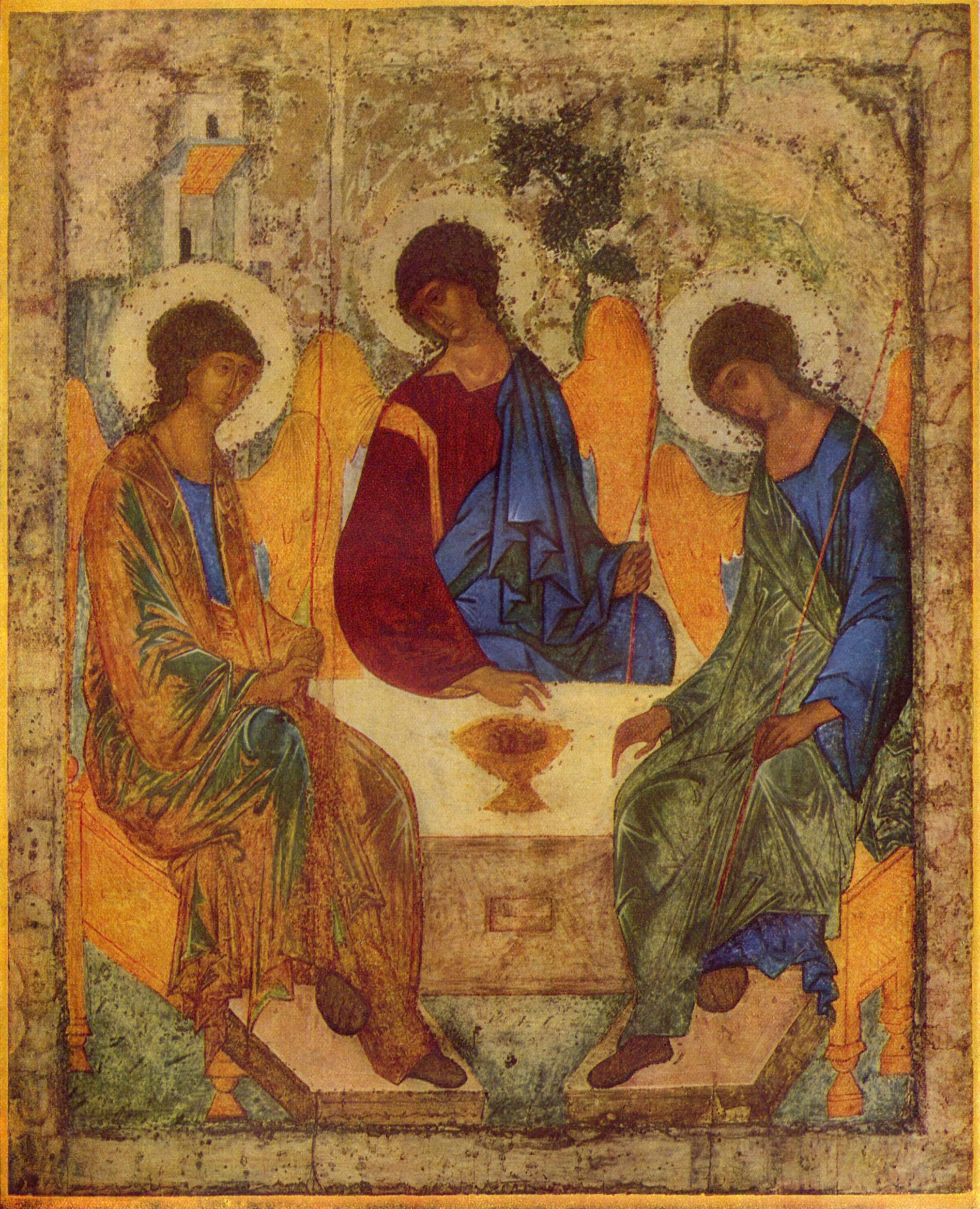
Alfred sits on my left, Mary on my right, like a Rublev icon. Then, protecting the privacy of my directee and maintaining confidentiality, I tell them about the trepidation and restlessness I experienced in a recent session. Our joint listening leads me to notice and make space for my feelings and recall other times I’ve felt this way. Eventually, their gentle questions uncover a crippling fear. Now that it’s on the table, a strange thing happens.

Neither Alfred nor Mary are under its spell. God isn’t either.

I try on their freedom. Instead of trepidation, I’m excited about what God is doing in my directee’s life and in mine.

I think back to the Wendell Berry quote Alfred brought. What if he or Mary had known which way to go and given me advice? They would laugh at the thought of it–not that they wouldn’t have been tempted to save me, but they really didn’t know what to do. What a wonderful gift to bring to the table.

He brought me to his banqueting table,
his banner over me is love.
–a Sunday School song based on Song of Solomon 2:4

* * *

Love Mischief for the World

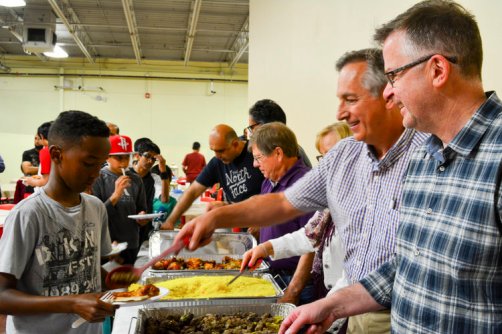
My brother Ron (second from the right) and his wife, Deb, along with others from their church, served an Iftar meal to their Muslim neighbours during Ramadan last month. Pastor Joel Bergeland wrote about it on Mount Olivet’s blog. He writes, “At every turn of the night, we were greeted and recognized. It was difficult for me to cross the dining hall without being stopped multiple times by people wanting to shake my hand and let us know how grateful they were for our presence with them: ‘No one has done this before–what an act of goodwill.’ , ‘You give me hope that we can have a future filled with peace.’ . . .
‘This is God’s house, and that means everyone is welcome here. I hope you, too, feel welcome.’ I did. And judging by the laughter and conversations I saw the other Mount Olivet folks engaged in, they did, too.” God’s banner over us is love!

What love mischief are you and God doing to care for the earth?
Let me know and I will include it in an upcoming post.

Credits and References:
Icon of the Holy Trinity by Andrei Rublev (1360-1430) [Public domain], via Wikimedia Commons
Wendell Berry quote from “The Real Work” by Wendell Berry, from Standing by Words. © 1983.
Quote from Douglas Steere, “To listen another’s soul into a condition of disclosure and discovery may be almost the greatest service that any human being performs for another.” was in On Listening to Another.
Photo from Mount Olivet Lutheran Church in Plymouth, Minnesota, used with permission.
© Esther Hizsa, An Everyday Pilgrim, 2017.
Unauthorized use and/or duplication of this material without permission from Esther Hizsa is strictly prohibited. Excerpts and links may be used provided there is a link to the original content and credit is given as follows: © Esther Hizsa, An Everyday Pilgrim 2013-2017.  http://www.estherhizsa.com
Posted in Reflections, Spiritual Direction | Tagged , , , , , , , , , , , , , , , | 2 Comments

Changes

I smell freshly mown grass and my chest expands. A sense of freedom, gratitude, wonder and delight emerges.

I follow my senses to my childhood, lying on the lawn looking up at the clouds in a blue, blue sky. No more school for two whole months.

In the next breath, I’m taken to another lawn–my parents’ back yard in Vernon on the May long weekend. Dad’s pushing the electric mower, just about done. He’s already tanned, though it’s been a wet spring. He loves his lawns, back and front. Not a weed in them. “I cut the lawn on my 89th birthday,” he says proudly when he sits down to join us. His biking, hiking, and driving days are over, but he can still cut the lawn–for now anyway.

I return from my reverie and look out the window. Up until a month ago, Fred cut this lawn. Birds would follow him, grateful for the food he served up with every pass of the mower.

Now someone younger does the landscaping in our townhouse complex. The birds have a new hero, and I have more time with mine.

Another breath of fresh-cut grass and an old Gordon Lightfoot song comes to mind.

Sit by my side come as close as the air
Share in a memory of gray
And wander in my words
And dream about the pictures that I play, of changes

When I was in my teens, I’d sit on the front steps of my parents’ house in Ontario on warm summer evenings. My whole life spread out like the lawn in front of me–fresh and green. Oblivious to the occasional car passing by on the gravel road, I played my guitar and sang songs like this one, songs of love and loss, freedom and change.

God is still by my side as close as the air, feeding the birds, wandering in my words, and bringing new life in the changes.

God made the moon to mark the seasons,
and the sun knows when to go down.
–Psalm 104:19 (NIV)

***

Love Mischief for the World

On July 1, Canada will celebrate its 150 birthday. On this great occasion, I would like to honour Canada’s Aboriginal Peoples. This image (left) represents the Anglican Church’s solidarity with the indigenous peoples of Canada. The fish and cross were the first Christian symbols. In the middle is another ancient symbol: the medicine wheel. “The circle, being primary, influences how we as Aboriginal peoples view the world,” writes Elder Jim Dumont in Culture, Behaviour and Identity of the Native Person. “In the process of how life evolves, how the natural world grows and works together, how all things are connected, and how all things move forward toward their destiny, Aboriginal peoples see and respond to the world in a circular fashion and are influenced by the examples of the circles of creation in our environment.” Thank you to our First Nations, Inuit, and Métis sisters and brothers for your gifts of wisdom, healing, and forgiveness. May we listen and use what you have given to bring reconciliation to you and to our land.

What love mischief are you and God doing to care for the earth?
Let me know and I will include it in an upcoming post.

Credits and References:
“Long Green Grass” in public domain.
Changes, ©1966 by Phil Ochs, as sung by Gordon Lightfoot
 © Esther Hizsa, An Everyday Pilgrim, 2017.
Unauthorized use and/or duplication of this material without permission from Esther Hizsa is strictly prohibited. Excerpts and links may be used provided there is a link to the original content and credit is given as follows: © Esther Hizsa, An Everyday Pilgrim 2013-2017.  http://www.estherhizsa.com
Posted in Reflections, Songs | Tagged , , , , , , , , , , , , , | Leave a comment