Good and Glory

Jesus-down-from-Cross-lowf

It is finished. Jesus has died. His body is lowered down from the cross and taken to the tomb.

On Easter Saturday we hold vigil with everyone who is grieving the loss of Christ’s presence. Those bright days of miracles and laughter, of full bellies and awakened hearts are gone. Now, there is only darkness.

Into the darkness we must go.
Gone, gone is the light.

We think: if we had just prayed right, lived right, believed hard enough, that we should be able to raise Jesus from the dead and feel his presence once more. But this dark night dispels that illusion.

Into the darkness we must go.
Gone, gone is the light.

Before he died, Jesus told his friends he would be back. Remember what John said:

The light shines in the darkness,
and the darkness has not overcome it.

Remember when Jesus said that if our children asked us for a fish, we wouldn’t give them a snake. Or if they asked for an egg, we wouldn’t give them a scorpion. He said he knew we would never do that and neither would his Father. God only gives good gifts. So this dark night must be a good gift, a glorious gift.

O guiding night!
O night more lovely than the dawn!

On this holy night, let us light a candle in the deep caverns of our feelings and welcome the darkness that is filled with good and glory.

candle shawn carpenter

Credits and references:
Jesus down from the cross by Michael D. O’Brien. Used with permission.
Gone is the Light by Gord Johnson on Steve Bell’s album Devotion.
John 1:5
Dark Night of the Soul by St. John of the Cross.
I also refer to John 14:28 and Luke 11:11-13.
The phrases “deep caverns of feeling” and “filled with good and glory” are from “Living Flame of Love” in The Collected Works of St. John of the Cross, translated by Kieran Kavanaugh, O.C.D. and Otilio Rodgriguez, O.C.D. with introductions by Kieran Kavanaugh, O.C.D. (ICS Publications, 1979)
Candle by Shawn Carpenter. Used with permission.
© Esther Hizsa, An Everyday Pilgrim, 2015.
Unauthorized use and/or duplication of this material without permission from Esther Hizsa is strictly prohibited. Excerpts and links may be used provided there is a link to the original content and credit is given as follows: © Esther Hizsa, An Everyday Pilgrim 2013, 2014, 2015.  http://www.estherhizsa.wordpress.com
Posted in Easter, Holy Week, Lent | Tagged , , , , , , , , , , , , , | 4 Comments

O Sacred Friend Now Wounded

Crucifixion 2 Michael O Brien

Now you are lifted up and alone, O Sacred Friend. You are every person who has ever been condemned, battered, betrayed, or abandoned. You bear all our suffering and every consequence for the suffering we caused.

“Father, forgive them; they don’t know what they’re doing.”

Forgive them, you say. Me included, I hear. Even now you see the spark of the kingdom in our ugliness, without justifying our violence.

You know full well what I have done, yet when I reach my hand across time and space to touch your face, you do not flinch. I caress your hair, your cheek, your beard as you slip into death. I lay my open palm over your heart, barely beating.

And all that is you flows into me, into us, into every living thing on earth.

Jesus-down-from-Cross cropped-lowf

What language shall I borrow
to thank thee, dearest friend,
for this thy dying sorrow,
t
hy pity without end?
— “O Sacred Head Now Wounded”

Credits and references:
Crucifixion 2 by Michael D. O’Brien. Used with permission.
Luke 23:34 (Msg)
Jesus down from Cross (cropped) by Michael D. O’Brien. Used with permission.
“O Sacred Head Now Wounded,” anonymous.
Banner: The Dark Night of the Soul (cropped) by Rene. Used with permission.
© Esther Hizsa, An Everyday Pilgrim, 2015.
Unauthorized use and/or duplication of this material without permission from Esther Hizsa is strictly prohibited. Excerpts and links may be used provided there is a link to the original content and credit is given as follows: © Esther Hizsa, An Everyday Pilgrim 2013, 2014, 2015.  http://www.estherhizsa.wordpress.com
Posted in Easter, Holy Week, Lent | Tagged , , , , , , , , , | 2 Comments

A Smelly, Sweet Encounter

Christ washing the Disciples Feet

Perhaps it wasn’t until Jesus and his disciples sat down and the evening meal was being served that they noticed the unpleasant aroma of street and feet. I can imagine them all, tired from the day, edgy and irritated with each other, avoiding eye contact with Jesus. Let someone else do it. And someone else did.

Jesus got up, and desiring to show them the depth of his love, took off his outer garment and got a basin of water. I had always pictured a hush coming over the room at that point and each disciple quietly waiting their turn, but seventeenth century painter Dirck van Baburen didn’t see it that way.

In his scene, a cacophony erupts that sounds worse than their feet smell. An older disciple accuses a younger one of shirking his duty. A couple of the men lament, “How did we let this happen?” Peter argues with Jesus while Andrew interferes; Jesus argues back.

And who was going to wash their master’s feet? They likely debated about that, too.

Finally they settled down and returned to their cold dinner. Then Jesus stirred the pot again. “I have set an example for you that you should do as I have done for you,” he told them.

And how did they respond? Canadians know about using their inside voice in situations like this. But not one of the disciples was Canadian.

“I’m not washing John’s feet; he already thinks he’s so special.”

“I’m not doing it.”

“Me either.”

“I’ll do it, and then I’ll wash my own.”

“You can’t wash your own, Doofus. Didn’t you hear what Jesus said? We need to take turns. I’ll draw up a roster.”

Maybe it didn’t happen like that. Maybe after they all got their feet washed and experienced Christ’s sacramental display of love, their hearts were humbled and transformed.

Maybe. Maybe not. Or maybe not completely.

Jesus, I am just like them. You washed my feet and that very night I argued with my brother, fell asleep when you asked me not to, betrayed and deserted you.

You knew that would happen, yet you washed our feet anyway.

Flames by Tassoman

O living flame of love
that tenderly wounds my soul
in its deepest center! Since
now you are not oppressive,
now consummate! if it be your will:
tear through the veil of this sweet encounter!
— “Living Flame of Love” by St. John of the Cross


Questions for your Lenten journey:

  • How do you feel when you have had a sweet encounter with Jesus and yet fall back into old patterns of behaviour?
  • What would it be like to believe that love did break through the veil and left a sweetness in your heart?
Credits and references:
“Dirty Feet” by rbairdpccam. Used with permission.
Christ Washing the Apostles’ Feet by Dirck van Baburen, 1616.
John 13:1-17
“Flames” by Tassoman. Used with permission.
“Living Flame of Love” is in The Collected Works of St. John of the Cross, translated by Kieran Kavanaugh, O.C.D. and Otilio Rodgriguez, O.C.D. with introductions by Kieran Kavanaugh, O.C.D. (ICS Publications, 1979)
© Esther Hizsa, An Everyday Pilgrim, 2015.
Unauthorized use and/or duplication of this material without permission from Esther Hizsa is strictly prohibited. Excerpts and links may be used provided there is a link to the original content and credit is given as follows: © Esther Hizsa, An Everyday Pilgrim 2013, 2014, 2015.  http://www.estherhizsa.wordpress.com
Posted in Easter, Holy Week, Lent | Tagged , , , , , , , , , , , , | 1 Comment

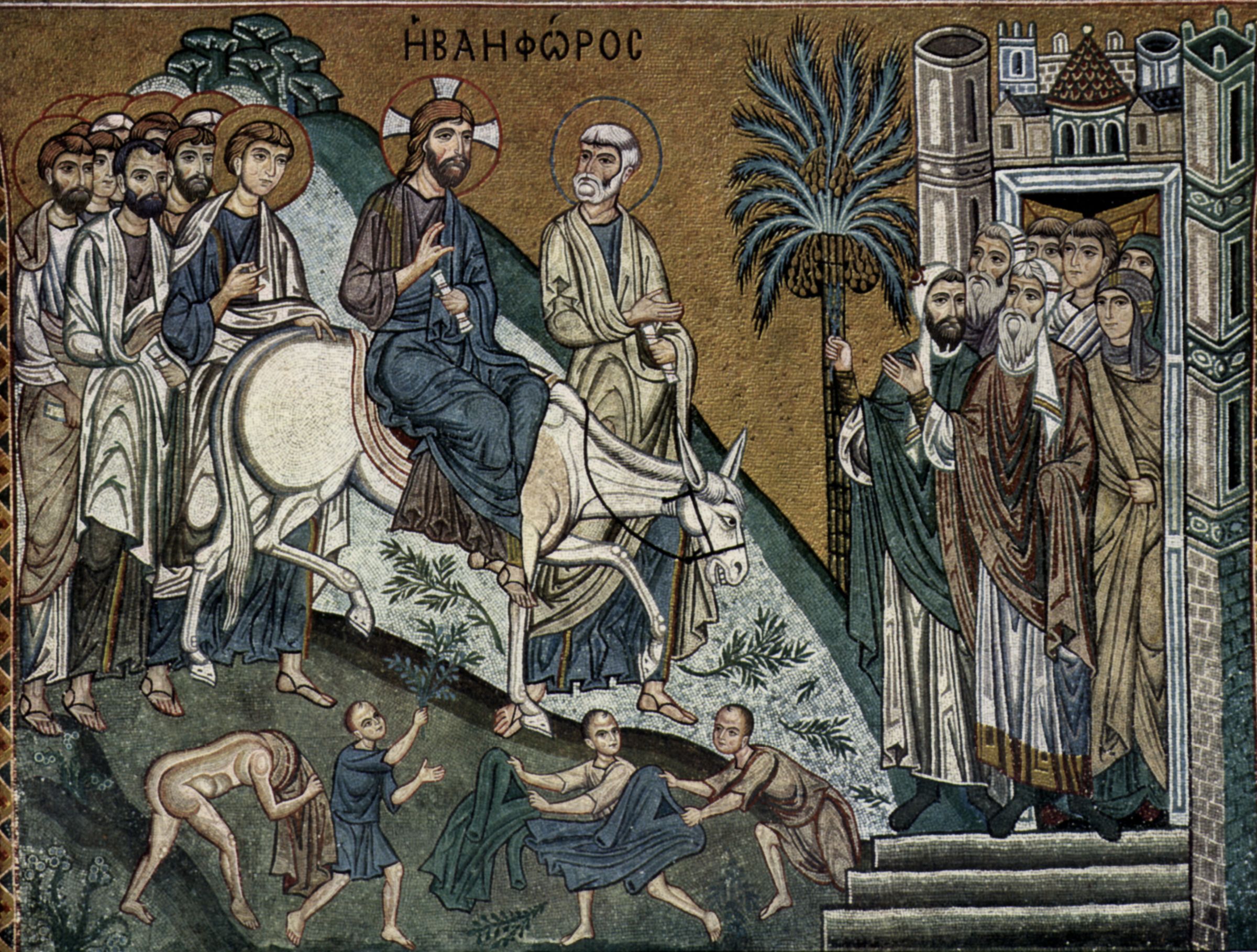
Hosanna!

Meister_der_Palastkapelle_in_Palermo, 1150

How do we respond to such an exquisite display of love?

Jesus, seated on a donkey, resolutely rides into Jerusalem knowing he will die there. Both he and the saint who is showing him the way are holding a scroll. The word written by the prophet is coming to pass as the Word-Become-Flesh writes history.

Behind Jesus, the disciples follow in a huddle, solemn determination on their faces except for the one in front–John perhaps–whose face is filled with compassion.

The curious religious leaders and people of Jerusalem crowd the gate. One with  a closed fist looks away, another open-handed welcomes, a third protectively clutches her robe. And the ancient looking children in the foreground! Three are spreading their outer garments on the path or waving palms and the fourth pulls his robe over his head. He will lay down the only piece of clothing he has on. His hosanna costs him everything, including his dignity. But no one seems to notice.

The donkey plods on.

Like everyone here, I am convinced, determined, broken-hearted, sceptical, intrigued, guarded, caught up in hope, laid bare in shame, humbly trudging forward and standing in the way.

Jesus, I’m not ready, but you comes into my Jerusalem anyway. There’s not one person in this scene that you love less than another, no one you dismiss. No part of me is too aloof, too embarrassing, too tight-fisted to be loved.

My heart swells. Hosanna! Hosanna in the highest!

palm frond by Samuel John

 How gently and lovingly
you wake in my heart. . .
how tenderly you swell my heart with love.
— “Living Flame of Love” by St. John of the Cross

Questions for your journey into Holy Week:

  • How does it feel to know that Jesus understands and welcomes every part of you?
  • How do you respond when you behold such an exquisite display of love for you?
Credits and references:
Mosaic, Einzug Christi in Jerusalem by Meister der Palastkapelle 1150.
“Palm Frond” by Samuel John. Used with permission.
“Living Flame of Love” is in The Collected Works of St. John of the Cross, translated by Kieran Kavanaugh, O.C.D. and Otilio Rodgriguez, O.C.D. with introductions by Kieran Kavanaugh, O.C.D. (ICS Publications, 1979)
© Esther Hizsa, An Everyday Pilgrim, 2015.
Unauthorized use and/or duplication of this material without permission from Esther Hizsa is strictly prohibited. Excerpts and links may be used provided there is a link to the original content and credit is given as follows: © Esther Hizsa, An Everyday Pilgrim 2013, 2014, 2015.  http://www.estherhizsa.wordpress.com
Posted in Holy Week, Lent | Tagged , , , , , , , , , , | Leave a comment

A Spark of Something Holy

Fred and I have been attending a little Anglican Church in our neighbourhood. For Lent we joined a group that has been gathering after church to discuss Brian McLaren’s new book, We Make the Road by Walking.

One chapter focused on the kingdom of God. In it McLaren writes,

freedom by Anne YToday as in Jesus’ day, not everybody seems interested in the good news that Jesus taught. Some are more interested in revenge or isolation or gaining a competitive advantage over others. Some are obsessed with sex or a drug or another addiction. Many are desperate for fame or wealth. Still others can think of nothing more than relief from the pain that plagues them at the moment. But underneath even the ugliest of these desires we can often discern a spark of something pure, something good, something holy–a primal desire for aliveness, which may well be a portal into the kingdom of God. 

So often when I meet people who are in difficulty, all I see is the tangled mess they’re in. I wonder how I could possibly help them welcome God into their lives. But McLaren invites me to believe that God has already placed a divine spark of the kingdom in everyone. My job isn’t to help them address the smothering mess but to give some air to the spark that is there.

I remember a pastor friend doing that at an outreach lunch we had.  The man sitting at the table beside him launched into a rant about church people being hypocrites and how he hated hypocrites. The pastor could have been offended and pointed out that this fellow was in a church, and the meal he was eating was made by “hypocrites,” but he didn’t. Instead, he matched the man’s intensity and said, “Me too. Preach it, brother.”

The pastor found a portal into the kingdom. He saw how this man and Jesus were alike: both wanted people to stop being “white washed tombs” and get real.

I didn’t hear what was said after that, but I saw the men’s body language and heard the tone of their voices as they interacted. They were relaxed, animated and laughed easily. My friend had kindled a spark of something holy.

Blueberry Hannah N

I love the place where your glory dwells. — Psalm 26:8

Questions for your Lenten journey:

  • What overwhelms you right now? It could be the dismal state of a friend’s or your family’s situation, the destruction of our planet, or the unfair distribution of power. Ask God to show you a spark of something holy in it.
  • How might you fan into flame this spark of the kingdom?
Credits and references:
Creation of Adam by Michelangelo
“Freedom” by Anne Yungwirth. Used with permission.
“Blueberry” by Hannah Nieman. Used with permission.
Matthew 23:13-39 Jesus delivers seven woes to the Pharisees and teachers of the law. In verse 27 he says, “Woe to you, teachers of the law and Pharisees, you hypocrites! You are like whitewashed tombs, which look beautiful on the outside but on the inside are full of the bones of the dead and everything unclean.”
© Esther Hizsa, An Everyday Pilgrim, 2015.
Unauthorized use and/or duplication of this material without permission from Esther Hizsa is strictly prohibited. Excerpts and links may be used provided there is a link to the original content and credit is given as follows: © Esther Hizsa, An Everyday Pilgrim 2013, 2014, 2015.  http://www.estherhizsa.wordpress.com.
Posted in Lent | Tagged , , , , , , , , , , , | 2 Comments

Smitten

Steve-Bell“God is smitten with us,” Steve Bell said between songs at a recent concert. “Lent is about love and returning to the Lover who is absolutely smitten with us.”

To get us in the mood for Lent, Steve sang love songs inspired by poets, both ancient and modern. One was about God’s beloved, Israel, and Israel’s propensity to exchange freedom and real love for that slavery that was familiar. This song, in particular, inspired me to take the freedom Jesus gives me. But what does that even look like?

The next morning I reflected more on how I am like Israel and return to the familiar instead of forging ahead. One by one, God named the ways I have been called to make new roads but have not consistently walked them out. They were so mundane I hadn’t paid much attention to them: stretching after a bike ride and strengthening my core muscles, shopping with the earth in mind, eating foods that nurture my body, choosing words that are loving and kind, meeting God regularly for prayer. Humbly, I realized that doing these things delights God.

God loves us so much that no part of our lives is overlooked. Jesus says, “Even the hairs on our heads are numbered.” God, who created us, knows how interconnected we are in ourselves–body, soul and mind–and how interconnected we are to each other and the earth. Being attentive to these simple things fosters life in us and in the world.

“Lent means lengthening,” Steve Bell said. “The days are getting longer; the earth is greening and getting ready to bear fruit.” Now is the season to lengthen life and lengthen love. Now is the season to return to the one who is smitten with us.

Christian Asuh artist


God told them, “I’ve never quit loving you and never will.
    Expect love, love, and more love!
And so now I’ll start over with you and build you up again,
    dear virgin Israel.
You’ll resume your singing,
    grabbing tambourines and joining the dance.
–Jeremiah 31:3,4 (MSG)


Questions for your Lenten journey:

  • What new roads of freedom is God calling you to?
  • Steve Bell invited us to exchange our view of God from a magistrate to a lover who is smitten with us. How might that bring you more freedom?
Credits and references:
Photo of Steve Bell used with permission.
The song I referred to is “A Big Mistake” on Steve Bell’s album, Pilgrimage
Matthew 10:30 (NIV)
Painting by Christian Asuh
© Esther Hizsa, An Everyday Pilgrim, 2015.
Unauthorized use and/or duplication of this material without permission from Esther Hizsa is strictly prohibited. Excerpts and links may be used provided there is a link to the original content and credit is given as follows: © Esther Hizsa, An Everyday Pilgrim 2013, 2014, 2015.  http://www.estherhizsa.wordpress.com
Posted in Lent, Stories | Tagged , , , , , , , , , | 2 Comments

Returning to the Well

jesus-and-the-samaritan-woman1After the Samaritan woman talked with Jesus at the well, her life changed dramatically. From then on, I bet she kept an eye out for him whenever she went to get water. I can even imagine them having more conversations that weren’t recorded in scripture.

In the Spiritual Exercises, Ignatius of Loyola encourages us to return to our encounters with God and pray again with what emerged. We can welcome God to deepen these  experiences and give us living water.

With this in mind, I return to the well of encounter and pray again with my dream. It is the day after Ash Wednesday and this prompts me to ask God for more self-awareness, particularly around my attachments.

There they are in my dream. Becoming stressed by not having a handle on a situation, tells me how much I need control. Doubting my character when I am rejected by others, reveals my need for approval. Being undone by the man who saw everything as meaningless, triggered my need to for significance.

I know a bit about how attachments work. Our false self spurs them into action whenever they are threatened and makes us feel good whenever they are appeased. Attending to our attachments seems natural and legitimate. So naming these devils, as the Spirit helped me do when reflecting on my dream, unmasks them.

I line up the three culprits in front of me: control, approval, significance. I look them over carefully, so I can recognize them the next time they kick up a fuss or stroke my ego.

I sit in silence and ask the Holy Spirit to pray in me. As I do, the unholy three loosen their grip on me. God is here with all I need to quench my thirsty soul.

Vulcan Stream by Reza

Jesus answered her, “If you knew the gift of God, and who it is that is saying to you, ‘Give me a drink,’ you would have asked him, and he would have given you living water.” –John 4:10 (NRSV)

Questions for your Lenten journey:

  • When did you last encounter God? What happened? Return to that experience in prayer with Jesus.
  • What makes you angry or stressed? Take a moment with Jesus and look under that feeling. What are you attached to that Jesus would like to free you from?
Notes and credits:
In the traditions of the Eastern Orthodox Church, the Samaritan woman at the well is considered to be a saint, named Photine or Photini/Photina (the luminous one, from φως, “light”).
“Vulcan Stream” by Reza. Used with permission.
© Esther Hizsa, An Everyday Pilgrim, 2015.
Unauthorized use and/or duplication of this material without permission from Esther Hizsa is strictly prohibited. Excerpts and links may be used provided there is a link to the original content and credit is given as follows: © Esther Hizsa, An Everyday Pilgrim 2013, 2014, 2015.  http://www.estherhizsa.wordpress.com.
Posted in False Self, Ignatian Spirituality, Lent, Prayer | Tagged , , , , , , , , , , , , , , , , | 2 Comments

Sharing the Weight, Revealing the Glory

When I told a friend about my dream, she was moved by what came out of it. “Why do you think God gave you that dream now?” she asked.

“That’s a very good question,” I said. We both knew it was a question I needed to ask God.

On a bike ride one afternoon, I put it to God. I had just written about the dream and it was fresh in my mind. How does this relate to what’s going on in my life?

I could identify a few times over the past week when I felt anxious about decisions, relationships or work that needed to be done. My anxiety wasn’t pervasive, nor did it last long, but it was there nonetheless. Little episodes of Godless dread.

That was it. God wanted to be in those moments too. I had minimized them and just got on with life until a sense of peace returned. Now I saw that those episodes are like the pebbles on the shore that God glistens and tugs home. Whatever I am going through–big or small–God wants to be there, sharing the weight, revealing the glory.

Reality seeps in: I don’t have to do anything alone. I can meet God—in the moment something happens, in the feelings that arise, in the facts that must be faced, in the grieving and rejoicing, and in the changes to be made.

Pebble Beach by Jørn Støylen

I bind unto myself today
The strong Name of the Trinity,
By invocation of the same
The Three in One and One in Three.

Christ be with me, Christ within me,
Christ behind me, Christ before me,
Christ beside me, Christ to win me,
Christ to comfort and restore me.
Christ beneath me, Christ above me,
Christ in quiet, Christ in danger,
Christ in hearts of all that love me,
Christ in mouth of friend and stranger.

I bind unto myself the Name,
The strong Name of the Trinity,
By invocation of the same,
The Three in One and One in Three.
— from St. Patrick’s Breastplate


Questions for your Lenten journey:

  • Think back over the past few days. What disturbed you?
  • Return to that moment with God. Can you talk to God about what happened. Notice how it is different now that you are not carrying that experience alone.
  • What glory does God reveal?


Credits:
“Pebble Beach” by  Jørn Støylen. Used with permission.
© Esther Hizsa, An Everyday Pilgrim, 2015.
Unauthorized use and/or duplication of this material without permission from Esther Hizsa is strictly prohibited. Excerpts and links may be used provided there is a link to the original content and credit is given as follows: © Esther Hizsa, An Everyday Pilgrim 2013, 2014, 2015.  http://www.estherhizsa.wordpress.com.
Posted in Lent, Stories | Tagged , , , , , , , , , , , | 1 Comment

The Deep, Deep Love of Jesus

I dream that I’m at an event in an unfamiliar place. I find a list of the seminars offered and choose one to attend. But when I go to check the room number, the schedule is gone. Now, what do I do?

Anxiety rises as I wander down the wide, dimly lit hallways. I see a few friends, but they evade me. What did I do wrong?

I keep walking and looking for direction. Aware that time is ticking and I’m missing out, I begin to panic. I finally stop and talk to a man having coffee. “I’m not going to any of the talks,” he says flatly. “They’re only trying to sell you stuff.” His cavalier remark only adds to my confusion.

I am lost, rejected–and alone. Where is God? I have no choice but to try to make the best of it on my own. Dread engulfs me.

I notice that I am overheating. I throw off my blankets and begin to wake. With a wave of relief, I realize I do not have to return to that Godless situation. At any moment, I can look into my heart and find God, who is always with me. No matter what happens, I’ll be all right.

Later that day, I sit down to pray and reflect on my dream. In God’s presence, I relive the dread of being sentenced by people’s judgments and imprisoned in my deficiencies. Despair throbs in my throat. I’ve been in hells like this before.

What do you see, God? What is going on for you when I am trapped and alone?

In response, I somehow know that the intensity of my dread matches the intensity of God’s desire to rescue me. I feel God’s feelings.

Deep calls to deep, the psalmist wrote, in the roar of your waterfalls; all your waves and breakers have swept over me.

I am humbled and tearful now. God’s love for me—for all of us—pounds against the shores of my soul, enlarging it. I see everyone and everything on earth as if they are pebbles on my beach. Waves rush in and recede, glistening each stone, loosening the sand, tugging us home.

Waves by Tony Hisgett

O the deep, deep love of Jesus, vast, unmeasured, boundless, free!
Rolling as a mighty ocean in its fullness over me!
Underneath me, all around me, is the current of Thy love
Leading onward, leading homeward to Thy glorious rest above!
— Samuel T. Francis, 1875


Questions & suggestions for your Lenten journey:

  • What do you relate to in my dream or prayer?
  • We all know God loves us, but it’s hard for us to really believe it. Invite Jesus to reveal to you personally the depth of his love for you.
References and credits:
Psalm 42:7 (NIV)
“Waves” by Tony Hisgett. Used with permission.
© Esther Hizsa, An Everyday Pilgrim, 2015.
Unauthorized use and/or duplication of this material without permission from Esther Hizsa is strictly prohibited. Excerpts and links may be used provided there is a link to the original content and credit is given as follows: © Esther Hizsa, An Everyday Pilgrim 2013, 2014, 2015.  http://www.estherhizsa.wordpress.com
Posted in Lent, Mystical, Stories | Tagged , , , , , , , , , , | 2 Comments

DIY Prayer Retreat #2: God Is Love Loving

Candle light Alesa Dam

Read the introduction in DIY Prayer Retreat #1 for general instructions on how to facilitate a prayer retreat.

10:00- 10:30: Gather

  •  It is helpful to begin this retreat by sharing loving images of God. You may use artwork or a story like this one: 

In a sermon, Pastor Lance Odegard of Artisan Church, told this story. Lance’s son was caught doing something wrong and sent him to his room. Lance went to talk with him and as soon as he took his son onto his lap, the boy began to cry. His shoulders were going up and down like jack hammers, and he could hardly speak. “I… I… f-f-feel so g-g-guilty,” he said. Lance wrapped his arms around his son and started to cry too. 

“Dad,” his son said. “Why are you crying?” 

Lance was at a loss for words for a moment then replied. “Because you’re crying.” 

After they talked about what happened, the boy said to his father. “Every night you tell me that you love me, now I know how big that love is.”

Rembrandt_Return_of_the_Prodigal_Son

  • Take a few minutes to be with what has been shared about God’s loving nature.
  • Distribute copies of the reading below and the plan for the day. Ask a participant or two to read aloud “God Is Love Loving”.
  • After a few minutes of silence invite the participants to share briefly what stood out for them in the reading.
  • Then go over the plan for the day, attend to any housekeeping details and disperse. 

Reading: God Is Love Loving
from What Is Ignatian Spirituality? by David L. Fleming

Ignatius’s life changed drastically in 1521. He was a soldier serving the kingdom of Castile, fighting to defend the city of Pamplona against a French attack. During the battle a cannonball struck him in the legs. Badly injured, Ignatius was taken to his family castle in the town of Loyola to recuperate. There he endured two extremely painful operations to repair his wounds, and spent many months convalescing. Ignatius had a lot of time to think about his life, which, to that point, had been an undistinguished and unsatisfying pursuit of military glory and frivolous pastimes.

Ignatius Loyola (1491-1556). Spanish founder of Jesuit Order. Counter-Reformation. #1ab.Ignatius was a keenly observant man. His talent for simple “noticing” or “taking note” became a cornerstone of his approach to the spiritual life. In 1521, bored and restless as he healed in his family’s home, Ignatius took special notice of the movements in his own spirit.

He had asked for romance novels to read. These tales of love and adventure were the most popular printed books of the time, as they are in our time, and Ignatius loved to fill his imagination with these stories. But the only books available in the house were a life of Christ and a book of stories about saints. Ignatius read these instead, and he was struck by the feelings they stirred in his heart. The stories of Jesus and the heroes of the faith inspired and stimulated him. By contrast, he was restless and discontented when he remembered his favorite tales of romantic love and adventure.

Gradually, a new and inspiring image of God began to form in Ignatius’s mind. He saw God as a God of Love. This was no abstract philosophical concept. God as Love was no longer just a scriptural statement. Ignatius experienced God as an intensely personal, active, generous God, a God as Love loving. God creates, and by so doing, God is actively showering us with gifts. God acts, and all his actions show his wisdom and love.

God’s love is unconditional. It is not something we earn, or buy, or bargain for. God does not say, “I will love you if you keep my commandments” or “I will love you if you go to Lourdes.” Lying on his sickbed—in pain, crippled, agitated—Ignatius came to understand that active loving was God’s most outstanding quality. This is his foundational image of God. He arrived at it by “noting” how God dealt with him in his body, soul, and spirit, and through the people and events in his everyday life.

… This image of God affects how we understand the purpose of our lives. If we think that God loves us only if we act in a certain way, we will see our lives as a time of testing. We need to rise to the challenge, to avoid mistakes, to labor to do the right thing. But if God is Love loving, our life is a time of growing and maturing. “All the things in this world” are ways to become closer to God. Lovers don’t test each other. Lovers don’t constantly demand that the other measure up. Lovers give to those they love.


10:45-Noon First Prayer period
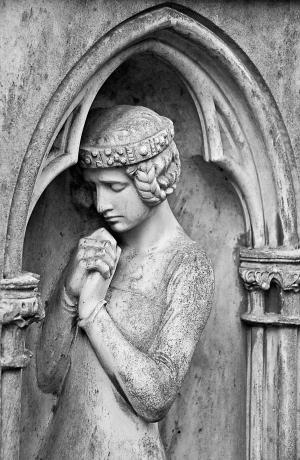
Silent Prayer by Neil GallopDescend

  • “with the mind into the heart and there stand before the face of the Lord, ever-present, all-seeing, within you.”  (Theophan the Recluse)

Ask Jesus for the grace you need

  • to envision God as Love loving, an active lover attentively loving you.
  • to remain present and open to God

Be attentive to God and to yourself in the silence (most of the hour)

  • As you sit in the silence with God, pay attention to what you notice has been going on in your life. What stands out? What feelings emerge along with them?
  • As you continue to sit with God and the event and feelings around it, invite God to do what God wants to do: actively love you.
  • Is there something that you have been reading in scripture lately that relates?
  • Allow your time with God to be a new landscape, an open vista, in which God takes the lead and interacts with you.

Converse

  • Near the end of the hour take 5 minutes or so to have a conversation with God about what came up in your prayer period

Journal Entry by Joel Montes de OcaJournal

  • After your hour of prayer, take time to write down what was significant to you in this prayer period.

12:15 to 1:30: Relax, have lunch, go for a walk, knit etc.

1:30-2:30: Second prayer period

Use the same structure as above.

  • This time, allow the louder emotions and events in your life to take a seat and “let your shy soul speak” (Parker Palmer). As you sit quietly with God, allow a less emotionally charged event or connected events (and accompanying emotion) to emerge.
  • Once again, allow your time with God to be a new landscape, an open vista in which God takes the lead and interacts with you.

2:30-3:00

  • Journal about what was significant in your second prayer period
  • Ask God to show you what would be honouring to God and meaningful/beneficial for you to share with others
  • Relax, have a cup of tea…

3:00-4:00

  • Gather again and take turns sharing one thing that was meaningful that came out of the day.
  • Take a few minutes in silence after each person has shared to hold them up in prayer.


Credits:
“Candle Light” by Alesa Dam. Used with permission.
Story by Lance Odegard, Artisan Church used with permission.
Return of the Prodigal Son by Rembrandt.
“God Is Love Loving” Chapter 2  in What Is Ignatian Spirituality? by David L. Fleming, SJ
“Silent Prayer” by Neil Gallop
“Journal Entry” by Joel Montes de Oca. Used with permission.
Banner: “Sitting in Silence” by Alice Popkorn. Used with permission.
© Esther Hizsa, An Everyday Pilgrim, 2015.
Unauthorized use and/or duplication of this material without permission from Esther Hizsa is strictly prohibited. Excerpts and links may be used provided there is a link to the original content and credit is given as follows: © Esther Hizsa, An Everyday Pilgrim 2013, 2014, 2015.  http://www.estherhizsa.wordpress.com.
Posted in Ignatian Spirituality, Prayer Retreat Outline, Resource, Stories | Tagged , , , , , , , , , , , , , , , , , , , | 2 Comments