Advent I: Hope

Hope

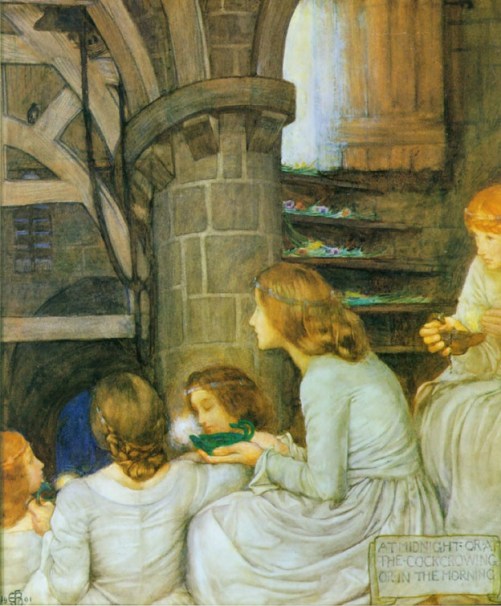
God, you come
like the persistent widow
and knock on my door.
You keep knocking,
wearing me down with your pleas
until I do right.

You come
like the friend at midnight
calling me out of bed
to give my neighbour what they need.

You keep coming
like the good shepherd who
sees I want for nothing,
fills my cup to overflowing,
and tirelessly nudges,
“Wake up.”

I open one eye
and like
the unjust judge,
the put out neighbour,
the mindless sheep,
I do what you want.

You wait,
like the five wise virgins
with an endless supply of oil,
for both eyes to open.

Therefore, keep awake–for you do not know when the master of the house will come, in the evening, or at midnight, or at cockcrow, or at dawn, or else he may find you asleep when he comes suddenly. And what I say to you I say to all: Keep awake. –Mark 13:35-37

Some Advent Love Mischief:

  • What has God been nudging you to do that you don’t want to?
  • How is this nudge different from the other “shoulds” in your life?
  • What might you see this Advent when you open both eyes? What is God awakening you to?
Credits and References:
“The First Sunday of Advent” by Susanne Nilsson. Used with permission.
Luke 18:1-8, Luke 11, 5-8, Psalm 23, Matthew 25:1-13
“Ten Virgins 07” by Waiting For The Word. Used with permission.
© Esther Hizsa, An Everyday Pilgrim, 2017.
Unauthorized use and/or duplication of this material without permission from Esther Hizsa is strictly prohibited. Excerpts and links may be used provided there is a link to the original content and credit is given as follows: © Esther Hizsa, An Everyday Pilgrim 2013-2017.  http://www.estherhizsa.com
Posted in Advent, Poetry | Tagged , , , , , , , , , , , , , | Leave a comment

New Coins in My Pocket

At some point, the desperate need to shout fell away as if it were a worthless coin. It’s not that I didn’t want to be heard or at times stay awake at night plotting how I might be heard. But one day I reached into my pocket and found new coins.

These coins gave me the freedom to choose to say nothing.  I pulled them out and examined them with awe. I could be misunderstood and do nothing.

I spent a coin whenever my inner teacher tugged my sleeve and said, “Let it go.”

I also discovered I could spend one when I wanted to be safe and be liked. But, my inner teacher would have none of that.

One afternoon, at a monthly gathering of my peers, I needed to be heard, not for my benefit but for theirs. As gently as I could, I spoke up and interrupted the process–more than once. My confidence could have been interpreted as arrogance and my persistence as pushy. But I found the coin that let me be misunderstood and spent it. I kept asking the questions my inner teacher fed me and hoped that God would do something with them.

God did and it was beautiful to behold.

I’ve been reading A Hidden Wholeness by Parker Palmer who encourages me to live an undivided life. He wrote, “The divided life is a wounded life, and the soul keeps calling us to heal the wound.” I’ve spent my life shouting to be heard and I’ve felt ashamed of it. But now I see that my soul was shouting to be healed.

When I was given a voice, I didn’t need to shout anymore. But choosing to be silent in order to be nice or accepted divides me from myself.

Parker Palmer says we all have an “inner teacher whose guidance is more reliable than anything we can get from a doctrine, ideology, collective belief system, or leader.” And my inner teacher is telling me: To live out of my hidden wholeness means saying what needs to be said even at the risk of being disliked or dismissed.

While I kept silence, my body wasted away
    through my groaning all day long.
–Psalm 32:3 (NRSV)

* * *

Love Mischief for the World

This Men’s Bible Study group from Mount Olivet Church in Plymouth in Minnesota are up to some great love mischief for the world. They used my blog post Autumn Leaves to explore the subjects of change, loss. insecurity and letting go. Thanks, guys, for listening to your souls and living out of your hidden wholeness.

What love mischief are you and God doing to care for the earth?
Let me know and I will include it in an upcoming post.

Credits and References:
Photo of man with coin by Thomas Leuthard (2008-2017). Used with permission.
“Coins” by Jeff Milner. Used with permission.
Quotes from A Hidden Wholeness by Parker Palmer, pg 20, 25.
Photo from Mount Olivet Lutheran Church in Plymouth, Minnesota by Ron Frehner. Used with permission.
© Esther Hizsa, An Everyday Pilgrim, 2017.
Unauthorized use and/or duplication of this material without permission from Esther Hizsa is strictly prohibited. Excerpts and links may be used provided there is a link to the original content and credit is given as follows: © Esther Hizsa, An Everyday Pilgrim 2013-2017.  http://www.estherhizsa.com
Posted in Reflections, Stories | Tagged , , , , , , , , , , , | Leave a comment

I Shouted


I sit by the roadside in Jericho begging. A crowd goes by and I ask, “What’s happening?”

They tell me, “Jesus of Nazareth is passing by.”

Without thinking, I shout, “Jesus, Son of David, have mercy on me!”

Those who are in front sternly order me to be quiet. Pinpricks of shame erupt like a rash all over my body. Desperation squeezes my soul. I shout even more loudly, “Son of David, have mercy on me!”

Jesus stops still. He orders his disciples to bring me to him.

Firm hands grasp my arms, and I am taken away from the shushing crowd.

I know it’s Jesus when I hear, “What do you want me to do for you?”

Still gripped on either side, not by the disciples now, but by hope on my left and fear on my right, I reply, “Lord, I want to be heard.”

“Receive your voice; your faith has saved you.” He steps closer and waits.

Immediately I regain my voice. I tell him how painful it is to be misunderstood, judged and dismissed. When my only words are tears, he holds me and weeps too.

Then he steps back. My throat throbs as I prepare for his parting and my returning to a beggar’s life.

But Jesus doesn’t say goodbye. He takes my hand and introduces me to his friends.

I follow him, glorifying God. And all the people praise God.

Because he inclined his ear to me,
    therefore I will call on him as long as I live.
–Psalm 116:2 (NRSV)

* * *

Love Mischief for the World

Refood’s love mischief for the world means less organic waste in landfills and more healthy food getting to those who can’t afford it. “Refood is a Canadian social enterprise which converts excess or defected produce of local vendors into healthy lunches for homeless people and elementary school students,” says Refood.

Here’s how they do it.

STEP ONE: We pick up excess produce from local grocery stores, farms, restaurants.

STEP TWO: Our experienced chefs cook healthy food.

STEP THREE: We distribute the food to local shelters and schools.


What love mischief are you and God doing to care for the world?
Let me know and I will include it in an upcoming post.
Credits and References:
Luke 18:35-43, Psalm 116:2
Close-up of Eric Gill relief, Moorfields Eye Hospital The words here,’Domine, ut videam’ (Lord, that I may see!), comprised the answer, according to the Gospel of Mark, to Jesus’s question to the blind beggar Bartimaeus who called out to him in Jericho by Ceridwen [CC BY-SA 2.0 (https://creativecommons.org/licenses/by-sa/2.0)], via Wikimedia Commons
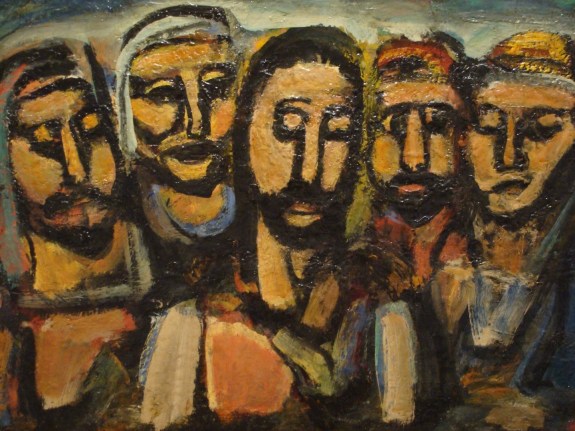
“Christ and Apostles” by Georges Rouault, 1871-1958
“Healthy Food Box” Creative Commons.
Esther Hizsa, An Everyday Pilgrim, 2017.
Unauthorized use and/or duplication of this material without permission from Esther Hizsa is strictly prohibited. Excerpts and links may be used provided there is a link to the original content and credit is given as follows: © Esther Hizsa, An Everyday Pilgrim 2013-2017.  http://www.estherhizsa.com 
Posted in Ignatian Spirituality, Praying with the Imagination, Reflections | Tagged , , , , , , , , , , , , | 4 Comments

The Last Word

I told my spiritual director about a recent experience of feeling like a bull in a china shop.

In situations like this, I’m reminded of the Nissan Bluebird we briefly owned. Two decades ago when our family was sailing around the world in Tieras, we had a five-month layover in New Zealand. Car rentals were expensive and used cars cheap. So we bought an old Bluebird. It ran, barely. Fred tinkered with it to increase its reliability. He gave it a tune up and replaced parts. It ran well–for a few months, and then it stopped dead. Literally. The worn bearings couldn’t handle the pressure coming from a more efficient engine.

That Bluebird doggedly warns me from its grave: Don’t let your idealistic enthusiasm put too much pressure on a worn down system. I’ve held this caution as a reminder to be sensitive to others. I’ve also held it as a fear that I could do irreparable damage and that would be terrible.

In the spiritual direction session, I brought to Jesus the fear that I ‘d done a terrible thing. I kept hoping he would validate my actions born of conviction or correct me if I’d gone too far. But Jesus did neither.

“This is hard,” he said with his gentle hand on my shoulder.

As I continued to picture him in the room where the “terrible thing” happened, I saw him standing beside each person there, comforting and transforming them. He reassured me that my words would not be the last ones spoken.

A few days later at a silent retreat, I read the quote by Johnny Sears that was in last week’s post. Here it is again.

On the other side of insecurity lies deeper trust in the goodness of life and the love of God.

Jesus was asking me to trust his goodness.

Then he gave me four more opportunities to do it.

Four?!

In the space of a week, just by being me, I caused stress in other people’s lives–different people, different contexts, with no validation or correction given by God. But I did hear God’s still small voice inviting me to notice the good work being done in the stress I caused.

So far, three of the four situations have happy endings. The fourth might fall apart. I feel anxious thinking that I would be partially responsible for its demise. There’d be disappointment and “if onlys.”

But when I lean into a deeper trust, I know that God will have the last word, and it will be a good one.

You don’t have to wait for the End. I am, right now, Resurrection and Life.
–John 11:25 (MSG)

* * *

Love Mischief for the World

Here’s some love mischief from The Coffin Club in New Zealand.

What love mischief are you and God doing to care for the world?
Let me know and I will include it in an upcoming post.

Credits and References:
1985-86 Nissan Bluebird By OSX (Own work) [Public domain], via Wikimedia Commons
C33 Nissan Laurel RD by JChubby Creative Commons
Esther Hizsa, An Everyday Pilgrim, 2017.
Unauthorized use and/or duplication of this material without permission from Esther Hizsa is strictly prohibited. Excerpts and links may be used provided there is a link to the original content and credit is given as follows: © Esther Hizsa, An Everyday Pilgrim 2013-2017.  http://www.estherhizsa.com 
Posted in Reflections, Spiritual Direction, Stories | Tagged , , , , , , , , , , , , | 2 Comments

DIY Prayer Retreat #10: The Days of Autumn

Here’s another one-day prayer/silent retreat outline. Boelle Kirby adapted it from sections of “Befriending Insecurity” by Johnny Sears in Weavings Journal, Nov/Dec/Jan 2016-17, and May I Have This Dance by Joyce Rupp.

You’ll find the introduction to Do It Yourself group prayer retreats here and other outlines under resources.

The Days of Autumn 

On the other side of insecurity lies deeper trust in the goodness of life and the love of God. –Johnny Sears

In this season of autumn, the leaves falling from the trees onto the earth are subtle reminders that we are asked to let go of many things throughout our life… The ease at which the leaves sail through the air as the trees let go of their treasures stands in sharp contrast to our own tight grasp on life. We can see autumn standing in surrender as the winds sweep her trees naked and vulnerable.

We seem to be living in a time rife with opportunities for insecurity and uncertainty, which hearkens to the reality of living that we are all vulnerable—which means anxiety is an unavoidable part of life. Whenever we are called to let go of something safe, secure, and familiar whether it be relationships, beliefs, circumstances, expectations… we may encounter those chilling winds that can sweep our covering leaves away and leave us feeling naked as the trees.

But we cannot grow without change. Much of this growth depends on whether we give ourselves to the process of change or run from it with our fears and insecurities. Sister Simone Campbell of the Sisters of Social Service has suggested that we need to develop a “theology of insecurity” to deal with our obsession with security and control. Perhaps looking again at autumn might give some perspective on aspects of this theology.

Autumn (along with winter) is a part of the necessary transition between summer’s fruitfulness and spring’s new life. No new growth will come unless autumn agrees to let go of what has been. Dead leaves that seem to have no value are transformed by winter snows and rains to rich humus for new growth. The bare branches already bear the potential of new green in the terminal buds. The ground lies fallow, but it is resting and gaining nutrients for the seeds to sprout in the spring. The earth waits in the process of growth for the unknown, unseen beauty yet to come.

Autumn invites us to pause and to reflect on how we live with insecurity, challenges us to develop deeper trust in the unknowns of our eternal God, and believe more fully in the promises of our faith—which can be difficult to fully accept and live. When we befriend insecurity, when we stop gritting our teeth in resistance and trying to impose our will onto life in an attempt to force things to fit our expectations, we can accept the invitation to shed whatever hinders us and we create space for new life to emerge.

AUTUMN PRAYER  LITURGY

God of the seasons, there is a time for dying and a time for rising. We need courage to enter into the transformation process.

God of autumn, the trees are saying goodbye to their green, letting go of what has been. We too, have our moments of surrender, with all their insecurity and risk. Help us to let go when we need to.

God of fallen leaves lying in colored patterns on the ground—our lives have their own patterns. As we see the patterns of our own growth, may we learn from them.

God of misty days and harvest moon nights, there is always the dimension of mystery and wonder in our lives. We always need to recognize your power-filled presence. May we gain strength from this.

God of harvest and ripened grain, many gifts of growth lie within the season of our surrender. May we wait for harvest in faith and hope. Grant us patience when we do not see, and hope in the fallowness.

God of love, you enter into our autumn seasons, into our deepest places of inner dwelling, into the heart of our transformation. You give us glimpses of truth. May we allow our experience of autumn to speak to us of necessary change and growth. Grant us an openness to the continuous process of letting go and moving on that is part of the human condition. We are grateful that you are our faithful companion on this journey.

AMEN

Questions:

  1. Think of what specific areas cause fear, vulnerability, or insecurity in this season of life for you. Instead of resisting insecurity and rejecting anxiety, what would it look like to befriend or make peace with them?
  2. What might God be saying to you about these, and what might you ask from God?

Possible activities:

Draw an autumn tree. Let the tree symbolize you. For each part of the tree reflect and respond on that part of the tree.

  • The roots: who and what has given you nourishment and vitality in your life? Who and what “roots” you in your times of insecurity and change?
  • The trunk: what are your strengths? What events have channeled new life into you?
  • The leaves: what is dying in your life now? What do you feel called to let go of?
  • The bark: who or what protects you, comforts you?
  • The terminal buds on the ends of the branches: what brings you hope? What is your hope?

With either question 1 or 2 above, write a letter addressed to the insecurities or to God, speaking to them or God as if they were in the room with you (or write a conversation). Have them answer back if you want to.

*   *   *
Credits and Resources:
Content for this reflection is adapted from
“Befriending Insecurity” by Johnny Sears, in Weavings, A Journal of the Christian Spiritual Life, Volume XXXII Number 1, Nov/Dec/Jan 2016-17
May I Have This Dance by Joyce Rupp. 1999, Ave Maria Press. (Chapter: “October:  The Falling Leaves”)
“Fall Leaves” by Sharon. Used with permission.
“Fall Fairground” by Liz. Used with permission.
“Horse Chestnut terminal bud in winter by Shaun C. Williams. Used with permission.
“Leaf” by Carl Mueller. Used with permission.
Winter Tree Line Drawing Creative Commons.
“Leaves” by Rob Howard. Used with permission.
© Esther Hizsa, An Everyday Pilgrim, 2017.
Unauthorized use and/or duplication of this material without permission from Esther Hizsa is strictly prohibited. Excerpts and links may be used provided there is a link to the original content and credit is given as follows: © Esther Hizsa, An Everyday Pilgrim 2013-2017.  http://www.estherhizsa.com
Posted in Prayer Retreat Outline, Reflections | Tagged , , , , , , , , , , , , , , | 1 Comment

Silently Blooming

It’s this time of year, when the nights are long and the days cold and rainy, that I begin to accompany people through the Ignatian Spiritual Exercises Retreat in Daily Life. These retreatants embark on a nine-month journey with Christ, asking that their only desire and one choice would be to want and choose what better leads to God’s deepening life in them. They ask this knowing they have other desires that lead them astray. In their prayers, God gently reveals their inordinate desires. Then, bravely and humbly, they name them when they come to me for spiritual direction.

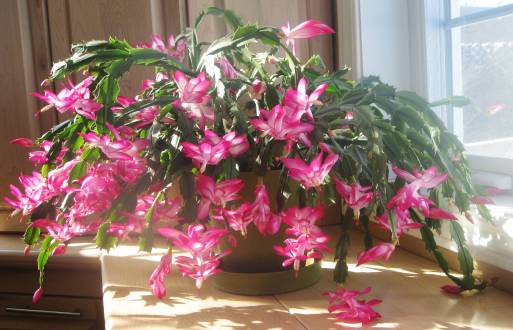
It’s also this time of year that my Christmas cactus blooms in the room where we meet. The first bud has blossomed, but fifty or more are silently waiting to reveal their glory. These buds remind my retreatants and me that Christ is with us on this journey–already in the womb, growing to full term, about to be born in us. Each new flower reassures us that something beautiful will come of their willingness to be vulnerable.

In the song I Shall Not Want, Audrey Assad names the desires that can enslave us.

 From the love of my own comfort
From the fear of having nothing
From a life of worldly passions
Deliver me, O God
From the need to be understood
From the need to be accepted
From the fear of being lonely

Refrain:
Deliver me, O God
Deliver me, O God
And I shall not want, I shall not want
When I taste Your goodness I shall not want

From the fear of serving others
From the fear of death or trial
From the fear of humility

“Deliver me from these,” I pray. “And these–”

From the fear of feeling shitty
From the love of my own voice
From holding onto manna
Deliver me, O God.
From complacency and selfishness
From my absence to your presence
From indulging guilty pleasures
Deliver me, O God.
Deliver me, O God.

Like my retreatants, I too long for the day when my only desire is what leads to God’s deepening life in me. And that longing comes from God who is silently blooming.

God, you’re not afraid of my feelings
or ashamed of any part of me.
You loosen my grip on security
and listen to what’s under my complacency.
You are present in my absence
and circle back to show me where.

You forgive me seven million times
and more,
and more,
and more.

The Lord is my shepherd,
I shall not want.
–Psalm 23:1

* * *

Love Mischief for the World

“Audrey Assad is the daughter of a Syrian refugee, an author, speaker, producer, and critically lauded songwriter and musician. She releases music she calls “soundtracks for prayer” on the label Fortunate Fall Records, which she co-owns with her husband. She is also one half of the pop band LEVVwhose debut EP peaked at #17 on the iTunes Alternative chart.” —audreyassad.com

In this video, Audrey Assad shares her journey through dark valleys with God and the healing that has come to her and is still waiting for her. The love mischief she and God do for the world involves creativity, boldness, and vulnerability. Thank you, Audrey.

What love mischief are you and God doing to care for the world?
Let me know and I will include it in an upcoming post.

Credits and References:
“Lonely” by R. Halfpaap. Used with permission.
“Early Bud” by Michael.PortrayingLife.com. Used with permission.
Esther Hizsa, An Everyday Pilgrim, 2017.
Unauthorized use and/or duplication of this material without permission from Esther Hizsa is strictly prohibited. Excerpts and links may be used provided there is a link to the original content and credit is given as follows: © Esther Hizsa, An Everyday Pilgrim 2013-2017.  http://www.estherhizsa.com 
Posted in Ignatian Spirituality, Poverty of Spirit, Prayer, Reflections | Tagged , , , , , , , , , , , , , , | 1 Comment

A Prayer for When You’re in the Middle of the Story

For I am the Lord your God
who takes hold of your right hand
and says to you,

Do not fear; I will help you.
–Isaiah  41:13 (NIV)

God, you promised to help me,
your right hand guiding,
with a cautious squeeze
or a confident tug.

But where were you this time?

You could have warned me.
There’s nothing worse than a friend
who sees you heading off a cliff
and says
nothing.

I suppose I should have waited longer,
listened deeper.
But you should have
tried a little harder–
shouted even.

But you didn’t
and people got hurt.

Eventually, I’ll be able to
justify your silence,
trust a bigger picture,
see the idol I worshipped.

But right now, God,
I don’t like you very much.
So don’t try to cuddle up;
I’m not in the mood.

Why, O Lord, do you stand far off?
    Why do you hide yourself in times of trouble?
–Psalm 10:1 (NRSV)

* * *

Love Mischief for the World

Here’s why Fred and I are done with conventionally grown bananas and the Chiquita Banana lady.

For consumers, bananas are a delicious and nutritious start to the day, a healthy snack and a fixture in our fruit bowls. For millions of residents in the banana lands, the production of bananas means social upheaval, violence and pesticide poisoning. Banana Land explores the origins of these disparate realities and opens the conversation on how workers, producers and consumers can address this disconnect. bananalandmovie.org

What love mischief are you and God doing to care for the world?
Let me know and I will include it in an upcoming post.

Credits and References:
“Alone” by Andrei Niemimäki. Used with permission.
“Cold” (Lima, Peru) by Luis Alveart. Used with permission.
Esther Hizsa, An Everyday Pilgrim, 2017.
Unauthorized use and/or duplication of this material without permission from Esther Hizsa is strictly prohibited. Excerpts and links may be used provided there is a link to the original content and credit is given as follows: © Esther Hizsa, An Everyday Pilgrim 2013-2017.  http://www.estherhizsa.com 
Posted in Poetry, Poverty of Spirit, Prayer, Reflections | Tagged , , , , , , , , , , , , | Leave a comment

A Little More Freedom, Trust and Grace

I loved the idea that, despite my misguided actions, God saw my intent and looked upon me with kindness.

But it didn’t take me long to realize that it was God who brought those actions to my attention in the first place.

“Notice what you notice,” Father Elton Fernandes would remind me while I was praying the Ignatian Spiritual Exercises. Like Ignatius before him, Father Elton believed that the Holy Spirit brings what we notice to our awareness for our good and God’s glory.

My first reaction whenever I receive a humbling awareness is to assume it’s my responsibility to change myself. But Father Elton invited me to wait and notice what God does with these awarenesses.

That day as I biked to spiritual direction and saw how much my critical nature hurts others, I felt ashamed. However, my encounter with Jesus in the session showed me that God was not ashamed of me. That helped me hold my new awareness with compassion, curiosity, and hope.

I continued to notice times when I was tempted to correct or advise others. But I also noticed I had a little more freedom to let go of my desire to intervene. I could hold the discomfort of inefficiency or misunderstanding a little longer. I could trust a little more that the One who carried me was carrying everyone else as well.

With more trust, I began to see that what might seem wrong to me could just be different. If I’m patient I may understand why another has chosen to do things the way they do.

Of course, there are still times when I regret something I’ve said or done, but there’s one more thing I notice: I have a little more grace for myself.

What I’m trying to do here is get you to relax, not be so preoccupied with getting so you can respond to God’s giving. People who don’t know God and the way he works fuss over these things, but you know both God and how he works. Steep yourself in God-reality, God-initiative, God-provisions. You’ll find all your everyday human concerns will be met.
–Luke 12:29-31 (MSG)

* * *

Love Mischief for the World

Jacquoline Martin, who has worked with me at the Wednesday Lunch Club, was named Douglas College’s Community Builder of the Year in 2015. Jacquoline continues to follow her passion for volunteering in her community. This month she arranged for ReFood to deliver a generous donation of fresh meat, fish, milk, yogurt, and cheese for the folks at the Wednesday Lunch Club. You’re awesome, Jacquoline. Thank you for inspiring us and doing such wonderful love mischief for the world.

What love mischief are you and God doing to care for the world?
Let me know and I will include it in an upcoming post.
Credits and References:
“Fawn” by Ed Dahl. Used with permission.
“Relax” by Martha Soukup. Used with permission.
Esther Hizsa, An Everyday Pilgrim, 2017.
Unauthorized use and/or duplication of this material without permission from Esther Hizsa is strictly prohibited. Excerpts and links may be used provided there is a link to the original content and credit is given as follows: © Esther Hizsa, An Everyday Pilgrim 2013-2017.  http://www.estherhizsa.com 
Posted in Ignatian Spirituality, Reflections, Wednesday Lunch Club | Tagged , , , , , , , , , , , , , , , | 1 Comment

Carried

“Let me carry you,” I heard Jesus say during morning prayers part way through co-facilitating the Living from the Heart intensive.

I liked the idea of being picked up and carried, but as I imagined Jesus cradling me in his arms, I saw myself squirm and struggle against the confinement.

I couldn’t relax. What if I forget things or let people down?

Jesus seemed willing to take that risk. Me? Not so much.

After the intensive, I went for spiritual direction. I biked along the Greenway into Vancouver and thought about Jesus’ offer and my response. I noticed how often during that week I was either vigilantly trying to avoid making mistakes or feeling remorse for making them.

“Will I ever be free of this?” I asked my director.

“I wonder if you could take a moment and listen to where your motivation was coming from.”

Tears filled my eyes. Under my vigilance, fear and remorse was a desire to allow the Spirit to flow freely, unhindered by misinformation or oversight.

When I told my director this, she invited me to imagine how God feels about this deep desire.

“God loves it, but there is a big ‘but’ on top of that desire: BUT sometimes I’m so focused on doing things well that I lose sight of how this affects others.”

“And how does God feel about all that?”

I closed my eyes again and saw my pure desire below the surface and the messy reality of “the big but” above. Then Jesus reached out his arm. With one swipe, he cleared the surface.

I didn’t feel blamed and absolved for my missteps or preoccupation, though I suppose I was forgiven. Nor did I get the sense that Jesus didn’t care about the people who’d been hurt by my hypervigilance. In that moment, Jesus wanted nothing to block his view of my desire or keep him from delighting in my heart.

Eventually, my director brought me back to Jesus’ invitation to carry me.

This time when I imagined myself in Jesus’ arms, it felt spacious. There was room for all of me: my desire to let the Spirit flow and my sadness over what I do that hinders it.

“Is there an invitation here for you?” she asked.

“To be as kind to myself as Jesus is to me,” I said as more tears streamed down my face.

People look at the outward appearance, but the Lord looks at the heart.
–1 Samuel 16:7

* * *

Love Mischief for the World

I’m so excited. Beth Carlson-Malena and my friend Mark Fox are co-pastoring a new church called Open Way Community Church in Vancouver. Knowing Mark and Beth, it’s going to be punny, rich and real. What else could it be when God invites them and all of who they are to do some love mischief for the world?

What love mischief are you and God doing to care for the world?
Let me know and I will include it in an upcoming post.

Credits and References:
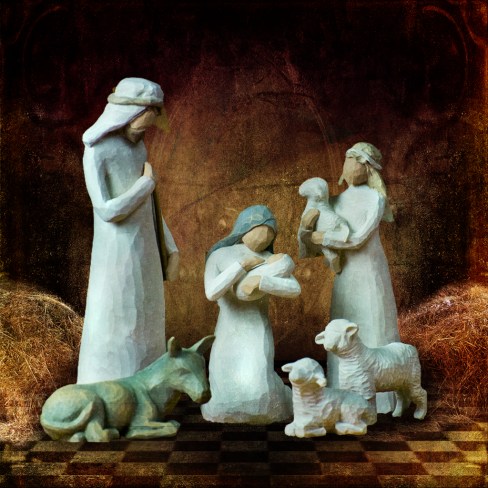
The statue was carved for Father Thomas Green, SJ (1932-2009) by Joe Crawford, December 1988.  Steve Imbach writes, “We visited Father Tom in the Philippines and when our visit with him was over he told us to take it home; it was ours.  It now sits in the room I offer direction in.”
“Autumn Leaves 2” by Paul. Used with permission.
© Esther Hizsa, An Everyday Pilgrim, 2017.
Unauthorized use and/or duplication of this material without permission from Esther Hizsa is strictly prohibited. Excerpts and links may be used provided there is a link to the original content and credit is given as follows: © Esther Hizsa, An Everyday Pilgrim 2013-2017.  http://www.estherhizsa.com 


Posted in Reflections, Spiritual Direction, Stories | Tagged , , , , , , , , , , | 1 Comment