This Moment, This Conversation, This Life

Summer has arrived and life is more spacious. Nothing urgent demands my attention. I can finally get to the mundane jobs that I’ve been putting off for a while. However, cleaning cupboards and straightening drawers are not as appealing as writing, offering spiritual direction or riding my bike.

Fred sprained his ankle, so I’ve been doing the driving–one of my least favourite activities. Behind the wheel, stopped at a light, I think about how boring this is. But my recent reading about mindfulness reassures me that this moment is not better or worse than any other. The choice before me is whether I will be awake to this moment and receive it as it is without judging its value. Will I wake up to the richness and depth of what I am experiencing right now?

On a walk that morning, our grandson talks about Minecraft; His cousin is beside herself because Season 3 of Riverdale has ended on a cliffhanger. I know nothing about either topic. I want to change the subject and talk about something more meaningful to me. And yet, there is a judgment, a rejection of this moment as it is.

They walk faster than I do and take their conversation with them. I look at the trees, the sky and clouds. My knee hurts. The pain is likely exacerbated by my extra weight. I notice how easily my thoughts leave this sidewalk, these trees, this body and go somewhere else. I’m figuring out how to make future moments better.

I notice that I’m not present and choose to return to the earth under my feet, my grandchildren laughing, my life in this moment.

In this moment, I am grateful that I notice my judgment, the pull to be elsewhere, and my desire to be present.
Mindfulness means moment-to-moment, non-judgmental awareness.
It is cultivated by refining our capacity to pay attention,
intentionally, in the present moment,
and then sustaining that attention over time as best we can.
In the process, we become more in touch with our life
as it is unfolding
.
— Myla and Jon Kabat-Zinn

∗ ∗ ∗

Love Mischief for the World

“Take a book. Leave a book.”

Little free libraries are popping up in neighbourhoods all over the place. My daughter has one for children’s books outside their house. Our grandson gets to meet the neighbours, pet their dogs, and see if anyone’s left a book about Minecraft.

What love mischief are you and God doing to care for the earth?
Let me know and I will include it in an upcoming post.

Credits and References:
Photo of driving a car by George Hodan. Public Domain
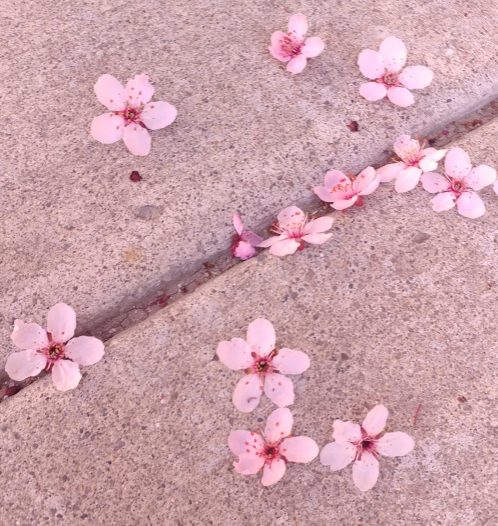
“Sidewalk Flowers” by Steven Harris. Used with permission.
“Neighbourhood Book Exchange” by Richard Eriksson. Used with permission
© Esther Hizsa, An Everyday Pilgrim, 2019.
Unauthorized use and/or duplication of this material without permission from Esther Hizsa is strictly prohibited. Excerpts and links may be used provided there is a link to the original content and credit is given as follows: © Esther Hizsa, An Everyday Pilgrim 2013-2019.  http://www.estherhizsa.com
Posted in Mindfulness, Reflections | Tagged , , , , , , , , | Leave a comment

Helping Each Other Make It Home

As you can imagine, I have been reflecting on the love mischief of tears and paying attention to what has come to my awareness.

Five truths have emerged.

1. I didn’t deserve to be bullied.

That statement alone brings me to tears. The Dam Keeper, Laurel’s kindness, and my friends’ responses to what I wrote about last week reassure the little girl in me that what happened when I was a kid was not right. I didn’t deserve to be treated that way. Not then and not now.

2. A person’s behaviour reveals their limitations.

My siblings felt bad about the way they treated me when we were kids. I don’t hold it against them. They would have treated me differently if they could. I’m grateful that they have been liberated to love well now. And they do.

3. My judgment reveals my inability to accept the limitations of others.

For months I’ve been bewildered and resentful toward those who gave me that punch in the gut. I kept trying to understand why they did it, fearing that somehow their actions were justified. When I recognize that they weren’t, I can let go of my resentment and accept their limitations. I can see that these people are similar to my young sister and brothers: they were doing the best they could too. For some reason, they didn’t have the capacity or freedom to see the possibility of another course of action.

4. Compassion is evoked when a wider understanding is revealed.

In the past few weeks, I have seen example after example of this.

I was talking with a friend about a series we both enjoy on Netflix and going off again about how much it bugs me when there are inconsistencies in the plot. “If the man who lives alone is deathly allergic to tomatoes, why would he have a can of tomatoes in his cupboard?”

“By the time someone working on the episode noticed the discrepancy–if they noticed–everyone on set was likely too exhausted and too pressed for time to do anything about it,” she replied.

Her viewpoint softened my heart toward the ones I’d judged.

A few days later, my heart was softened again. I was with friends for a meal and afterwards, we meditated on John 10:22-30. In this passage, those who were not following Jesus asked him to tell them plainly if he was the Messiah or not. I had assumed the inquirers were being antagonistic, but one fellow in our group said, “Maybe they were wondering if they could trust Jesus. I think they were afraid.”

5. We are all connected.

In Embers: One Ojibway’s Meditations, Richard Wagamese writes,

We are all connected … we all belong to each other.

Every year, once spring has sprung, my world regains proper proportion because baseball is back. I love the central metaphor of the game–all of us helping each other to make it home.

Relationships never end; they just change. In believing that lies the freedom to carry compassion, empathy, love, kindness and respect into and through whatever changes. We are made more by that practice.

I think about what I will say to friends who ask me what happened. It feels good to have the freedom to say what helps them make it home.

Accept one another, then, just as Christ accepted you.
–Romans 15:7 (NIV)

∗ ∗ ∗

Love Mischief for the World

The Vancouver Sun reported that on June 15 more than 1,500 people gathered outside China’s consolute in Vancouver to oppose an extradition bill and condemn the Hong Kong police force’s use of violence against protesters. Among them, was my friend Father Richard Soo. The Sun also reported that the next day Father Soo and Chris Chiu (who is leading the Intro to Ignatian Exercises retreat with me in October) and more than 200 others gathered Sunday afternoon for a prayer rally organized by Metro Vancouver Christians to support the human rights of the people of Hong Kong.

I just heard from Chris that they are having another ecumenical prayer meeting for Hong Kong on Thursday, June 27 at Tenth Church in the Lower East Hall at 7:30pm. Everyone is invited and welcome! Please spread the word. More info here https://www.facebook.com/events/345405429690045/

What love mischief are you and God doing to care for the earth?
Let me know and I will include it in an upcoming post.

Credits and References:
Photo of woman on dock by Matthias Zomer from Pexels. Creative Commons.
Quotes from Embers are found on pages 36, 45 and 44.
Return of the Prodigal by Jan Weenix in 1669 [Public domain]
© Esther Hizsa, An Everyday Pilgrim, 2019.
Unauthorized use and/or duplication of this material without permission from Esther Hizsa is strictly prohibited. Excerpts and links may be used provided there is a link to the original content and credit is given as follows: © Esther Hizsa, An Everyday Pilgrim 2013-2019.  http://www.estherhizsa.com
Posted in Childhood, community, Reflections, Stories | Tagged , , , , , , , , , , , , , | 2 Comments

The Love Mischief of Tears

“Find your pitch and hum it,” Donna said on the first morning of the seventh annual SoulStream Partner Gathering at Sorrento Centre. We hummed in harmony and in unison following her instructions. Then she stopped and remarked how beautiful we sounded. “That child that told you to stop singing, that music teacher that wanted you to just mouth the words, they were incorrect. You can sing. Every voice matters,” she said.

I noticed Susan looking up at Donna. She was listening intently and smiling. Her face bore such a sacred witness to this truth that I was moved to tears.

The night before, the twelve months of the year were posted around the meeting room.  We were asked to go and stand under our birth month. I was the only May baby, so Laurel left April to join me. I looked at the first question we were invited to talk about and tears began to form at the base of my throat.

Laurel shared a memory of a birthday party she enjoyed.

“I can’t remember my birthday parties,” I said. I was relieved the question didn’t ask about a sad memory, so I didn’t need to tell her about the year it was Hate Esther Day on my birthday. But of course, that was the next question. So I did and tears filled my eyes.

Saturday afternoon we had a “Cinema Divina.” We watched an animated short called The Dam Keeper. It’s about a young pig who has the job of keeping the darkness from coming into the town and how he is rejected and bullied by others that attend his school.

After the film and a few minutes of silence, we broke into small groups. I didn’t know how deeply I was affected by the film until I tried to tell Fred and Glen about the scene that impacted me the most. I could barely get my words out for the flood of tears.

Eventually, I said, “I loved how the fox reached out to the pig, but my strongest emotion was when I saw the crocodile and hippo drag the pig into the washroom and close the door.”

Saturday night a band played oldies but goodies in the open air Kekuli. We shed our “dance shame,” as Brent put it, and had fun dancing in twos or threes, alone or with a broom. When we knew the words, we’d sing along.

Laurel made eye contact with me from the other side of the Kekuli and invited me to slow dance. “We’re celebrating your birthday,” she said. When everyone sang, “I can’t help falling in I love you,” she sang it to me and my tears returned.

Sunday morning, Doug and Laurel challenged Jeff and me to a game of bocce on the lawn. “Come on,” Laurel said to me. “It’s what you do at birthday parties.” We were tied after the first two games, then Jeff and I won the rubber. They may say they let us win, but I wouldn’t believe them if I were you.

Near the end of worship on Sunday morning, Irene read Psalm 23 from Nan Merrill’s Psalms for Praying. The last line stirred up my tears again. “And I shall dwell in the heart of the Beloved forever.”

You prepare a table before me
in the presence of all my fears;
you bless me with oil,
my cup overflows.
Surely goodness and mercy will
follow me
all the days of my life;
and I shall dwell in the heart
of the Beloved
forever.
–Psalm 23:5,6
Nan C. Merrill,
Psalms for Praying: An Invitation to Wholeness

∗ ∗ ∗

Love Mischief for the World

The Dam Keeper is a 2014 American animated short film directed by former Pixar art directors Robert Kondo and Daisuke Tsutsumi. It tells the story of Pig, an introverted youth who lives in a windmill and keeps a dark fog from engulfing his town. Although socially rejected by his peers, he is befriended by the artistic Fox (Wikipedia). I wonder what love-mischief will happen to you when you watch this film and talk about it with others.

What love mischief are you and God doing to care for the earth?
Let me know and I will include it in an upcoming post.

Credits and References:
Photo of Partner Gathering 2019 by Doug Schroeder. Used with permission.
Photo of Sorrento Centre used with permission.
© Esther Hizsa, An Everyday Pilgrim, 2019.
Unauthorized use and/or duplication of this material without permission from Esther Hizsa is strictly prohibited. Excerpts and links may be used provided there is a link to the original content and credit is given as follows: © Esther Hizsa, An Everyday Pilgrim 2013-2019.  http://www.estherhizsa.com
Posted in Childhood, community, Prayer, Reflections, Stories | Tagged , , , , , , , , , , , , | 3 Comments

Inseparable

Fred and I gathered on Vancouver Island with family and friends of my nephew Lee to spread his ashes. Some came just for the ceremony, some for a few days and, others, like us, stayed for the whole week to wander in the mountains and forests and along the seashore–the places Lee loved best.

The afternoon of the ceremony was sunny and warm. We assembled at the beach, and I led with quotes by Richard Wagamese and Dostoyevsky, and poems by Hafiz. Others present shared their memories and reflections. We remembered how Lee loved, then lovingly, we let him go.

Over the week, we played outside, cooked together and visited microbreweries and cafés. I enjoyed conversations with siblings and nieces and their spouses who live far away. I loved watching them interact with my son and daughter and their spouses and my grandson. But, I didn’t enjoy my recurring feeling of inadequacy. I was often disappointed in myself, that I wasn’t more thoughtful, compassionate, or calm. I wished I was more well-read, more physically fit. I also didn’t like how my feelings of inadequacy and disappointment shifted my focus from others to myself.

And where was God?

Silently with me–the eagles circling above, the owl perched stoically by the river, the deer wandering down to the beach at dawn–not saying a word.

The morning after we returned home, I read this in a poem by Steve Garnaas-Holmes:

Nothing can separate you from the love of God.
Not your sin, not your most horrible awfulness …
Nothing can separate you from the love of God.
You are in it like the air, like gravity …

My “horrible awfulness” didn’t separate me from God’s love. But that love didn’t take away my horrible awful feelings either–and I wanted it to.

For I am convinced that neither death nor life, neither angels nor demons, neither the present nor the future, nor any powers, neither height nor depth, nor anything else in all creation, will be able to separate us from the love of God that is in Christ Jesus our Lord. –Romans 8:38-39

∗ ∗ ∗

Love Mischief for the World

Thursday morning, before we packed up again and left for the annual SoulStream Partner Gathering at Sorrento, BC,  I received this email from a friend. “Karen and I will truly miss being with the community of SoulStream gathering… as we tread Le Chemin de St. Jacques (Camino) in France. In almost every church here, there is an icon in statuary or in paint of the Sacred Heart of Jesus which has been a powerful entry into the welcome of Jesus for me. I have recently become aware that each of our hearts is sacred to Jesus.  Your heart is sacred to Him. As you gather, I offer this prayer, which worked well for me today as a repetitive prayer while walking:

Jesus, heart of the Father,
Holder of our sacred hearts within your sacred heart,
We welcome you.
Spirit of Jesus, pray for us and with us.”

What love mischief are you and God doing to care for the earth?
Let me know and I will include it in an upcoming post.

Credits and References:
Photo of Miracle Beach by Suzanne Tucker. Used with permission.
Photo of whitetail deer by Russ [CC BY 2.0 (https://creativecommons.org/licenses/by/2.0)%5D
Photo of Sacred Heart by Doug Webber.
© Esther Hizsa, An Everyday Pilgrim, 2019.
Unauthorized use and/or duplication of this material without permission from Esther Hizsa is strictly prohibited. Excerpts and links may be used provided there is a link to the original content and credit is given as follows: © Esther Hizsa, An Everyday Pilgrim 2013-2019.  http://www.estherhizsa.com
Posted in Prayer, Reflections, Stories | Tagged , , , , , , , , , | 2 Comments

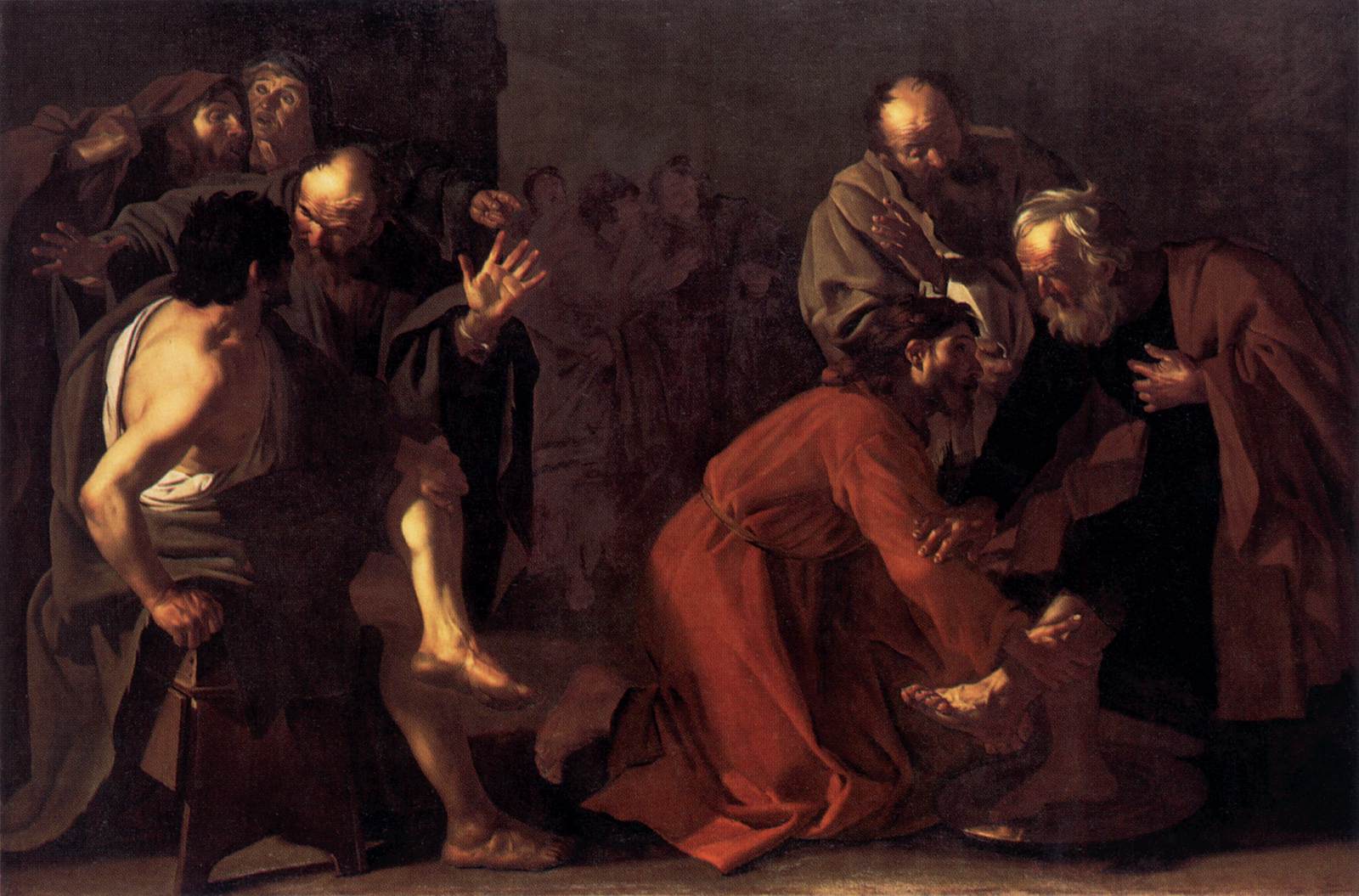
Love One Another


“Jesus, on the night of his betrayal and arrest, kneels at the feet of his disciples and in an act of intimacy and humility washes their feet and gives them his final message. They are to love one another,” Archbishop Melissa Skelton said in her homily to the delegates of the 119th Synod of the Diocese of New Westminster of the Anglican Church of Canada.

She went on to describe how we in the church should love each other. “For John’s Jesus, love is not about disposition or feeling. Love is something one does. Love seeks the well-being of others in concrete efforts on their behalf, even if this means the giving of our very lives in the process, giving in a way that costs.”

It’s easy to seek the well-being of others who think like we do. But put over 250 lay and clergy delegates in a room for a two-day conference and there will be some strong differences of belief about core issues, issues that might cause people to leave the church or vilify others.

If I want to love the way Jesus did, I need to stand with and keep loving people who believe I am dangerously wrong and vice versa. Love asks me to stand in my truth and allow the other to voice their thoughts and questions without shutting them down or dismissing them. Even if we have opposing views on indigenous rights, climate change, or what defines marriage, we are called to somehow stand together in unity.

At our table discussion over the affirmations proposed by Primate Fred Hiltz, one woman bravely asked, “Why should we ‘affirm the right of Indigenous persons and communities to spiritual self-determination in their discernment and decisions regarding same-sex marriage’? Why would one cultural group have rights to do as they please while others don’t? And if we allow each diocese to decide whether they feel it is right to perform same-sex marriages or not, where will that lead? It could be a slippery slope. Will they begin to decide about other things too and act independently?”

Two delegates avoided eye contact and said nothing. A priest and I offered explanations from our viewpoint.

When we broke for lunch, I thought of the courage it took for her to speak up and thanked her for asking those questions. She seemed surprised and disarmed by my gesture. We had been sitting across the table from each other, so I invited her to sit in the empty place beside me. We ended up having a lovely conversation about our lives.

That afternoon delegates expressed their views calmly yet passionately from microphones around the room. Archbishop Melissa asked us to honour whatever was offered without responding collectively (clapping or booing), and we did.

Two days later, I hosted a dinner with three dear friends. Ten years ago when we began meeting monthly, we were all in the same church and of one mind theologically. Now we’re not. It’s uncomfortable at times, and I’m sad that I can’t share things close to my heart and feel supported. As I was cleaning up the kitchen, I wondered if I wanted to continue meeting with these women. But I love them and so I will pay the cost of love.

“Relationships never end; they just change. In believing that lies the freedom to carry compassion, empathy, love, kindness and respect into and through whatever changes. We are made more by that practice.” –Richard Wagamese, Embers: One Ojibway’s Meditations

∗ ∗ ∗

Love Mischief for the World

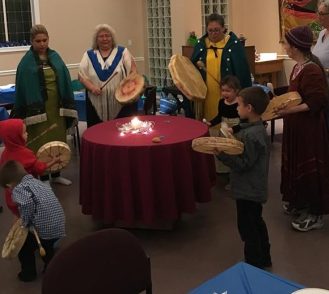
At Synod, we delegates overwhelmingly passed Resolution 6 to support the choice of the Mission and Ministry Development Committee that Urban Aboriginal Ministries (UAM) receive care + share givings for 2020-2021. UAM is a ministry of St. Mary Magdelene Anglican Church and supports Prayer Circles, Four Annual Feasts: Easter, Thanksgiving, Winterfest, and Christmas, Traditional as well as Ceremonies and Pastoral Care. This is an example of “doing” love. Desiring reconciliation with our Indigenous brothers and sisters means we support ways for them to recover their language and traditions and heal from the abuses of colonialism and the residential school system.

What love mischief are you and God doing to care for the earth?
Let me know and I will include it in an upcoming post.

Credits and References:
“Christ Washing the  Apostles Feet” Dirck van Baburen (circa 1594/1595–1624) [Public domain], via Wikimedia Commons (John 13:1-11)
Image of two hands from PxHere. Creative Commons.
Photo of Urban Aboriginal Mission WinterFest used with permission from UAM.
© Esther Hizsa, An Everyday Pilgrim, 2019.
Unauthorized use and/or duplication of this material without permission from Esther Hizsa is strictly prohibited. Excerpts and links may be used provided there is a link to the original content and credit is given as follows: © Esther Hizsa, An Everyday Pilgrim 2013-2019.  http://www.estherhizsa.com
Posted in Reflections, Stories | Tagged , , , , , , , , , , , , , , , , | Leave a comment

The Sound of Freedom Rising

It came like a low, distant hum, barely noticeable at first: a momentary sadness after a conversation.

The drone grew louder as I noticed it more often–after a suggestion I made evoked a negative response, after a compliment went nowhere, after an attempt at humour fell flat.

The incessant noise heightened whenever I didn’t get the response from others I was hoping for. Although my need for approval isn’t as strong as it used to be, I was disappointed that I couldn’t shut it off and be at peace.

It hummed in the background when I reflected again with my spiritual director about the incident that happened to me two months ago.

“I can easily see what they did wrong. But what do they see when they look at me? I suppose they see a person who doesn’t take no for an answer,” I said.

“And what does Jesus see?” she asked.

I closed my eyes and thought about my stubborn forthrightness. Then I heard Jesus say, “That’s what I love about you!” and burst into tears.

In one hand, I held my desire to be rid of what keeps me from fitting in and, in the other, Jesus’ desire that I cherish how I’m made.

“It seems that there is a cost to being your true self,” my director offered.

“Yes. Sometimes people aren’t going to like me or what I do.”

In an odd way, that felt freeing.

Perhaps the sadness I experience when I feel dismissed or don’t fit in is the sound of my true self rising. It’s the sound of new freedom.  And maybe, I don’t need to do anything about it.


The most courageous thing we will ever do
is
 to bear humbly the mystery of our own reality.
–Richard Rohr

Credits and References:
“Lonely Tree” by Mika Hiironniemi. Used with permission.
“Wheat” by FarbenfroheWunderwelt. Used with permission
Photo of Jean Vanier by Kotukaran, from Wikimedia. Creative Commons
© Esther Hizsa, An Everyday Pilgrim, 2019.
Unauthorized use and/or duplication of this material without permission from Esther Hizsa is strictly prohibited. Excerpts and links may be used provided there is a link to the original content and credit is given as follows: © Esther Hizsa, An Everyday Pilgrim 2013-2019.  http://www.estherhizsa.com
Posted in Poverty of Spirit, Reflections, Stories | Tagged , , , , , , , , , | 8 Comments

The Legend of La Loba

There is an old woman who lives in a hidden place that everyone knows but few have ever seen. . . . The sole work of La Loba, [the Wolf Woman], is the collecting of bones. She is known to collect and preserve especially that which is in danger of being lost creatures: the deer, the rattlesnake, the crow. But her specialty is said to be wolves.

She creeps and crawls and sifts throught the montañas, mountains and arroyos, dry river beds, looking for wolf bones, and when she has assembled an entire skeleton, when the last bone is in place and the beautiful white scuplture of the creature is laid out before her, she sits by the fire and thinks about what song she will sing.

And when she is sure, she stands over the creatura, raises her arms over it, and sings out. That is when the rib bones and leg blones of the wolf begin to flesh out and the creature becomes furred. La Loba sings some more, and more of the creature comes into being; its tail curls upward, shaggy and strong.

And La Loba sings more and the wolf creature begins to breathe.

And still La Loba sings so deeply that the floor of the desert shakes and as she sings, the wolf opens its eyes, leaps up, and runs away down the canyon.

Clarissa Pinkola Estés, Women Who Run With the Wolves

Hope leaps up in me when I hear the legend of La Loba (known in other lands as La Huesera, Bone Woman or La Trapera, The Gatherer). My soul declares, “It’s true. It’s true. That woman is God and I am the wolf. God is enlivening us all.”

My mind concurs. Ezekiel and the valley of dry bones, the shepherd that searches for the lost sheep, the prophet Zephaniah who sees God rejoicing over daughter Israel with singing are echoes of the same story. They’re stories of the resurrection and the coming of the kingdom.

God is always at work, searching relentlessly for the lost parts of ourselves, our communities, the earth and everything in it–and breathing life into us.

When I live out of this truth, I can trust that I will receive what I need to be whole. I don’t need to take it from someone else. Nor do I need to remain victimized by what’s been taken from me.

La Loba keeps collecting bones and bringing wolves to life; that is our work too. Every time I pause to hear God singing over my bones, I rise up with new eyes to see the lost bones of others. What song shall I sing over them?

When You send out Your breath, life is created,
    and the face of the earth is made beautiful and is renewed.
–Psalm 104:30 (Voice)

* * *

Love Mischief for the World

Maya Angelou (1928–2014) was an American poet, singer, memoirist, and civil rights activist. She published seven autobiographies, three books of essays, several books of poetry, and is credited with a list of plays, movies, and television shows spanning over 50 years. In this video,  Maya Angelou shares how she was liberated by love. It brought me to tears. I just had to share it with you.

What love mischief are you and God doing to care for the earth?
Let me know and I will include it in an upcoming post.

Credits and References:
Ezekiel 37:1-14, Luke 15:3-7, Zephaniah 3:17.
“Wolf” by Barnaby_S. Used with permission.
“Wolf Howling” by Steve Felberg on Pixabay. Creative Commons.
© Esther Hizsa, An Everyday Pilgrim, 2019.
Unauthorized use and/or duplication of this material without permission from Esther Hizsa is strictly prohibited. Excerpts and links may be used provided there is a link to the original content and credit is given as follows: © Esther Hizsa, An Everyday Pilgrim 2013-2019.  http://www.estherhizsa.com
Posted in Creation, Mystical, Reflections, Stories | Tagged , , , , , , , , , , , , , | 1 Comment

Empty

Empty

Before you go to bed,
shake the dust off your feet.
Open your front door and
–with a shoe in each hand–
smack those soles together.
Like a TV preacher,
tell those demons: “Be gone!”

Before you go to bed,
empty your pockets.
Pile up your
precious portfolio of plastic,
cell phone, cash, keys,
loose change, receipts, and Kleenex.
Pull your side pockets right out.
Flick those fabric ears clean of identity.

Before you turn back the sheets,
take off those dangly earrings, necklace, bracelet, watch.
Give your wrist a rub
until it forgets what it lugged around all day.

Before you turn out the light,
take a warm, wet cloth,
close your eyes and wash your face.
Wipe away all you heard, all you saw, all you tasted.
Brush off every word you spoke, tooth by tooth.
Gargle, spit, smile.

Before you lay your head on the pillow,
grab your ankles,
flip your body upside down and give it a shake,
hard,
like your mother did when she brought washing in from the line.
Snap out that lingering thought, that clinging regret
till it falls to the floor and rolls under the bed.

When you are
completely
empty,
pull the blankets up to your chin
and say goodnight to your life.

Go to sleep
filled with God.

Like a waterwheel of divine love, the Father empties all of himself into the Son. The Son receives and empties all of himself into the Spirit. The Spirit receives and empties all of himself /herself into the Father. The Father receives and the cycle continues. It’s no good telling people to let go if they can’t be assured they will be refilled, but the Trinity gives us a model for how that can happen. I can let go, because I trust I will always be filled up again.–Richard Rohr

* * *

Love Mischief for the World

Rod Janz, my friend and SoulStream partner (members of SoulStream Community are called “partners”) does some amazing podcasts. Letting go is another way of emptying. May you be filled with all the fullness of God.

What love mischief are you and God doing to care for the earth?
Let me know and I will include it in an upcoming post.

Credits and References:
Banner: Goodnight Moon written by Margaret Wise Brown and illustrated by Clement Hurd, 1947.
“Bed” by Erika Wittlieb on Pixabay. Used with permission.
“Empty” by Esther Hizsa. Used with permission.
A Good Night’s Sleep by 
Seán Ó Domhnaill. Used with permission.
Richard Rohr quote from Center for Action and Contemplation Meditation “Self-Emptying,” March 5, 2017,  adapted from Richard Rohr with Mike Morrell, The Divine Dance: The Trinity and Your Transformation (Whitaker House: 2016), 90-91.
This post was originally published on March 31, 2017. I thought it worked well with what I wrote last week. 
© Esther Hizsa, An Everyday Pilgrim, 2019.
Unauthorized use and/or duplication of this material without permission from Esther Hizsa is strictly prohibited. Excerpts and links may be used provided there is a link to the original content and credit is given as follows: © Esther Hizsa, An Everyday Pilgrim 2013-2019. http://www.estherhizsa.com
Posted in Poetry, Poverty of Spirit | Tagged , , , , , , , , , , , , , , , | 2 Comments

Surrendering to God’s Action Within

At the beginning of Lent, I downloaded Welcoming Prayer: Consent on the Go and committed to taking a few minutes a day to welcome “what is” in my life. If you have been reading my blog lately, you’ll know that hasn’t been easy.

In the morning after I had some time of silent prayer, I’d read a short chapter of the book and let the words guide me.

Feel and sink into what you are experiencing this moment in your body. . . Don’t think about it . . . The Spirit of God within invites us to just sink into it, feel it, welcome it and let it go. (28, 30)

Then I’d take a deep breath, let it out slowly, and notice what I was feeling and where I was feeling it in my body. Anger, disappointment, sadness and helplessness were frequent visitors.

As I sank into those feelings, judgment and blame often came to accuse me. I’d feel myself cower. Then I’d take another breath and remind myself that judgment and blame are not feelings. They are thoughts and I can ignore them. I am invited to welcome my feelings without thinking about them–without analyzing, fixing, or judging them or myself.

I’d greet my guests. “Welcome, Anger.” “Welcome,  Disappointment.” “Take a seat, Sadness and Helplessness.”

I also welcomed the Spirit of God, loving me deeply and accepting me completely–just as I am now with these feelings about all that is going on in my life.

I’d take another breath and say, “I surrender to God’s loving action within.” That “within” meant within my feelings and circumstances.

Usually, in the letting go to God’s action, I’d feel a gentle shift in my body. A sense of calmness and hope would emerge. I could enter the day with more freedom.

This five-minute practice keeps grounding me in the reality that my transformation is received and not achieved. Often when a new self-awareness arrives on my doorstep and I discover how I’ve fallen short or my actions have hurt another, I feel discouraged. Stopping right there and then and welcoming that feeling of discouragement and inviting God’s loving action into it reorients me to God and others and away from being preoccupied with myself and how well I’m doing.

I’m reminded of what I learned from Anthony de Mello‘s book Awareness: It’s my job simply to notice. It’s God’s job to transform me.

The Welcoming Prayer is a deceptively simple practice. Simple–and powerful. We don’t try to fix, improve, try harder, or change anything. We simply feel, sink into, welcome God’s presence and action–and let go. This is the “how” of our transformation. With daily practice, gradual transformation happens and attitudes begin to change. We cannot transform anything on our own power. Instead, we turn everything over to God. This is our prayer for help. It is a prayer to be free, but in God’s own time and in God’s own way, not ours. (70)

So here’s what I want you to do, God helping you: Take your everyday, ordinary life—your sleeping, eating, going-to-work, and walking-around life—and place it before God as an offering. Embracing what God does for you is the best thing you can do for God . . .  You’ll be changed from the inside out. –Romans 12:2 (MSG, adapted)

* * *

Love Mischief for the World

I love Anne Yungwirth’s photography. What joy to be able to share her pictures with you on my blog! I got to know Anne when I attended New Life Community Church. Anne and I were regular contributors to the church’s annual arts worship service. Anne continues to show me the many faces of God.

What love mischief are you and God doing to care for t earth?
Let me know and I will include it in an upcoming post.


Credits and References:
“If You Can’t Beat It, Enjoy It” by Anne Yungwirth. Used with permission.
“Ready to Burst” by Anne Yungwirth. Used with permission.
Welcoming Prayer: Consent on the Go was written, compiled for Contemplative Outreach by Pamela Bergman, Mary Dwyer, Cherry Haisten, Gail Fitzpatrick-Hopler and Therese Saulnier
Photo of Anne Yungwirth by Anne Yungwirth used with permission.
© Esther Hizsa, An Everyday Pilgrim, 2019.
Unauthorized use and/or duplication of this material without permission from Esther Hizsa is strictly prohibited. Excerpts and links may be used provided there is a link to the original content and credit is given as follows: © Esther Hizsa, An Everyday Pilgrim 2013-2019.  http://www.estherhizsa.com
Posted in Reflections | Tagged , , , , , , , , , , , , , , , | Leave a comment

On Each of My Risings

The deacon poured last year’s blessed oils onto the wood, newspaper and palm crosses. She lit them on fire and our Easter Vigil began. We read stories from the Hebrew scriptures, gospels and epistles, as God’s people have done for centuries. The readings remind us where we’ve come from and how we’ve been led–through suffering and death–to new life.

In her homily, Ruth Monette, our priest, talked about fire, how it lights the way and how it also burns and destroys. Our church, St. Stephen the Martyr, had a fire half a century ago and had to be rebuilt.

“Fires can be devastating,” she said. “When a forest catches fire, firefighters work hard to put them out. We don’t want people living nearby to lose their homes. But we’ve learned that for the forests to survive, we need to let them burn down so new trees can grow.”

While Ruth spoke, she glanced at me a couple of times. Although she told me afterward she wasn’t thinking about what had happened to me when she did that, I got the point.

A line from the Soul of Christ prayer came back to me. On each of my dyings, shed your light and your love. During the forty days of Lent, I died to what was, my power to change it, and my ability to get over it. All through Lent, Christ shed his love, but the light to see what would come of this death has not yet emerged.

We ended the service with timid shouts. “Hallelujah! Christ has risen!” Then we heard the pop of a cork and champagne and apple juice was poured for everyone. (Don’t you wish you went to my church!)

Celebrate, Esther! the Spirit seemed to say. Light is coming. 

Lent is over. Now, in this Easter season, we have fifty days of rising.

On each of my risings . . . what will Christ do?

I don’t know, but it’s going to good.

God’s Spirit beckons. There are things to do and places to go! This resurrection life you received from God is not a timid, grave-tending life. It’s adventurously expectant, greeting God with a childlike “What’s next, Papa?” –Romans 8:14-15 (MSG)

* * *

Love Mischief for the World

Jenny Konkin is the co-founder of a Downtown Eastside Vancouver organization called Whole Way House that works with vulnerable seniors and veterans. Jenny found out what happens when you end severe isolation and loneliness by inviting people into community. This video clip is taken from an interview with her on a podcast by Rod Janz on Fuel Radio. It’s truly inspiring.

What love mischief are you and God doing to care for t earth?
Let me know and I will include it in an upcoming post.

Credits and References:
“Flames” by sk_vel.Used with permission.
“Sunrise VIII” by Bart-s. Used with permission.
© Esther Hizsa, An Everyday Pilgrim, 2019.
Unauthorized use and/or duplication of this material without permission from Esther Hizsa is strictly prohibited. Excerpts and links may be used provided there is a link to the original content and credit is given as follows: © Esther Hizsa, An Everyday Pilgrim 2013-2019.  http://www.estherhizsa.com
Posted in Easter, Lent, Reflections | Tagged , , , , , , , , , , , , , | 1 Comment