The Fourth Event

On Sunday, we celebrate Pentecost, the fourth big event chronicled in the New Testament.

Christmas names the first one: the incarnation of Christ. God comes into our lives–into our joy and suffering. They called him Immanuel, “God with us.”

Reading the gospel stories, we, like Mary, Martha, Lazarus, and the disciples accompany Jesus and come to love him dearly. And he loves us as no other has ever loved us before. Then, we are heart-broken. At 33 years of age, Jesus is crucified. Good Friday marks the second event.

On Easter, we rejoice in the third event: Christ has risen. Death does not have the last word. Jesus is alive again. But he has changed, and he doesn’t stay. Jesus disappears into a cloud, and we are without him again.

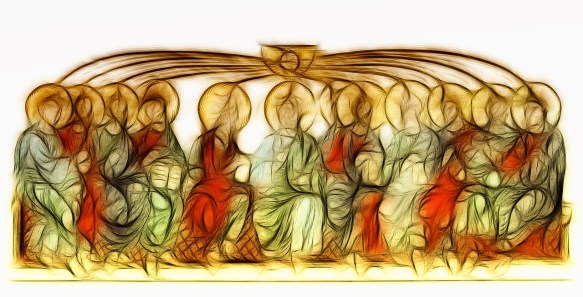
The fourth big event is Pentecost. The Spirit of Christ comes in power giving visions and dreams, not only to those who loved and lost Jesus but to all.

Though there is no feast to celebrate the fifth event, it is a watershed moment. Peter has a vision and hears, “Do not call something unclean if God has made it clean.” The message is clear: non-Jews are to be allowed to worship in the synagogues and temple as equals. As Peter tries to wrap his mind around the unthinkable: uncircumcised Gentiles are baptized in the Holy Spirit. The outcast and marginalized are included in God’s family.

Here we have the pattern for our lives. Jesus spells it out for us.

Very truly I tell you, unless a kernel of wheat falls to the ground and dies, it remains only a single seed. But if it dies, it produces many seeds. –John 12:24

Christ comes and awakens us to the reality that God is with us, in us–divine Love at the core of our being. Then there is a death of something good that we thought we could never live without. But after it, comes a resurrection and an anointing. Not only do we survive what we thought would kill us, we’re transformed.

Our transformation is not for us alone. Our eyes are opened. We see those who are poor, unfree, blind, and oppressed. Like Jesus, we are moved with compassion and see ways to alleviate suffering, end injustice, and participate in watershed moments.

This cycle of life>death>resurrection>empowerment>acts of compassion>life doesn’t just happen once. It happens again and again, and each time there is a death. Remember the Soul of Christ prayer.

On each of my dyings, shed your light and your love.

So here’s a question for you. What have you lost? What good thing is life releasing from your grip?

In your grief, look to the light. Look to love.

New life is coming with power, enlivening the Spirit of Christ in you, and you’ll be able to do things you never thought possible.

Dropping Keys

The small man
Builds cages for everyone
He
Knows.
While the sage,
Who has to duck his head
When the moon is low,
Keeps dropping keys all night long
For the
Beautiful
Rowdy
Prisoners.
–Hafiz

∗ ∗ ∗

Love Mischief for the World

It’s hard to believe that not long ago some people thought of other people as less than human and bought and sold them as slaves. This story of William Wilberforce and those who ended the slave trade inspires me to keep doing the good work we were created and empowered to do.

What love mischief are you and God doing for the world?
Let me know and I will include it in an upcoming post.

Credits and References:
Image of Pentecost if from Needpix.com. Creative Commons.
Soul of Christ” prayer,  paraphrased by David Fleming, is the Anima Christi prayer that Ignatius included at the beginning of the Spiritual Exercises of Ignatius of Loyola.
“Keys” by Patrick McFall. Used with permission.
“Dropping Keys” is in The Gift: Poems by Hafiz translated by Daniel Ladinsky, 1999. Used with permission.
© Esther Hizsa, An Everyday Pilgrim, 2020.
Unauthorized use and/or duplication of this material without permission from Esther Hizsa is strictly prohibited. Excerpts and links may be used provided there is a link to the original content and credit is given as follows: © Esther Hizsa, An Everyday Pilgrim 2013-2020.  http://www.estherhizsa.com
Posted in Christmas, community, Creation, Easter, Homelessness, Reflections, Stories | Tagged , , , , , , , , , , , , , , , , | Leave a comment

Convergence

When I wake in the morning
and all through the day, you are there
to comfort and lift me up.
Even at night, when emptiness threatens,
you fill me with yourself.
At my mother’s breast
and now that I am old,
you have been my friend my whole life long.

You may resonate with these words and say how good God is. But what if I told you that I wasn’t referring to God? I was talking about food.

I don’t recall what upset me that day, but I do remember the relief and comfort I felt when I bit into the saltine cracker. I must have been three or four years old because I needed a  step stool to get onto the kitchen counter and into the cupboard where the crackers were kept.

I have never in my sixty-three years of life known a significant period of time when I was free from the compulsion to eat.

Until now.

For the past three weeks, I’ve stopped snacking. My meals are high in fibre, plant-based and rich in Omega 3s. Sugar and junk food are out. I’m learning to “love the foods that love me back,” as John Robbins, author of Diet for a New America says.

I’ve also been consistently practicing centering prayer and yoga and going for walks or bike rides daily. I go to bed at ten pm and get up at six. I’ve never been able to do that before.

How did God bring me to the freedom that I’ve longed for my whole life? (I certainly didn’t get here on my own.)

There was a convergence.

Doing the Radical Compassion Challenge in January opened me to have compassion for the earth and future generations. This led to eating a plant-based diet for Lent.

Fear of throat cancer from acid reflux and heart disease from high cholesterol woke me up.

Listening to the Food Revolution Summit and Justin Michael Williams and the sudden death of a dear friend who was younger than me helped me stay woke.

The Universal Christ by Richard Rohr enabled me to face the death of food as my god and be resurrected into a new life in which I actually like spinach, blueberry, banana, and chia seed smoothies. I don’t enjoy them the way I do crackers or pizza, but I like how they satisfy me and restore my body.

Meanwhile, consuming whole foods was healing the pre-frontal cortex of my brain and giving me more impulse control. Without sugar and junk food in my diet, I began to enjoy the flavours of the wholesome foods I put in my mouth.

Covid-19 has allowed me the protected spaciousness to eat what nurtures my body without being tempted by what others are eating or having to be concerned about how my food choices affect them. Food is a touchy subject, way more controversial than sexual orientation or views about hell. It helps that right now the only one I eat with is Fred, and he supports me.

I feel great, and the day that I will no longer be obese is approaching.

God’s insatiable desire to set us free knows no limits. God is setting me free from past hurts, self-judgment, false beliefs, and crippling fears. God is also freeing me from compulsive behaviours that rob me of life.

I know that grace got me here and only grace can keep me here. I won’t maintain my resolve if I don’t stay woke, and I can’t stay woke without God’s help.

But today I can trust that the One who has been faithful will continue to give me the grace I need. Today is the only day I have.

There was an earthquake, and rocks were split in pieces.
What’s more, tombs were opened up, and many bodies of believers asleep in their graves were raised.
–Matthew 27:52-53 (Message)

Lord, You have always given
bread for the coming day;
and though I am poor,
today I believe.

Lord, You have always given
strength for the coming day;
and though I am weak,
today I believe.

Lord, You have always given
peace for the coming day;
and though of anxious heart,
today I believe.

Lord, You have always kept
me safe in trials;
and now, tried as I am,
today I believe.

Lord, You have always marked
the road for the coming day;
and though it may be hidden,
today I believe.

Lord, You have always lightened
this darkness of mine;
and though the night is here,
today I believe.

Lord, You have always spoken
when time was ripe;
and though you be silent now,
today I believe.

–Evening Prayer
from the Northumbria Community’s 
Celtic Daily Prayer

∗ ∗ ∗

Love Mischief for the World

Don’t dig up those dandelions or cut your lawn so often. Let the dandelions grow, and you’ll be helping bees survive. Here’s love mischief for the world that requires us to do less! You can read more about dandelions and bees here.

What love mischief are you and God doing for the world?
Let me know and I will include it in an upcoming post.

Credits and References:
“Sunrise” by Sachin Inamdar. Used with permission.
Empty tomb by pxfuel. Royalty-free.
Taken from Evening Prayer from the Northumbria Community’s Celtic Daily Prayer published by Collins. Used with permission.
© Esther Hizsa, An Everyday Pilgrim, 2020.
Unauthorized use and/or duplication of this material without permission from Esther Hizsa is strictly prohibited. Excerpts and links may be used provided there is a link to the original content and credit is given as follows: © Esther Hizsa, An Everyday Pilgrim 2013-2020.  http://www.estherhizsa.com
Posted in Aging, Lent, Mindfulness, Overeating, Reflections | Tagged , , , , , , , , , , , , , , , , , , , , , , , , | 6 Comments

Spaciousness

More and more I’ve noticed that I live on a continuum between panic and peace.

A misplaced click makes a document disappear, and suddenly I’m in “fight, flight, or freeze. My body, mind, and focus are constricted; my ability to think clearly is disabled. I’m wound up tight.

Just below panic is the place I most often live. Tara Brach calls it “The Trance of Anxiety.”

This is also a constricted space. I vigilantly watch out for the next thing that’s going to derail me. Pressured with deadlines, expectations, and scarcity of one sort or another make me feel like I’m in the trash compactor from Star Wars and the walls are closing in.

I know I’m in the Trance of Anxiety when I lack patience or have no space for others to be different. My hands are in tight fists, mirroring the constriction I feel and the instinct to defend myself.

Anxiety is a real place. But there’s another place I live that’s just as real.

It’s where I feel “Aah!” and my hands relax in a vulnerable, open posture.  This is a place of peace, abundance, and spaciousness. I taste it when I have a Saturday with nothing on my agenda or when I can finally unwind after I’ve finished a week of facilitating.

But this spaciousness is not limited to a day of the week or outer circumstances. It’s an inner reality, and (I love this): it’s always there.

The spaciousness that God gives is in the core of my being. In this place, I know that God is here, God is with me, and no matter what happens, all shall be well.

Listen to how the psalmists experience God’s spaciousness.

I’m leaping and singing in the circle of your love; you saw my pain, you disarmed my tormentors. You didn’t leave me in their clutches but gave me room to breathe. —Psalm 31:7-8

God, you did everything you promised, and I’m thanking you with all my heart. You pulled me from the brink of death, my feet from the cliff-edge of doom. Now I stroll at leisure with God in the sunlit fields of life. —Psalm 56:12-13

Pushed to the wall, I called to You; from the wide-open spaces, You answered. —Psalm 118:5

I can sink into those “wide-open spaces” simply by slowing down for a moment, taking a few conscious breaths, and remembering what’s true.

One spring, I was biking with my brother in the Okanagan. I said more than once how much I loved the rolling hills and the wide-open spaces.

“You could always move here if you really want to,” he replied.

Yes. I have a choice about where I want to live. I can choose to return to God’s spaciousness at any time.

When I reside in spaciousness I’m more able to slow down and allow ‘what is’ to be there. I’m more comfortable in my skin and more accepting of others.

I cannot choose to live in permanent residence there. I can only, in this moment, choose to return or rest there.

God stood me up on a wide-open field; 
I stood there saved—surprised to be loved! 
Psalm 18:19 (The Message) 

∗ ∗ ∗

Love Mischief for the World

Every day we enjoy the love mischief of trees.

What love mischief are you and God doing for the world?
Let me know and I will include it in an upcoming post.

Credits and References:
“Death Star Trash” by Manoel Lemos. Used with permission.
Psalms quotations from The Message.
“Sunset over wheat fields near Palouse, Eastern Washington State” by Diana Robinson. Used with permission.
© Esther Hizsa, An Everyday Pilgrim, 2020.
Unauthorized use and/or duplication of this material without permission from Esther Hizsa is strictly prohibited. Excerpts and links may be used provided there is a link to the original content and credit is given as follows: © Esther Hizsa, An Everyday Pilgrim 2013-2020.  http://www.estherhizsa.com
Posted in Creation, Mindfulness, Reflections | Tagged , , , , , , , , , , , , , , , , | 1 Comment

Embracing the Power I Have

If Jesus were my spiritual director and had read Becoming What I Eat and Drink, he wouldn’t ask me about my desire to be Mr. Rogers. He would ask me about the agitation I felt watching that scene from Jesus Christ Superstar.

“There’s a scream inside you,” he repeats softly as I sit in silence one morning.

My shoulders tighten and the energy in my belly is like a trapped cat. I sense pressure in my throat and tension in my thighs.

Jesus listens deeply to what I’m feeling in my body and waits.

Gradually the energy in my belly becomes still and heavy; my shoulders and legs relax. It’s just there, this wishing there weren’t so many demands.

Now I picture Jesus’ hand on the still animal of desire, stroking its head, feeling its fur, speaking kindly: “This is so hard.”

“Yes,” I reply to his compassionate presence. “Demands come from people I want to love, who deserve to be loved, but it’s all too much.”

He continues to stroke the animal’s head and furry cheek. My entire body is relaxed except for a pressure in my belly and throat. Perhaps it’s the scream still poised.

But I don’t feel like screaming now. I feel like reaching up from my belly through my throat and out to the person who wants something. I see their face. I imagine myself touching their cheek and looking into their eyes. I realize, in that moment, I can be present to them.

Now I feel a tenderness in my throat. The animal of my body is purring. It loves to love.

The next day I was preparing a talk about Tonglen prayer for Living from the Heart. Tonglen is the practice of breathing in the suffering of another and breathing out comfort, peace, and well-being. These words were in my notes.

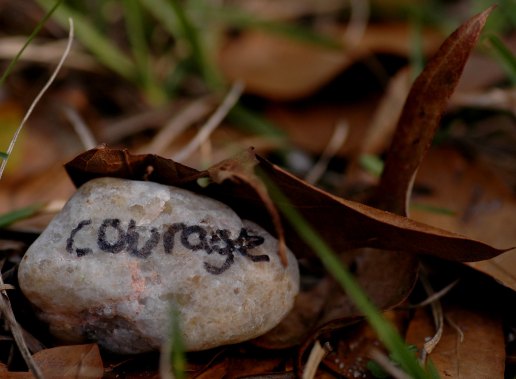
All it really takes is the courage to believe that suffering cannot hold a candle to love. We give evil power through fear. When we trust that the Spirit within us has the power to transform the negative energy of suffering into the creative energy of peace and well-being, we can let go of fear and embrace our power–a power we have in Christ.

The following morning, as I sat again in silence, I understood that I had been afraid that an avalanche of suffering would come in if I opened the door to any more people. My agitation wanted to protect me from that possibility.

Now that this fear has been revealed, I can thank it and let it go.

Only one moment at a time can come through the door of my life. At each moment, I can take a calming breath and welcome the one before me and listen. Whatever suffering I let in me can be transformed into love.

I have told you these things,
so that in me you may have peace.
In this world, you will have trouble.
But take courage!
I have overcome the world.
John 16:33 (NIV, adapted)

∗ ∗ ∗

Love Mischief for the World

What love-mischief might God be doing in Covid-19? Might it lead to a great realization? Probably Tomfoolery tells us about it in this “simple poem in complicated times.”  On his Facebook page he writes, “In the bad, we find the good.”

What love mischief are you and God doing for the world?
Let me know and I will include it in an upcoming post.

Credits and References:
“Cautious Kitty” by Riik@mctr. Used with permission.
Quote from my notes was written by Jeff Imbach, one of the founders of SoulStream community and a co-facilittor of Living from the Heart.
“Courage” by jridgewayphotography. Used with permission.
© Esther Hizsa, An Everyday Pilgrim, 2020.
Unauthorized use and/or duplication of this material without permission from Esther Hizsa is strictly prohibited. Excerpts and links may be used provided there is a link to the original content and credit is given as follows: © Esther Hizsa, An Everyday Pilgrim 2013-2020.  http://www.estherhizsa.com
Posted in compassion, Mindfulness, Poetry, Reflections, Stories | Tagged , , , , , , , , , , , | Leave a comment

A Me I Have Not Seen Before

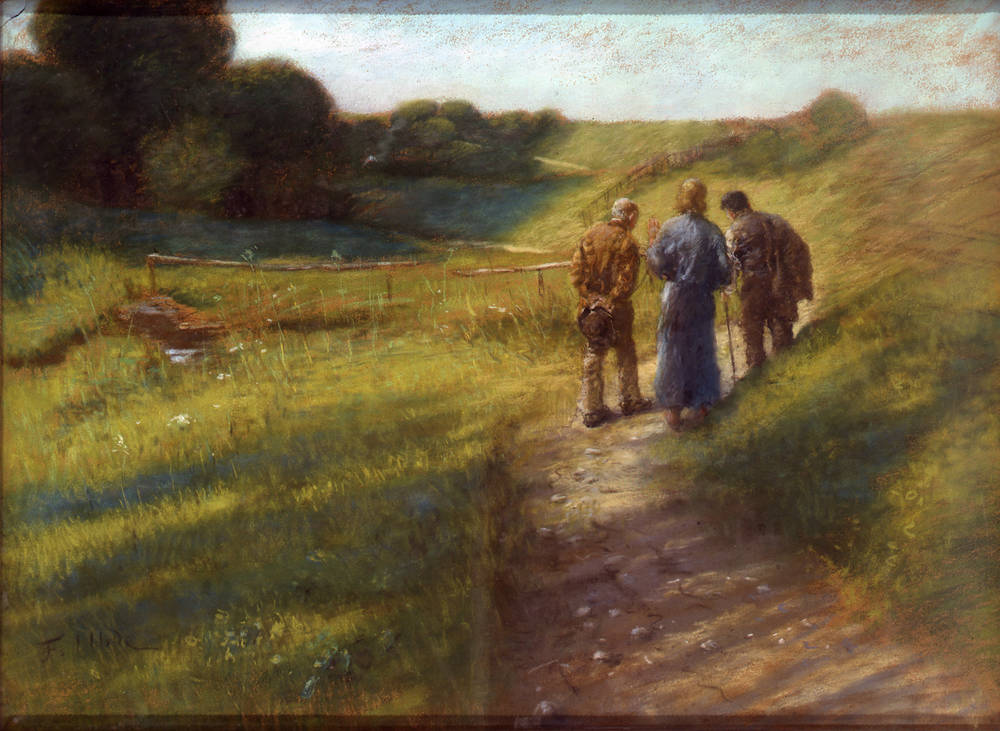
I’m curious. Why didn’t Mary Magdelene or the disciples on the road to Emmaus recognize the risen Lord? Why did the resurrected Christ suddenly have the superpower to appear and disappear, walking through walls and closed doors. And why, when Jesus’ body was gloriously restored, did he still have the scars on his hands, feet, and side?

Reflecting on these three mysteries, David Johnson, a SoulStream partner, says this to our community,

This third mystery is really the key to grasping fully the meaning of resurrection—i.e., the key to experiencing resurrection, not just accepting the doctrine. Jesus’ lingering wounds tell us that the new life God offers us is not about restoring perfection. It’s not taking us back to the Garden of Eden. Resurrection isn’t a “do-over.” No, I believe that the resurrected Jesus continues to bear the wounds as a sign that he is continuing to be with us, daily taking the slings and arrows of this outrageous life right along with us. And he’s now inviting us to do the same for others. That means that resurrection isn’t just a one-time event, something in the past to profess faith in, something in the future to wish for. No, resurrection is here. It’s now. It’s not so much something to be believed as it is something to be lived.

The resurrection is something to be lived. Jesus shows us that as we live it out, we will look different, we will do things we couldn’t do before, and we will continue to bear the scars of the wounds that threatened to kill us.

So, I ask myself, How am I different in my post-Easter Covid-19 life? What can I do now that I never could before? From what deaths have I risen?

As you reflect on these three mysteries, I would love to hear how you’ve experienced resurrection. Here’s where these questions take me.

I’ve never seen myself so consistent at centering prayer, daily exercise, and eating healthy food. I never thought I would have the superpower to run Zoom meetings complete with screen shares, breakout rooms, and random unnerving glitches. While my normally full life has been ramped up with steep learning curves and more responsibilities and jobs to do, I’ve been given words to breathe that keep me grounded: pause, be one, notice, let go of what doesn’t serve you.

Twenty-five years ago, I thought I would die when Fred was so sick that he had to fly back to Canada leaving me in Turkey with our thirteen-year-old son, ten-year-old daughter, and a 40-foot boat I couldn’t sail. A few years later, I thought I would die when I had to leave a church I loved because I couldn’t fix what was wrong. I thought I would die last spring when I was judged and dismissed.

But I have risen.

As I recall those events, I no longer experience the intense grief, helplessness, or shame I felt then. I feel free and a little less afraid of the next death that’s coming. I have more compassion and hope for others who are struck down for they will but not be destroyed. I have more freedom to choose what gives life to me and to others instead of numbing, disappearing, or distracting myself. That’s not to say I don’t do those things anymore, but to have the superpower to do them less often than I used to. Now that’s a me I have not seen before.

We are afflicted in every way, but not crushed; perplexed, but not driven to despair; persecuted, but not forsaken; struck down, but not destroyed; always carrying in the body the death of Jesus, so that the life of Jesus may also be manifested in our bodies. –2 Corinthians 4:8-10 (ESV)

∗ ∗ ∗

Love Mischief for the World

Being resurrected is being awake to what is true and living out of that space. It’s the state of being “woke.”  When we are awake–living with awareness–we make life-giving choices that affect the planet and its inhabitants. Justin Michael Williams explains this term with a lot of passion. That passion comes from his roots and from his own transformed life. He invites us to stay woke and join the revolution that begins from inside where God/Truth/Love dwells in the core of our being.

What love mischief are you and God doing for the world?
Let me know and I will include it in an upcoming post.

Credits and References:
Road to Emmaus by Fritz von Uhde – Der Gang nach Emmaus (1891). Wikimedia Creative Commons.
“We can do it- Rosie the Riveter” by .alicia.kowalski. Used with permission.
© Esther Hizsa, An Everyday Pilgrim, 2020.
Unauthorized use and/or duplication of this material without permission from Esther Hizsa is strictly prohibited. Excerpts and links may be used provided there is a link to the original content and credit is given as follows: © Esther Hizsa, An Everyday Pilgrim 2013-2020.  http://www.estherhizsa.com
Posted in Easter, Reflections | Tagged , , , , , , , , , , , , | Leave a comment

Becoming What I Eat and Drink


On Good Friday I watched Jesus Christ Superstar (Stay Home #WithMe). I braced myself for the scene that bothers me more than the thirty-nine lashings or the death of Judas.

A woman comes out of the shadows, “See my eyes I can hardly see. ” Then a man, “See me stand I can hardly walk.” Then more and more and more people approach Jesus.

“I believe you can make me whole. See my tongue I can hardly talk. See my skin I’m a mass of blood. See my legs I can hardly stand. I believe you can make me well. See my purse I’m a poor, poor man.”

The voices get louder and more insistent. “Will you touch, will you mend me, Christ? Won’t you touch, will you heal me, Christ? Will you kiss, you can heal me, Christ?  Won’t you kiss, won’t you pay me, Christ?”

Jesus tries to touch each one but he can’t. “There’s too many of you; don’t push me. There’s too little of me; don’t crowd me.”

They all converge, relentless until he screams. “Heal yourselves!”

I’m agitated on one level because this isn’t the Jesus I know. I’m also agitated at a deeper level because this is how I feel and act sometimes. Though my screaming comes in a different form, it is a scream none the less. My soul cries, “There are too many of you; there’s too little of me.”

On Easter Saturday, Fred and I watched It’s a Beautiful Day in the Neighbourhood. The journalist who has come to interview Fred Rogers sees over and over again, how Mr. Rogers takes time with each neigbour he meets. He is never rushed, fully present. He loves them just the way they are. He gives himself to them. This is the Jesus I know.

I want to be Fred Rogers, I sighed. I mean, I want to be my truest self, the me that I see in Fred Rogers.

Long ago, I gave up trying to make myself into someone else. I’ve also given up trying to become my True Self. That’s God’s work. I can’t push the river. Until God transforms me, I’m resigned to being overwhelmed, self-protective, and hurtful at times.

On Easter Sunday before I  went online to participate with Christ Church Cathedral in the Holy Eucharist, I read “This Is My Body,” Chapter Eleven in Richard Rohr’s The Universal Christ. In it, Rohr writes,

“As St. Augustine said, we must feed the body of Christ to the people of God until they know that they are what they eat! And they are what they drink!”

Tears began to flow. I can be Mr.Rogers. I am Mr.Rogers.

Minutes later, I joined the people of God. Hundreds of us in our homes gathered around Christ’s table. With them, I ate Jesus’ body and drank his blood and consumed the reality that my deepest me is God, as Catherine of Genoa once said.

I have been resurrected, and I can live out of Christ in me. Fred Rogers is in me, ready to come out of the tomb.

As the bread and wine which we now eat and drink
are changed into us,
may we be changed again into you,
bone of your bone, flesh of your flesh,
loving and caring in the world.
Amen.
from A Communion Liturgy of the Iona Community

∗ ∗ ∗

Love Mischief for the World

This sermon by Archbishop Melissa (-26.29) brought me to tears. Her words went right into my heart and from it at the same time. “I rely on the resurrection,” she said.

What love mischief are you and God doing for the world?
Let me know and I will include it in an upcoming post.

Credits and References:
The poster It’s a Beautiful Day in the Neighborhood is owned by Sony.  This image is used to provide critical commentary on the film of the poster itself, not solely for illustration and qualifies as fair use under the copyright law of the United States.
Photo of communion elements from Wallpaper Flare. Creative Commons.
© Esther Hizsa, An Everyday Pilgrim, 2020.
Unauthorized use and/or duplication of this material without permission from Esther Hizsa is strictly prohibited. Excerpts and links may be used provided there is a link to the original content and credit is given as follows: © Esther Hizsa, An Everyday Pilgrim 2013-2020.  http://www.estherhizsa.com
Posted in Easter, Holy Week, Reflections | Tagged , , , , , , , , , , , , , , | 1 Comment

Rooted, I Rise

Two weeks ago, I looked at my Christmas cactus and wondered if, like me, it needed a haircut. It’d finished blooming, so it was time. But then I saw a tiny bud and found another and another. My faithful friend wasn’t ready to stop blessing me.

Some mornings I wake in triumph having rested well and not given in to the temptation to eat during the night. This morning, I wake in defeat. I make coffee and look to see how the buds have changed. Their growth is barely noticeable.

In an email, I receive this quote by Joan Chittister.

As life goes on, it becomes clearer and clearer that the cross is not a dark aspect of religion. It is, on the contrary, the one hope we have that our own lives can move through difficulty to triumph. It’s the one thing that enables us to hang on and not give up when hanging on seems impossible and giving up seems imperative. The cross says very clearly that things will work out if we work them out and that whatever is, is important to our life’s fulfillment. The cross says that we can rise if we can only endure.

We’re in the Easter season and yet, in many ways, we’re still on the cross of our struggles and in the tomb of Covid-19. I keep losing and gaining back two of the thirty pounds I need to shed to bring my cholesterol down. I remind myself to be present when I walk, but my mind, like a restless hound, strains on the leash. A kilometre later, I realize I’ve been planning again.

When I realize that once again I’ve failed to do what I intended, I feel sad and discouraged. The temptation to give up is strong but not as strong as the temptation to berate myself.

For a split second, I pause.

It’s in that pause, that resurrection happens.

In that pause, I hear, “This is hard.”

The tiny buds say, “Look at me. Trust. New life is coming.”

“Persevere,” Joan says.

That’s enough to open my heart to pray and allow me to unroll my yoga mat. I hear Adriene say, “Let’s begin seated in a cross-legged position. Congratulate yourself for being here. The hardest part of the practice is over.”

All I have to do right now is to listen to her voice and notice how it feels in my body. That’s all God asks of me in this moment.

“Root to rise,” I hear Adriene say.

Rooted, I rise.

“If we could surrender to Earth’s intelligence,
we would rise up rooted, like trees.”
–Rainer Maria Rilke

∗ ∗ ∗

Love Mischief for the World

In many ways, my story is nothing like Maya Angelou’s and yet I listen to this and know she is speaking for all of us. We have all been lied about, ground down, and killed with hatefulness. We have all been the slaves of shame and pain and yet, like life, we rise. We rise because Christ, who is at the core of our being, rose and continues to rise.

What love mischief are you and God doing for the world?
Let me know and I will include it in an upcoming post.

Credits and References:
Photo of the Schlumbergera (Christmas Cactus) by Maja Dumat. Used with permission.
Quote from Wisdom Distilled from the Daily, by Joan Chittister, p 148.
“As the mist rises” by Mark Seton. Used with permission.
© Esther Hizsa, An Everyday Pilgrim, 2020.
Unauthorized use and/or duplication of this material without permission from Esther Hizsa is strictly prohibited. Excerpts and links may be used provided there is a link to the original content and credit is given as follows: © Esther Hizsa, An Everyday Pilgrim 2013-2020.  http://www.estherhizsa.com
Posted in compassion, Easter, Holy Week, Overeating, Prayer, Reflections, Stories | Tagged , , , , , , , , , , , , , , | 2 Comments

Remaking History

We were about to make Canadian history: the first Living from the Heart course day on Zoom.

Audrey, Brent and I had put in extra hours rearranging the material, learning how to do break out rooms, and prepping the participants. We asked them to be patient with us and with themselves as this was a first.

At 8:30 I tried to join the participants who were checking their equipment before we began at 9:00, but I couldn’t get into the meeting. Then I tried to text Audrey, who was our Zoom host, but my cell phone went blank. My heart pounded, my cell phone was unresponsive and the circle on my screen kept circling and circling and not letting me in.

My mind flooded with what-ifs. What if I couldn’t join? What if they have to manage the day without me? What if I’ve done something to my account that caused this?

Finally, after ten minutes of mind racing and jittery panic, my face appeared along with the invitation to join. Everything was fine. I could relax.

A few days later, I had another episode of sudden, irrational panic, when Fred wasn’t where I thought he would be, and I couldn’t get ahold of him on his cell.

“I was listening to a lecture by Tara Brach and she said, ‘Anxiety is the portal to freedom’,” I said to my spiritual director after telling her about my episodes of panic. “She encouraged us to welcome anxiety, feel it in our bodies, and listen to it as if it were a vulnerable child. She asked, ‘What does your anxiety want to hear from a kind soul?'”

My director asked me the same question.

“I hear: ‘This is hard.'” Tears filled my eyes and rolled down my cheeks.

In that hour, we listened deeply to my body, God, and the words and images that came to me while tears continued to flow.

At first, God brushed away all the guilt, blame and shame I felt about being anxious. That brought tremendous relief.

Then God came close and wrapped his arms around the tiny, panicking baby in me and soothed me. He was so grateful for my anxiety. It was my anxious cry that helped him find the part of me that was buried under the leaves of guilt and blame. God matched my panic with his desperation to comfort me.

To God, my anxiety was not something to be feared or shunned, but a guest to be warmly welcomed and treated with honour and respect.

As I step back and look at my life, I’m often in what Tara Brach calls “the trance of fear.” Anxiety constantly murmurs below the level of consciousness. It compels me to rush and causes me to judge.

Now I see that anxiety knocks at my door whenever I’m aware that I’m rushing or judging. It bursts in uninvited when I’m in a full-blown panic.

These moments are gift.

These are the moments when I hear the tiny baby in me crying and God and I can go to her.

Every time we do, we re-make history.

*

After I finished writing this, I wondered why this story was given to me for my Good Friday post?

Perhaps it’s because this is what Good Friday is about. God, who can’t stay away, comes to earth, walks with us on the road, and goes with us into our pain to set us free.

The Guest House

This being human is a guest house.
Every morning a new arrival.
A joy, a depression, a meanness,
some momentary awareness comes
as an unexpected visitor.
Welcome and entertain them all!
Even if they are a crowd of sorrows,
who violently sweep your house
empty of its furniture,
still, treat each guest honourably.
He may be clearing you out
for some new delight.
The dark thought, the shame, the malice.
meet them at the door laughing and invite them in.
Be grateful for whatever comes.
because each has been sent
as a guide from beyond.

—Jellaludin Rumi,
translation by Coleman Barks

∗ ∗ ∗

Love Mischief for the World

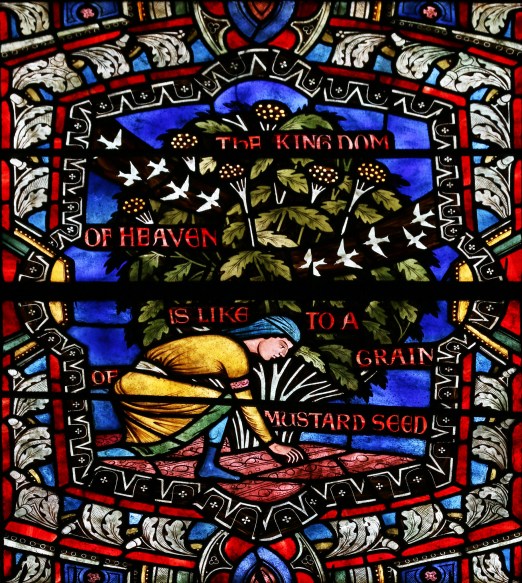
Have you noticed the sky is bluer? Clouds are clean and fluffy. Daffodils are coming up on school grounds in beds so perpetually trampled that no one knew there were bulbs underground. The earth is breathing a sigh of relief as fewer planes, ferries and cars are in motion. Now that we can’t shop, work or visit as much, more people are walking and biking–enjoying the beauty around them. The blossoming trees blush, delighted to be given so much attention. There’s some divine love mischief happening on our earth. “Now I am revealing new things to you, things hidden and unknown to you, created just now, this very moment. Of these things, you have heard nothing until now. So that you cannot say, Oh yes, I knew this. –Isaiah 48:6-7 (Jerusalem Bible)

What love mischief are you and God doing for the world?
Let me know and I will include it in an upcoming post.
Credits and References:
Photo of mural of little girl and balloon from Pixabay. Creative commons.
Quote by Tara Brach from before in a lecture on anxiety and sleeplessness.
“‘Just right!’ she sighed.” by Steve Corey. Used with permission.
“The Guest House” from The Essential Rumi is a teaching story translated by Coleman Barks © by owner provided at no charge for educational purposes.
© Esther Hizsa, An Everyday Pilgrim, 2020.
Unauthorized use and/or duplication of this material without permission from Esther Hizsa is strictly prohibited. Excerpts and links may be used provided there is a link to the original content and credit is given as follows: © Esther Hizsa, An Everyday Pilgrim 2013-2020.  http://www.estherhizsa.com
Posted in Holy Week, Poetry, Prayer, Reflections, Spiritual Direction, Stories | Tagged , , , , , , , , , , , , | 2 Comments

Using Our Imaginations to Be with Christ in Holy Week

In the past few posts (and in my upcoming Good Friday post), I have shared how Christ has shown compassion for me in my suffering.

Now I want to be with Jesus in his suffering. The best way I know how to do that is to imagine myself with him in the stories of his passion and death. Will you join me?

An Introduction to the Prayer of Imagination/Ignatian Contemplation

    • It’s an old way of praying.
      People have been praying this way for centuries unintentionally and intentionally. It was developed and used extensively by Ignatius of Loyola in the 16th century.
    • It’s possible.
      Some people think they don’t have a very good imagination. If you can worry, you have a good enough imagination!
    • It’s earthly.
      We get into the scene with our five senses.
      What we’ve experienced in life informs our imaginations. For example, we don’t need to know what a hillside in Galilee looks like. Imagining a hillside we know will do.
      Our imaginations don’t always tell us what’s true; we can imagine Jesus not being Jesus. Suppose in your prayer  you meet up with Jesus and he scowls at you and says, “What took you so long?” This is not Jesus but someone else in your life that is being projected onto him. If this happens, stop right there. Let that image go and ask the real Jesus to come and take the imposter’s place.
    • It’s heavenly.
      We get to experience Jesus face-to-face.
      God uses our imagination to shows us what we couldn’t imagine. We can be surprised by love.
      This prayer experience becomes our gospel story. Like the woman at the well, our encounter changes us, and it is a real encounter that we will treasure forever.
    • I have written about my experiences of praying the prayer of imagination. Here a post about what happened when I prayed with the story of Jesus’ and Blind Bartimaeus. (Mark 10:45-52)
  • Praying the Prayer of Imagination in Holy Week 
    • Usually, when we use our imaginations to pray with a gospel story, our focus is on our relationship with Jesus. We are often given an awareness or gift that opens us to see Jesus more clearly, love him more dearly and follow him more nearly. But in the Holy Week scriptures, Ignatius invites us to turn our attention to Jesus and let him receive gifts from us.
    • The only gift Jesus asks for is our presence. “ When we pray with the stories of the passion and death of Jesus, we might feel pity, horror, gratitude, wonder,” writes David Fleming. “But the specific grace that Ignatius would have us seek is the grace of compassion. Ignatius emphasizes how important it is to enter into Jesus’ inner experience. We are to suffer with Jesus—by our compassion. It is as if Jesus were saying, ‘Let me tell you what it was like, what I saw, what I felt. Please don’t interrupt; just stay with me and listen.’”
    • Just stay with Jesus, listen, and offer comfort– a sip of cold water, your hand on his cheek, a gentle embrace.
    • We cannot stop what is happening, nor does Jesus want us to. This is so hard. We want so badly to change the situation or run away. We are tempted to distance ourselves physically or emotionally, so we don’t feel the pain of another. We fear it will overwhelm us.
    • It takes courage to suffer with anyone who is about to die and to feel so helpless. That’s why we need grace. We can ask God to help us stay with Jesus and not fall asleep in one way or other.

Prayer Guide
In Ignatian Contemplation, we use our imaginations to put ourselves into a gospel story in order to encounter Christ in the scene.

    • You will need to actively use your imagination—things won’t just happen on their own.
    • Get involved in what is taking place. Don’t just be an observer.
    • Don’t try to come up with a lesson or insight from the story. It’s about being with Jesus be in the scene.
    • Don’t worry about being distracted; when you notice your mind wandering, gently bring yourself back to the scene.
    • Set aside 20-30 minutes for your prayer.

Steps:

    1. Ask for God’s grace as you begin your prayer e.g.:
      God, you are with me always and have shown compassion to me in my suffering. I ask for the grace to be with you in yours and offer you compassion.
    1. Readings:
      • As you read the passage, let the gospel scene saturate your mind. Read the passage slowly two or three times. Notice what you see. What do you hear, smell, taste or touch? Use your five senses to help you get into the story.
      • If you remember details from another gospel allow them to play into the story, but don’t look up the different accounts.
      • There is no need to remember every detail of the story. Just focus on what seems alive to you.
    1. Praying with your Imagination
      • Gently, place yourself in the scene. What is it like to be there? Use your five senses.
      • If you begin as one person in the story (e.g. Peter), you do not need to do what he does. In fact, to show Jesus compassion, you will do what is not recorded in scripture. Let your story unfold.
      • Feel free to participate in the scene naturally as you would if you were there.
      • Notice that you may be drawn to intervene and stop what is happening. But this is not what Jesus wants. His story must play out. Your role is simply to be with Jesus so he does not suffer alone.
      • Even in suffering, you may experience Jesus extending compassion to you. This is a beautiful gift, but be careful not to allow the focus to shift to you and your story.
      • What feelings emerge as you participate in the story? How might you express your compassion to Jesus?
      • Don’t worry if it feels like not a lot is happening. Your presence with Jesus at this difficult time is a precious gift to him.
    1. Ending
      • Gently withdraw yourself from the scene and end the prayer period with a short prayer of thanks.

The Scripture Passages: (Choose one each day)

Easter Sunday

On this glorious day, we ask for the grace to experience the joy of Jesus in his resurrected body and his victory over death. In our prayer, we travel through time and space and meet him in the upper room, outside the empty tomb, on the road to Emmaus or on the beach with a spectacular catch of fish. Choose one of the resurrection stories and be with Jesus there.

Feel free to tell us how your prayers went in the comments below.

Grace and peace to you, my friends.

Credits and References:
“Christ Carrying the Cross” by Titian (1490-1575). Wikipedia Public Domain
Quote by David L. Fleming from What is Ignatian Spirituality? p.84.
Partial copy from The Entombment (Russian, Late 15th Century) Icon written and photographed by Ann Green. Used with permission.
“The Incredulity of St. Thomas” by Caravaggio, 1601-2. Wikimedia. Public Domain
This outline is adapted from notes from SoulStream’s Living from the Heart course and lectures by Father Richard Soo, SJ. Used with permission.
© Esther Hizsa, An Everyday Pilgrim, 2020.
Unauthorized use and/or duplication of this material without permission from Esther Hizsa is strictly prohibited. Excerpts and links may be used provided there is a link to the original content and credit is given as follows: © Esther Hizsa, An Everyday Pilgrim 2013-2020.  http://www.estherhizsa.com
Posted in compassion, Easter, Holy Week, Ignatian Spirituality, Praying with the Imagination, Reflections, Resource | Tagged , , , , , , , , , , , , , , , , , , , , , , | Leave a comment

God Let Me Drift

At 8:55 am, I clicked on the link to the Zoom gathering of SoulStream‘s Leadership Team. I like to be early so I can greet each person as they arrive.

I was feeling unusually peaceful. I’d given myself enough time to participate in Day 6 of A Novena for Times of Unravelling, got onto the mat for 20 minutes of Yoga with Adriene and had a shower before I clicked “Join Meeting.”

When I entered the “room” the team was already engaged in the first item on the agenda. My heart sped up and my chest tightened. I wasn’t five minutes early; I was 25 minutes late. I missed the gentle hellos, morning prayers and the beginning of this discussion.

As I took in my new reality, the embarrassment I felt began to subside. I already knew the back story that was being shared, I’d had lovely morning prayers, and no one was upset with me.

I’ve been learning to take my hands off the railing of my coracle, look up at the sky and trust. That’s exactly what I was doing yet God let me drift out to sea without a “Hey, girl. Don’t forget you need to be somewhere at 8:30.”

Why did God let me drift?

I wonder if the experience of messing up and it being okay was more valuable than arriving on time.

As I write about it, I feel my chest and shoulders soften and my wondering turns to a knowing.

The thing about letting go of the sides and leaning back into trust is the very real possibility that my little boat can drift out into the shipping lanes and be capsized by a freighter.

I recall one evening after dusk when we were sailing with our young family off the coast of India. I was at the helm and having a lovely conversation with our twelve-year-old son and nine-year-old daughter. Engrossed in the moment, I misread the red and green lights coming toward us. Fred came into the cockpit in the nick of time. He cranked the wheel hard to port and off the collision course we were on.

In a similar situation off the coast of Australia, we got a call on our VHF radio from the ship we nearly hit. “We’re having a barbecue on the aft deck. Want to join us?”

“We almost did,” I replied.

Fearing something like that can happen again makes it hard for me to relax back in my coracle. Yet these stories tell me two things: I can trust God to be there in the nick of time if a big danger ensues and God may have a different definition of “big danger” than I do. Apparently, being late for a meeting is not a big danger to God.

Come to me.
Get away with me and you’ll recover your life.
I’ll show you how to take a real rest.
–Matthew 11:28 (The Message)

∗ ∗ ∗

Love Mischief for the World

Zoom meetings I attend have been scheduled to start after 7 pm to free participants to go outside and bang pots and pans for the frontline healthcare workers. Meanwhile, a B.C. hotel chain, in conjunction with United Way and private donors, is offering free rooms to medical staff. Some have been sleeping in their cars to keep from bringing Covid-19 home to their families. Here is a poem in gratitude for health care workers.  I love this video by Chris Mann and he has more. For a laugh, check out this one and this one.

What love mischief are you and God doing for the world?
Let me know and I will include it in an upcoming post.
Credits and References:
“Adrift” by Scott Wylie. Used with permission.
“Feather 2” by Jim Champion. Used with permission.
© Esther Hizsa, An Everyday Pilgrim, 2020.
Unauthorized use and/or duplication of this material without permission from Esther Hizsa is strictly prohibited. Excerpts and links may be used provided there is a link to the original content and credit is given as follows: © Esther Hizsa, An Everyday Pilgrim 2013-2020.  http://www.estherhizsa.com
Posted in Lent, Mindfulness, Reflections, Songs | Tagged , , , , , , , , , , , , , , , , , | 2 Comments