The End of a Story

On each of my dyings,
shed your light and your love.
–Soul of Christ Prayer, paraphrased by David L. Fleming

I’m haunted by the ending of a story.
The boy dies from his compulsion
to save the earth.
The father can’t save his son;
he missed the cue
that prepared the reader
for what was to come.

The stark scene
continues to bother me
long after I finished the book.
I still feel it in the pit of my stomach–
the sadness of it all,
the fear that my compulsions will win,
the anxiety that I will miss a vital clue.

What brings some relief
is that the father held his son
in his fear and pain
until he was released from this world.

Perhaps that is life:
God holds us tenderly as we die again
to one more thing we can’t control.

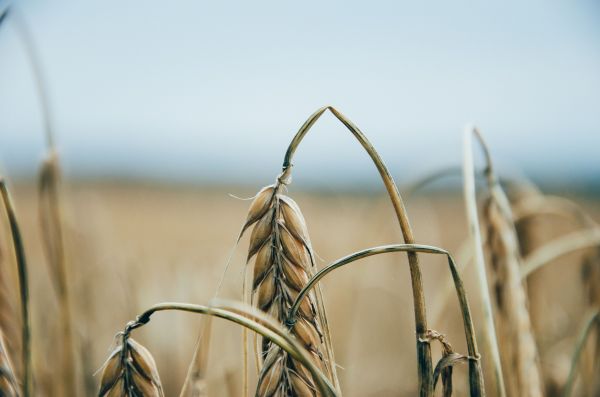
The grain of wheat must fall to the ground
and die.
We must lose our life
to find it.
“Whoever wants to be my disciple,” Jesus said,
“must take up their cross and follow me.”

I know this.
I’ve spoken about it
and accompanied others through death and resurrection.

But this story
slipped past the tidy knowing
that distanced me from my cross.
It pierced my gut
and let me feel
fear,
grief,
loss,
and my deep need
to be held
in my passing
from one story
to the next.

Will you sing over me?
Sing of the goodness I cannot see
Will you sing over me?
Sing Over Me
by Paul Zach, Kate Bluett, Isaac Wardell, Taylor Leonhardt, and Matt Maher.

 
Credits and References:
“Grain of Wheat” photo by Upsplash from Free Range Stock
“The End of a Story” by Esther Hizsa, 2024
© Esther Hizsa, An Everyday Pilgrim, 2024.
The unauthorized use and/or duplication of this material without permission from Esther Hizsa is prohibited. Excerpts and links may be used provided there is a link to the original content and credit is given as follows: © Esther Hizsa, An Everyday Pilgrim 2013-2024.  http://www.estherhizsa.com
Posted in compassion, Creation, Easter, Holy Week, Lent, Poetry, Reflections, Stories | Tagged , , , , , , | Leave a comment

Free

O Beloved, how numerous are my fears!
They rise up within me whispering
there is no help for you. 

 Yet You, O Beloved,
are a shield about me…
When I cry out to You,
You answer within my heart.
–Psalm 3:1-4 Nan C. Merrill,
Psalms for Praying (adapted)

Numerous are the nameless fears 
that rise up against me. 
They draw back their bows 
and fire sharp thoughts. 

But You, O Beloved, 
are swift and strong– 
a shield about me,
a shelter within,
so I can rise again.

You have saved me
again
and again
and again.

And you will keep saving me
until all my fears fade into love.

I used to be afraid I wasn’t loved.
Then I feared I didn’t love enough
or my love would be rejected.

Then one day,
when my love was cast aside,
I wasn’t afraid.
I was hurt,

then I was sad

and then I was
free
to keep loving.

Rise up, Love! Set me free!
For through your guidance,
my fears will fade into love.

Free from fear, I will know 
the Oneness of Being that 
encompasses everything! 
I shall be free to serve Love
with a glad and open heart.

–Psalm 3:7-8 Nan C. Merrill, Psalms for Praying

Credits and References:
Image by Anne Yungwirth. Used with permission.
Free by Esther Hizsa 2024
© Esther Hizsa, An Everyday Pilgrim, 2024.
The unauthorized use and/or duplication of this material without permission from Esther Hizsa is prohibited. Excerpts and links may be used provided there is a link to the original content and credit is given as follows: © Esther Hizsa, An Everyday Pilgrim 2013-2024.  http://www.estherhizsa.com
Posted in compassion, Reflections | Tagged , , , , , | 2 Comments

Courage and Curiosity

For my courage is in You, O Love,
You who are the Lover hidden
in every heart.
 
–Psalm 3:6 
Paraphrase by Nan C. Merrill,
Psalms for Praying

People do things 
that annoy and disturb us,
challenge and hurt us.

Sometimes Wisdom says,
“Keep your distance.
Stay out of harm’s way.”

But more often than not,
She whispers, “Stay close,
This one has a gift for you.”

This one?
Really?

It comes so quickly
   the judgment,
   the distancing,
   the othering.

It takes courage
to notice our reaction–
   which we cannot control–
and choose
a different response.

You, O Beloved, give us
the courage 
     to trust
     You are hidden in every heart
and the curiosity
    to see what we can find there.

Rise up, Love! Set me free!
For through your guidance,
my fears will fade into love.
Free from fear, I will know
the Oneness of Being that
encompasses everything!
I shall be free to serve Love
with a glad and open heart.

–Psalm 3:7,8 
Paraphrase by Nan C. Merrill,
Psalms for Praying

Credits and References:
“annoyed” by Michael Neel. Used with permission.
Courage and Curiosity by Esther Hizsa, 2024
“Game of Chicken” by Christopher. Used with permission.
© Esther Hizsa, An Everyday Pilgrim, 2024.
The unauthorized use and/or duplication of this material without permission from Esther Hizsa is prohibited. Excerpts and links may be used provided there is a link to the original content and credit is given as follows: © Esther Hizsa, An Everyday Pilgrim 2013-2024.  http://www.estherhizsa.com

Posted in compassion, Lent, Mindfulness, Poetry, Reflections | Tagged , , , , , , , , , | Leave a comment

Wounded Goodness

Ignatius asks us to see how Jesus on the cross identifies with wounded creation and accepts the task of reparation, healing and transforming the damage we have been doing to ourselves and our planet. Ignatius would say Jesus loves us so much that he wants to show that love by identifying with us as a victim of our own sin. Jesus is also trying to make us conscious of the power of divine love to integrate our wounded goodness (and that of everyone else) into himself and then to move from a preoccupation with sin to a focus on grace. …


The twentieth-century Jesuit priest and scientist Pierre Teilhard de Chardin would add that Jesus identifies with our wounded goodness because he views us as an important part of his universal body. He invites us to move beyond worrying about our inadequacies and failures in the past because he wants us to focus on what needs to be done in the future to complete God’s project [of reconciliation] and our potential contribution to it (Eph 1:9-10 and 2 Co 5:15).

                                                                       –Louis Savary, The New Spiritual Exercises

What would it be like 
to hear Jesus say, 
“I know what you’re going through”?

He, too, was misunderstood, 
betrayed, abandoned, and beaten. 
He, too, carries the scars
of what was done to him.

He also carries the scars of
what we have done to others,
the earth and ourselves.

What would it be like
to feel him near,
full of forgiveness,
understanding,
and compassion
for our human condition.

What would it be like
to embrace our wounded goodness,
let go of blaming others
for wounding us,
let go of blaming ourselves,
and accept that
being whole,
being free,
being Christlike
doesn’t mean being
sinless.

How might our lives be different 
if we let go of
the disappointment and shame
of failure?

What if we let go
of expecting more from others?

What do we hope
would happen if we were
perfect?

That, finally, we would be loved and accepted,
valued and respected?
Do we think, ah then, 
I will not feel the pain of inadequacy.
I will feel at peace with myself.

Oh, the contortions we go through
to deny
our woundedness
and
our goodness.

Perhaps that’s what we should be giving up for Lent:
the fear of imperfection.

As we let go of it now (or at least try to),
may we open to the wonder
that the divine power of Love
can integrate
our wounded goodness
into grace–
into Christ’s universal body
that is big enough
and strong enough
to repair and renew
creation.

But in this showing, Jesus gave me all that I needed.
“Sin is inevitable,” he said, “yet all will be well
and all will be well and every kind of thing shall be well.”
Julian of Norwich, The Showings of Julian of Norwich,
translated by Mirabai Starr, chapter 27. 

Credits and References:
The Dark Night of the Soul” by Rene. Used with permission.
“Wounded Goodness” by Esther Hizsa, 2024.
“Second last day of 2011 Dawn” by fauxto_digit. Used with permission.
© Esther Hizsa, An Everyday Pilgrim, 2024.
The unauthorized use and/or duplication of this material without permission from Esther Hizsa is prohibited. Excerpts and links may be used provided there is a link to the original content and credit is given as follows: © Esther Hizsa, An Everyday Pilgrim 2013-2024.  http://www.estherhizsa.com
Posted in Holy Week, Lent, Poetry, Poverty of Spirit, Reflections | Tagged , , , , , , , , , , , , | Leave a comment

The Suffering We Choose

I cannot promise
this blessing will free you
from danger,
from fear,
from hunger
or thirst,
from the scorching
of sun
or the fall
of the night.
–Jan Richardson, Beloved Is Where We Begin

The blessing of being God’s beloved
will not free us
from suffering–

suffering that comes unbidden,
the suffering of our making,
out of our brokenness,

and the suffering we choose.

Whether we are aware of it or not,
something in us
longs to be with Christ
wherever he is,

which is everywhere
and especially
in suffering,

Something in us
turns toward suffering
to alleviate it.

If you are suffering
because of a choice you made,
don’t beat yourself up
or assume there’s something wrong
as if life isn’t supposed to be
this hard.

Trace back to that moment in time
when you made the decision 
that led to your suffering.
Chances are
some part of you 
was overcome with compassion.

That part of you
was God.

But a Samaritan while traveling came upon him, and when he saw him he was moved with compassion.  He went to him and bandaged his wounds, treating them with oil and wine. Then he put him on his own animal, brought him to an inn, and took care of him. –Luke 10: 33,34 (NRSVUE)

Credits and References:
“Suffering with Christ” Photo of a mosaic from the Lady Chapel in Westminster Cathedral by Fr Lawrence Lew, O.P.. Used with permission.
“The Suffering We Choose” by Esther Hizsa, 2024
“African depiction of the Good Samaritan” by tim kubacki. Used with permission.
© Esther Hizsa, An Everyday Pilgrim, 2024.
The unauthorized use and/or duplication of this material without permission from Esther Hizsa is prohibited. Excerpts and links may be used provided there is a link to the original content and credit is given as follows: © Esther Hizsa, An Everyday Pilgrim 2013-2024.  http://www.estherhizsa.com
Posted in compassion, Lent, Reflections | Tagged , , , , , , , , | Leave a comment

This Road

I can tell you
that you will know
the strange graces
that come to our aid
only on a road
such as this
–Jan Richardson, Beloved Is Where We Begin

If You are telling me one thing
as I begin my Lenten journey,
it is that I am on the right road,
“a road such as this,”

this back-and-forth life,
this finding myself scattered
and gathered again,
this moment by moment choosing
to come home to You,
to breathe in trust
and take the next step.

There isn’t another road,
another God,
another life.
There is only this day
and the strange grace
that here and now
and always
–no matter what I see
or don’t see–
You meet me
and call me
Your beloved.

Open my eyes to see You.
Open my heart to love You.
Open my arms to greet You
everywhere
You appear.


Every valley shall be filled in,
every mountain and hill made low.
The crooked roads shall become straight,
the rough ways smooth.

–Luke 3:5 (NIV)

Credits and References:
“Camino” by Alejandro Espinosa. Used with permission.
This Road by Esther Hizsa, 2024
“Oct 7, 2019 A Kinder Camino Tour by Fresco Tours. Used with permission
© Esther Hizsa, An Everyday Pilgrim, 2024.
The unauthorized use and/or duplication of this material without permission from Esther Hizsa is prohibited. Excerpts and links may be used provided there is a link to the original content and credit is given as follows: © Esther Hizsa, An Everyday Pilgrim 2013-2024.  http://www.estherhizsa.com
Posted in Lent, Poetry, Reflections | Tagged , , , , , , , | Leave a comment

There It Is Again

It’s there
when you spill your tea
just when you thought
This time, I’ll be on time for my meeting,
there again,
when judgment announces your mistake
after the fact,
and there too
when you lie awake at night
trying and failing
to find a way
to make things work.

It’s there when you read the news,
help a person who’s homeless,
and see the price of gas go up again.

It’s there
when you find yourself in that endless loop
between blaming yourself and justifying what you did,
there again, when you realize you’re still waiting
for hope to arrive.

Powerlessness.

It’s one of the worst feelings in the world,
and we will use
all the power we have,
all the devices known to us,
to avoid feeling it,

but that only makes it worse.

We have to open the door,
name it,
and let it be seen, heard
and felt.

But never,
never
do this alone
or it will be the end of you.

Ask the All-Powerful One
to help you.
For he was powerless, too–
at his birth
and on the cross.
Remember how he wept over Jerusalem,
watched the rich young ruler walk away,
and wasn’t able to convince Judas that he was on his side?

You’ll want God with you
when you open that door.

And you’ll want
the gift that’s left behind
after powerlessness
has had its say.

But you, O Lord, are a shield about me,
my glory, and the lifter of my head.
–Psalm 3:3 (ESV)

Credits and References:
“Superman” by . Used with permission
“There It Is Again” by Esther Hizsa, 2024
“Let’s open the door to..”  Used with permission.
© Esther Hizsa, An Everyday Pilgrim, 2024.
The unauthorized use and/or duplication of this material without permission from Esther Hizsa is prohibited. Excerpts and links may be used provided there is a link to the original content and credit is given as follows: © Esther Hizsa, An Everyday Pilgrim 2013-2024.  http://www.estherhizsa.com
Posted in compassion, Poetry, Reflections | Tagged , , , , , , , , | 2 Comments

Naked Among the Tombs

Believing you’re loved
is easy if you’re the demoniac in the story.
Jesus meets you living naked among the tombs,
a danger to yourself and others,
and then restores you in mind, body and spirit,
clothes you,
and returns you to your loved ones.
A story book ending.

But what about the poor guy
that owned the large herd of swine
that rushed into the lake and drowned
because of what Jesus did?
It would be hard for the farmer to believe the Son of God loved him.
In fact, the townspeople asked Jesus to leave.
They didn’t want that kind of love.

I don’t like the idea that God’s love allows you
to lose your possessions and livelihood in an instant.
I really don’t like what happened to the animals.
That doesn’t sound loving to me.

When I listen to the stories of people who lost everything,
I hear it was a terrible end.
But to many of them, it was also 
a wonderful beginning.

Still, I don’t want it to happen to me.

And just like that 
demon fear slips in
and seeds the belief 
that God can be indifferent to my suffering–
see now, isn’t this story proof?
And when that seed 
is fully grown,
we find ourselves
naked among the tombs.

 So we have come to know and to believe the love that God has for us.
God is love, and whoever abides in love abides in God,
and God abides in them.
–1 John 4:16 (NIV, adapted)
Credits and References:
“Jesus casting out the demons” image 22.4.2010: Sant’Apollinare Nuovo, Ravenna by Nick Thompson. Used with permission.
Naked Among the Tombs by Esther Hizsa, 2024
“Stillness” by christian.rudman. Used with permission.

© Esther Hizsa, An Everyday Pilgrim, 2024.
The unauthorized use and/or duplication of this material without permission from Esther Hizsa is prohibited. Excerpts and links may be used provided there is a link to the original content and credit is given as follows: © Esther Hizsa, An Everyday Pilgrim 2013-2024.  http://www.estherhizsa.com
Posted in compassion, Poetry, Reflections | Tagged , , , , , , , , | 2 Comments

When the Dove Descends

When the dove descended on Jesus
and a voice from heaven declared
in the presence of many witnesses,
“This is my beloved Son,
in whom I am well pleased.”
did Jesus believe it?

Perhaps the Holy Spirit led him 
into the desert 
so he could listen to the part of himself
that was afraid to trust
such extravagant love.

Maybe in the quiet of the wilderness 
Jesus was able to hear the dark fears inside
tempting him to hold back
just in case

he didn’t get what he needed,
he was misunderstood and dismissed,
he fell, and God didn’t catch him.

Perhaps that’s why 
he was in the desert for forty days.
Words of faith come quickly,
while belief often trails behind.

So maybe we can give ourselves
forty days or
forty years.
Maybe it takes seven times seventy years
to believe it’s true for us, too.

Maybe the wilderness in which 
our dark fears come out of hiding
are those moments
when the dove descends,
and we meet a part of ourselves we don’t like
and want to cast out.

What if
all the things we do 
that we wish we wouldn’t
–blaming ourselves or others,
losing our temper,
judging,
giving in to our compulsions–
are not coming from a part of us
that needs to be banished
but a part of ourselves
that is brave enough to tip her hand
and let us in 
so she can be witnessed,
reassured,

and hear God declare again
from the heaven in our hearts,
“You are my beloved child,
in whom I well pleased.”

Consider the kind of extravagant love the Father has lavished on us—He calls us children of God! It’s true; we are His beloved children. –1 John 3:1 (The Voice)

Credits and References:
The Baptism of Christ by José Ferraz de Almeida Júnior (1850-1899). Creative commons.
When the Dove Descends by Esther Hizsa, 2024
“Welcome New Light” by Alice Popkorn. Used with permission.
© Esther Hizsa, An Everyday Pilgrim, 2024.
The unauthorized use and/or duplication of this material without permission from Esther Hizsa is prohibited. Excerpts and links may be used provided there is a link to the original content and credit is given as follows: © Esther Hizsa, An Everyday Pilgrim 2013-2024.  http://www.estherhizsa.com
Posted in compassion, Mystical, Reflections | Tagged , , , , , , , | Leave a comment

A World Filled with Love

He showed me a little thing, the size of a hazelnut, in the palm of my hand, and it was as round as a ball. I looked at it with my mind’s eye and I thought, “What can this be?” And the answer came, “It is all that is made. ” I marvelled that it could last, for I thought it might have crumbled to nothing, it was so small. And the answer came into my mind, “It lasts and ever shall because God loves it.” And all things have being through the love of God. In this little thing, I saw three truths. The first is that God made it. The second is that God loves it. The third is that God looks after it.
             –St. Julian of Norwich, The Revelations of Julian of Norwich 

God made me.
God loves me.
God looks after me.

The moment I think
I might crumble into nothing,
I am seen,
held,
protected.

The moment I find myself
thinking I’m alone–
that sacred moment when
I notice that
I’m forcing life 
into something it’s not,
thinking the world’s against me–
I remember
You’re right here
with me,
always
for me.

Then You pick me up out of my fear,
carry me close to Your chest,
and put me down again
safe and secure
in a world filled with love

May what I do flow from me like a river,
no forcing and no holding back,
the way it is with children.

Then in these swelling and ebbing currents,
these deepening tides moving out, returning,
I will sing you as no one ever has,

streaming through widening channels
into the open sea.

Rainer Maria Rilke, I Believe in All that Has Never Yet Been Spoken

Credits and References:
Painting of Julian by Virginia Wieringa.
A World Filled with Love by Esther Hizsa, 2024.
“Milky Waters”10 mile creek, Buller Gorge, New Zealand by colin hansen. Used with permission.
 
© Esther Hizsa, An Everyday Pilgrim, 2024.
The unauthorized use and/or duplication of this material without permission from Esther Hizsa is prohibited. Excerpts and links may be used provided there is a link to the original content and credit is given as follows: © Esther Hizsa, An Everyday Pilgrim 2013-2024.  http://www.estherhizsa.com
Posted in compassion, Poetry, Reflections | Tagged , , , , , , , , | 4 Comments