Christ Has Died

the_entombment_of_christ

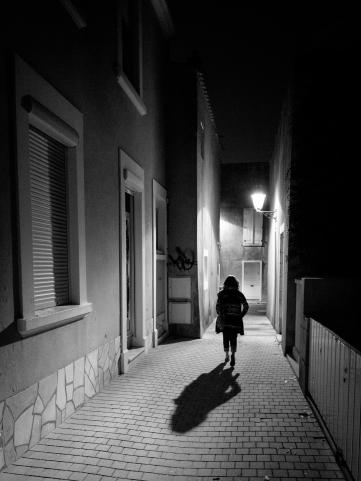
Homeless

they take
him
down from the cross
his
PUTcold body pierced
PUTbruised mouth silenced
PUTsoft eyes blind

as he began
now at end
PUTwrapped in cloth strips
PUTlaid in wrong place
helpless
God

stone heaved
tomb sealed
sudden scream
PUTmine

guards curse
push me
PUT“Go home!”

can’t

have none
PUTbut
PUThim

Credits:
“Entombment of Christ” by Caravaggio, 1602-3.
“Homeless” by Esther Hizsa, 2014.
© Esther Hizsa, An Everyday Pilgrim, 2014.
Unauthorized use and/or duplication of this material without permission from Esther Hizsa is strictly prohibited. Excerpts and links may be used provided there is a link to the original content and credit is given as follows: © Esther Hizsa, An Everyday Pilgrim 2013, 2014  http://www.estherhizsa.wordpress.com.
Posted in Easter, Holy Week, Lent, Poetry, Popular Posts | Tagged , , , , | 1 Comment

With Christ in Glory

thief

I look at the naked, bloodied body next to me. “What’s he doing here?”

A sinless man is being crucified beside us: me on his left, the other criminal on his right. The crucified always die in disgrace, our lives held up as negative examples.

Yet, he is good. People called him rabbi, healer, messiah, saviour, Son of God. At birth they called him Emmanuel: “God with us.” God with us in life. Now, God with us in death.

Crowds hurl insults at Jesus, insults we deserve. The other thief joins in. “Some saviour he is. Can’t even save himself, let alone us.”

“Have some respect.” I struggle for breath. “We had it coming, but not him. He’s not like us.”

“He’s a fake.”

“No. A king.” Lungs burn, limbs scream. Always knew I’d get caught, die alone. But I’m not alone. I’m with the one they call…

“Jesus.” I can barely whisper. “Remember me when you come into your kingdom.”

Jesus turns his head and looks at me. I see his face for the first time. He’s no older than me. Blood trickles down from the crown of thorns on his head. His voice is gentle. “Today,” he says between breaths, “you will be with me, in paradise.”

Euphoria rises from my belly, shoots into every sinew and cell in my body, erupts in laughter. Never before have I felt such love, such joy.

Then suddenly, it’s dark. Mid-afternoon, can’t see a thing. The earth heaves and groans. Nails rip flesh. Cries, curses, prayers. Hold breath. Silence.

Is he gone?

Jesus shouts, “Father, into your hands I commit my spirit.”  One breath and–wait. No more.

I am alone again. But not alone.

Tears on my cheeks. Paradise. Today. I’m coming home to the King.


 A prayer for Good Friday:

Jesus-and-the-rich-man by Heirich Hoffmann cropped Jesus, may all that is you flow into me.
May your body and blood
be my food and drink.
May your passion and death
be my strength and life.
Jesus, with you by my side
enough has been given.
May the shelter I seek
be the shadow of your cross.
Let me not run from the love which you offer,
But hold me safe from the forces of evil.
On each of my dyings
shed your light and your love.
Keep calling to me
until that day comes when, with your saints,
I may praise you forever.

– Soul of Christ (Anima Christi),
paraphrased by David L. Fleming, S.J.

Credits:
“Thief,” original source unknown.
“Christ and the Rich Young Ruler” by Heinrich Hoffmann, 1889.
© Esther Hizsa, An Everyday Pilgrim, 2014
Unauthorized use and/or duplication of this material without permission from Esther Hizsa is strictly prohibited. Excerpts and links may be used provided there is a link to the original content and credit is given as follows: © Esther Hizsa, An Everyday Pilgrim 2013, 2014  http://www.estherhizsa.wordpress.com.

Posted in Easter, Holy Week, Lent, Stories | Tagged , , , , , , , | 1 Comment

Stay with Me

See how tenderly the angels comfort Jesus in his anguish. He longed for such compassion from his friends, but they couldn’t do it. They disappeared into a panacea of sleep. We rely on Jesus to be with us in everything, but will we be with him in all he must endure?

Last year on Maundy Thursday when I was doing the Ignatian Exercises, Jesus turned to me and said, “Esther, stay with me.”

I swallowed hard and asked God for the grace to be able to be with him. Then I closed my eyes and imagined myself in the Garden of Gethsemane.

On that night when Jesus was about to be betrayed, his heart was heavy with sorrow. Peter, James and John were asleep, deaf to his painful pleading. I wanted to put my hands over my ears. It was heart-wrenching to hear Jesus so deeply distressed. He paced and cried out, “Please… Father… take this cup from me.” He fell on his knees, covered his face with his hands, and wailed.

“God, do something!” No sooner had I said the words when angels came and comforted him.

I asked God, “Can I go and comfort him too?”

“Go,” God said.

I ran to Jesus and wrapped my arms around him.  He clutched on to me so tightly I could barely breathe. He was trembling. Tears soaked into my shirt.

After a long time he sat back and looked me in the eyes. “My Father has asked me to go to the cross and die for you,” he says wiping his cheeks. “And I will go.”

“Don’t do it for me,” I said, “Am I really worth it?”

“Are you worth it?” He shakes his head. “How could you be with me all this time and still not know that you are the treasure of great price, the pearl that I have sold everything for? The thought of not being with you forever is what convinced me to say yes. I will do it for you and for them (he looks at the sleeping disciples) and for all.”

I touch his face and kiss his wet cheek. I hold his hands and rub the spot where the nails will enter. “Remember my touch when you are dying,” I say. “May that memory soften the pain.”

“Thank you,” Jesus says and hugs me. “I’m glad you’re here.”

Then he said to them, “My soul is overwhelmed with sorrow to the point of death. Stay here and keep watch with me.”  Matthew 26:38 (NIV)


Maundy Thursday reflection:

  • Will you keep Jesus company this week?
  • See what unfolds when you do.
Credits:
Gethsemane (The Hour is Near) by Anthony Falbo, 2006. Used with permission.
© Esther Hizsa, An Everyday Pilgrim 2014
Unauthorized use and/or duplication of this material without permission from Esther Hizsa is strictly prohibited. Excerpts and links may be used provided there is a link to the original content and credit is given as follows: © Esther Hizsa, An Everyday Pilgrim 2013, 2014  http://www.estherhizsa.wordpress.com.

Posted in Holy Week, Ignatian Spirituality, Lent, Praying with the Imagination, Stories | Tagged , , , , , , , , , , | 3 Comments

Moving from “Me” to “We”

Palm Sunday 12x9 21 bd 09 SOLD

If I were Jesus riding into Jerusalem, I would have been pretty agitated. Imagine entering the city where you’re about to be betrayed, abandoned, beaten, and killed. How could Jesus remain present to the crowds of joyous people shouting, “Hosanna!”? Before the week is through, another crowd will shout, “Crucify him.” Yet Jesus remains calm as he rides into Jerusalem and is welcomed by hundreds of palm-waving supporters. Yet he seemed to savour the moment.

How does he do that? How does anyone welcome the reality of their life without having the full reality of life rob them of joy? I got an answer to my question at Rob Des Cotes’  Soul Care Retreat.

Rob said, “This is how we tend to go through life.” Then he drew the diagram below (what I call the “me” stance):

diagram 1

“We have a relationship with something–an event, a relationship, a job, a goal, or a problem–and then we ask God to help us or bless what we’re doing. God is somewhere out there a distance from us,” he said.

Then Rob drew a second diagram (the “we” stance):

diagram2“Instead Jesus invites us to re-establish our relationship with God daily then, together with God, relate to everything else in our lives.”

Jesus was able to ride into Jerusalem and lovingly interact with the people around him because his primary relationship was not with his inevitable suffering and death. It was with God. The Lord God was holding Jesus’ right hand and telling him, “Do not fear, I myself am with you. We will face what is ahead together.”

When I think of addressing life this way–from a “we” stance instead of a “me” stance–I feel hopeful and light. I relax. I don’t have to be prepared for every possible outcome when the God of the universe is beside me. I can step back from whatever I’m dealing with and be more present to those around me.

It’s comforting to know I can turn to Jesus at any moment and say, “I’m glad you’re here.”

 For I am the Lord your God
    who takes hold of your right hand
  and says to you, Do not fear;
    I will help you…
  I myself will help you,” declares the Lord,
    your Redeemer, the Holy One of Israel.

 Isaiah 41:13,14 (NIV)

Questions for your Lenten pilgrimage:

  • What is on your mind right now?
  • How would it be different to address it with God ?
Credits:
“Palm Sunday” by Brian Whelan. Used with permission.
Rob Des Cotes is the director of Imago Dei Communities in Vancouver.
© Esther Hizsa,An Everyday Pilgrim 2014
Unauthorized use and/or duplication of this material without permission from Esther Hizsa is strictly prohibited. Excerpts and links may be used provided there is a link to the original content and credit is given as follows: © Esther Hizsa, An Everyday Pilgrim 2013, 2014  http://www.estherhizsa.wordpress.com.
Posted in Helpful Images, Holy Week, Lent, Rob Des Cotes | Tagged , , , , , , | 2 Comments

Are You Withering on the Vine?

tree-of-life-jaison-cianelli large

“Are you suffering from spiritual depletion?” Rob Des Cotes asked participants at the Soul Care retreat we hosted at our church. To help us answer that question, Rob led us though this diagnostic list.

Are you experiencing any of the following?

__ Loss of peace (unable to relax or rest from busy thoughts)

__ Loss of receptiveness (unable to receive/enjoy people, nature, art, etc.)

__ Loss of self-control (no “off” switch, unable to step back and make healthy choices)

__ Less capacity for relating well with others and God (feel like the “tail wags the dog,” no distance between you and your fear)

__ Less capacity for restoration (like rechargeable batteries that have lost their capacity to recharge)

I checked off five out of five. My life was packed to the edges. I rushed through morning quiet times or skipped them. I ate lunch while I worked. In the evening, when I did have time to pray, I was exhausted, and acedia persuaded me to have a snack and watch my favourite TV show instead. I still had moments of connecting with God, but that wasn’t enough to fend off my growing dissipation.

“If you are answering ‘yes’ to most of these statements, you may be withering on the vine,” Rob told us. “Jesus said, ‘I am the vine; you are the branches. If you remain in me and I in you, you will bear much fruit; but apart from me you can do nothing.'”

When we get too busy to spend time with God, we are like a severed branch. No longer attached to the vine, it cannot obtain the water and nutrients it needs to survive. This old hymn captures the truth,

I need Thee, oh, I need Thee;
Every hour I need Thee;
Oh, bless me now, my Saviour,
I come to Thee.

I am thankful for Lent, this season of repentance and renewal. I am thankful for Rob and the gentle way he calls us back to rest in God. And I am thankful for Jesus who revives me and invites me to abide in him again.

 As the Father has loved me, so I have loved you; abide in my love. – John 15:9 (NRSV)

Questions for your Lenten pilgrimage:

  • Are you withering on the vine?
  • Where have you noticed God inviting you to rest in him? 
Credits:
“Tree of Life” by Jaison Cianelli. Used with permission.
Rob Des Cotes is the director of Imago Dei Communities in Vancouver.
“I Need Thee Every Hour'” by Annie S. Hawkes and Robert Lowry, 1872.
Scripture references: John 15:5, 9
© Esther Hizsa, An Everyday Pilgrim 2014
Unauthorized use and/or duplication of this material without permission from Esther Hizsa is strictly prohibited. Excerpts and links may be used provided there is a link to the original content and credit is given as follows: © Esther Hizsa, An Everyday Pilgrim 2013, 2014  http://www.estherhizsa.wordpress.com.
Posted in Lent, Rob Des Cotes | Tagged , , , , , , , , , , , | Leave a comment

The Unending Miracle of Love

I felt my heart “strangely warmed,” like what happened to John Wesley at Aldersgate in 1738 when he knew for certain that he was saved, The same thing happened to the two travellers on the road to Emmaus. While they didn’t recognize the risen Christ walking with them, their hearts knew. They said later, “Were not our hearts burning within us while he talked with us on the road and opened the Scriptures to us?”

I have experienced this before. A sudden warm spaciousness fills my chest whenever I sense that something is true and very important to God.

And the important truth that set my heart ablaze were these words from The Cloud of Unknowing, written by an anonymous Christian mystic in the fourteenth century.

It is God, and he alone, who can fully satisfy the hunger and longing of our spirit which transformed by God’s redeeming grace is enabled to embrace him by love.

modern-abstract-art-painting-warm-embrace-1024x512

 I had often imagined God embracing me. But me, embrace God?

The mystic continued,

No one can fully comprehend the uncreated God with his knowledge, but each one, in a different way, can grasp him fully through love.

I pictured our six-year-old grandson. He was draped over Fred one Sunday in church with his soft cheek pressed against my husband’s leathery one. One hand was cupped under his opa’s chin and the other, fingers splayed, was buried in Fred’s wiry hair and massaging his scalp. A woman on the worship team looked up from her djembe drum, and seeing such a display of affection, was brought to tears.

 Truly this is the unending miracle of love: that one loving person, through his love, can embrace God, whose being fills and transcends the entire creation.

I closed my eyes and opened my heart to the image and words of the mystic. I imagined myself embracing God: my Father, my Mother. For a sacred, eternal moment, I rested my cheek on my Abba’s leathery face and encircled his neck with my arm. My spirit was satisfied as I caressed God’s temple and soaked up his sighs with my fingers.

Whenever I return to the thought of embracing God or the image of our grandson and Fred or this painting by Jaison Cianelli, my heart is strangely warmed again. Truly this is an unending miracle.


Thoughts for your Lenten pilgrimage:

  • Imagine being embraced by a child who adores you.
  • Imagine God enjoying your embrace.
Credits: “Warm Embrace” by Jaison Cianelli. Used with permission. Italicized excerpts are from The Cloud of Unknowing, chapter 4; Author unknown, edited by William Johnston.
© Esther Hizsa, An Everyday Pilgrim 2014 Unauthorized use and/or duplication of this material without permission from Esther Hizsa is strictly prohibited. Excerpts and links may be used provided there is a link to the original content and credit is given as follows: © Esther Hizsa, An Everyday Pilgrim 2013, 2014  http://www.estherhizsa.wordpress.com.
Posted in Lent, Mystical, Popular Posts, Praying with the Imagination, Stories | Tagged , , , , , , , , , , | 5 Comments

Resisting the Sirens

siren 2 I remember the first time I identified the delicious desire to disappear. I felt enticed to float away into another world where nothing was expected of me. Sirens,* born of innocent angst, sang to me from the shore. They continue to this day, luring me out of life and into the snack cupboard and one television series after another.

Withdrawing from the world and enjoying a distraction or two can be a welcome break from stress, physical pain, or repetitive thoughts. But habitually retreating from reality takes its toll.

Excessive disappearances deaden my senses and dull my hearing. I become unmoved by beauty and unaware of tastes. God’s Word bounces off me like rain on pavement.  I find myself not caring about people and stuff that matters. And I don’t care that I don’t care.

It’s not depression. I made that diagnosis when I read Kathleen Norris’s Acedia & me. It’s acedia, a term used by the Desert Mothers and Fathers in the fourth century, which means “the absence of care.”

Norris writes, “The desert monks termed acedia ‘the noonday demon’ because the temptation usually struck during the heat of the day, when the monk was hungry and fatigued, and susceptible to the suggestion that his commitment to a life of prayer was not worth the effort.”

We too can suffer from the same affliction. Norris explains, “When life becomes too challenging and engagement with others too demanding, acedia offers a kind of spiritual morphine: you know the pain is there, yet can’t rouse yourself to give a damn.”

Acedia preys upon us in weak moments and uses the lies and fears instilled in our childhood to undo us. The demon/Siren finally departs only after it has detached us from God and others.

If I don’t want to drift onto the rocks of apathy, I need to reattach myself to God. I must turn my back to the beguiling Sirens and ground myself, like the trees in Psalm 1. They are “planted by steams of water, that yield fruit in due season, and their leaves flourish. And in all they do, they give life.”

So for Lent I’m taking a break from Doc Martin, Chummy Noakes, and Christopher Foyle and hanging out with Jesus and his friends: real people with unscripted lives.

“Shush!” I must say to the Sirens and choose, each day, to re-enter life instead of watching it.

  *In Greek mythology, the Sirens were dangerous yet beautiful creatures, portrayed as femme fatales who lured nearby sailors with their enchanting music and voices to shipwreck on the rocky coast of their island. (more)

Questions for your Lenten pilgrimage:

  • What lie or fear do the Sirens use to detach you from life?
  • What daily practice grounds you in God?
Credits:
“Siren” by Edward Armitage, 1888
 Acedia & me by Kathleen Norris, Riverhead Books; New York, 2008. pages 5, 3.
Psalm 1:3 Psalms for Praying, by Nan C. Merrill
© Esther Hizsa,
An Everyday Pilgrim 2014
Unauthorized use and/or duplication of this material without permission from Esther Hizsa is strictly prohibited. Excerpts and links may be used provided there is a link to the original content and credit is given as follows: © Esther Hizsa, An Everyday Pilgrim 2013, 2014  http://www.estherhizsa.wordpress.com.
Posted in Lent, Popular Posts | Tagged , , , , , , , , , , , | 3 Comments

The Desire to Disappear

Disappear by SIMindy“Sometimes I wish I could disappear,” I told Father Elton once while I was doing the Ignatian Spiritual Exercises last year.

“Of course you do,” he said. “You want to do as you were told.”

“What do you mean?” I asked.

“That memory you had of yourself as a toddler, when you were crying and your sibling squeezed your cheeks…”

The image returned in full force: I’m sitting on the couch with my mother beside me. She is holding our baby brother, and my four-year-old sister and six-year-old brother are in front of me. They’re angry. One of them squeezes my cheeks together so hard I feel the flesh pressed against my teeth. I hear: Be quiet! Nobody asked you to be here.

I inhaled deeply and returned to the present, to Father Elton’s kind eyes and safe words.

“You were expected not to exist, something you couldn’t do,” he said.

“But I keep trying.”

I remember the first time I was tempted by the delicious desire to disappear. I felt drawn to float away into an imaginary black hole where nothing was expected of me.

But under that temptation is a deeper desire: the desire to be heard, welcomed and comforted, the desire to be real and accepted.

These are desires God longs to fill and prayer opens up a way for God to do it. That is why Ignatius asked “retreatants”* to spend an hour a day fully present to God.

Each morning I would sit on the couch in my study and ask for the grace I needed to pray with a gospel story and imagine myself in it with Jesus. Then I talked with Jesus about what I saw or felt and listened to his response.

I met with Father Elton weekly and shared what I had experienced in that dedicated time of prayer. “Jesus never seems to get tired of showing me how precious I am to him,” I told Father Elton more than once.

Every time I did, he smiled and nodded, as if he could see me materializing before his very eyes.

Take delight in the Lord,
and he will give you the desires of your heart.
– 
Psalm 37:4 (NIV)

*

Questions for your Lenten pilgrimage:

  • Are you carrying a painful image from your past?
  • Is there someone kind and safe you could share it with?
* “Retreatants” are people participating in the Ignatian Spiritual Exercises, either as a 30-day retreat or for one hour a day over the course of seven or eight months.
Credits:
“Disappear” by SIMindy. Used with permission.
© Esther Hizsa, An Everyday Pilgrim 2014
Unauthorized use and/or duplication of this material without permission from Esther Hizsa is strictly prohibited. Excerpts and links may be used provided there is a link to the original content and credit is given as follows: © Esther Hizsa, An Everyday Pilgrim 2013, 2014  http://www.estherhizsa.wordpress.com.

Posted in Childhood, Ignatian Spirituality, Lent, Spiritual Direction, Stories | Tagged , , , , , , | 3 Comments

Closed for a Reason

closed signWords bounce off my heart like rain on pavement. Not just any words. God’s words. They won’t go in. It’s like I’m closed, locked up tight.

I sit with my Bible open on my lap and remember another time when I felt like this. We were on vacation in the arid little town of Osoyoos. I wrote,

After breakfast we got into our friends’ blue Honda and headed north. On the way we passed a fruit stand with a red and white CLOSED sign on the door. The curtains were drawn, and I imagined the owner safely inside reading a paperback and sipping coffee. That’s me: CLOSED. I’ve had enough truth for one season, thank you very much. I don’t want to witness any more train wrecks or hear any more bad news from the TV, from the mirror, or my bathroom scales. I need no more evidence of how messed up we all are or how little I have to show for my life. I know “the truth shall set you free,” but that’s assuming you survive the shock of hearing it first. Solomon, in all his wisdom, should have added another verse to Ecclesiastes 3: “There is a season to be open and a season to be closed.” I was certainly closed for the season.

As I remember that time I am struck by two things. First is the fact that I noticed my desire to shut out both God and my feelings. Sometimes I can go along in life oblivious to the big CLOSED sign I am wearing around my neck.

Second, there was a reason I was closed. Recent events triggered memories of others from long ago and I didn’t want to go there again. The steady drips of the “truth” they told turned into a downpour and I quickly closed up shop.

I read the scripture passage again searching for a thought that might penetrate my heart. This line does it: “Without you nothing makes sense.” I sit in the silence and open the door a crack so God can slip in.

“What happened?” God’s voice is soft and gentle. “Tell me, what’s going on for you?”

God’s questions, like the hand of Moses, strike the rock of my heart. Out gush words, my words, and God hears them all.

Questions for your Lenten pilgrimage:

  • What makes you close your heart to God?
  • Can you leave your shop closed while God slips in to listen?
Credits:
“Sorry We’re Closed” by justmakeit. Used with permission.
Scripture verses:
Ecclesiastes 3
Psalm 16:2 (The Message)
Exodus 17:5-7
Excerpt is from “Astronomical Units” by Esther Hizsa in Stories of an Everyday Pilgrim (unpublished as yet).
© Esther Hizsa, An Everyday Pilgrim 2014
Unauthorized use and/or duplication of this material without permission from Esther Hizsa is strictly prohibited. Excerpts and links may be used provided there is a link to the original content and credit is given as follows: © Esther Hizsa, An Everyday Pilgrim 2013, 2014  http://www.estherhizsa.wordpress.com.
Posted in Lent, Popular Posts, Stories, Stories of an Everyday Pilgrim | Tagged , , , , , , , , | 2 Comments

Facing the Page

deadline

Deadlines intimidate me, especially when writing’s involved. I’ve learned the wisdom of waiting for a wave of creativity to carry me and not try to struggle against the tide. But a deadline says: Get going. You’ve used up your quota of procrastination. Now is the time. Jump.

Thursday afternoon I plunge into cold water that is over my head. Will my sermon come together by Sunday? I feel this way every time I write one and God always comes through. Just the other day someone reminded me of this verse in Isaiah. “For I am the Lord your God who takes hold of your right hand and says to you, ‘Do not fear; I will help you.'” With a little more confidence, I begin to swim in the choppy sea of thoughts and words, until I am called to dinner. “I’ll be there in a minute,” I say. I’ve made some progress, but the shore doesn’t seem any closer.

Friday I face the page again. Which way is the current flowing today? I lift my hand to God and jump in. The word count hovers like a shiver of sharks. Big chunks have to go. I sigh and offer up one poetic bit, then another. I surface for lunch then dive back in. At three o’clock I get on my bike. Bruce Cockburn’s “Pacing the Cage” plays in my head as I ride and I wonder if the deadline is my friend.

After supper Fred relaxes with a book. Isn’t this what Friday nights are for? I return to the page and attend to what emerged during my ride. Then I put the PowerPoint together. Images drift in. I exchange one find for another, collect what I need.

Saturday morning I have a two-hour window to practice out loud and time myself. The clock frowns. I feed the sharks again, take a deep breath and start over.  This time I catch a current of emotion when I hear myself talk about empathy. Word and image, and sound and meaning converge: solid ground under foot.

Saturday night I turn through the pages in my mind while I soak in the tub. Something’s wrong with the last section, but I can’t put my finger on it.

Three in the morning I’m awake floating on the page again, wondering if it’s a structural problem and what I should do. Then I see the connection under the surface and dive down to get it. Yes, that’s it. I reprint the page and go back to bed.

Sunday morning a few of us gather to pray before the service. After a moment of silence one fellow says, as he often does, “I have a word from the Lord for you.”

I’m listening.

“You are up high and must jump into the cold water below. You are afraid to jump, but a feather floats down from heaven and carries you with it.”

feather on water

And I remember a quote from Hildegard of Bingen that said, “I am a feather on the breath of God.”

“God will be with you,” he says.

And God was.

*

*

“Listen: there was once a King sitting on his throne.  Around him stood great and wonderfully beautiful columns ornamented with ivory, bearing the banners of the King with great honour.  Then it pleased the King to raise a small feather from the ground and he commanded it to fly.  The feather flew, not because of anything in itself but because the air bore it along.  Thus am I a feather on the breath of God.” – Hildegard of Bingen

Questions for your Lenten pilgrimage:

  • How was God with you today?
  • How was it different from other times God helped you?
Credits:
Deadline” by Jonathan Bliss. Used with permission.
“Feather on Water” by Megan Yungwirth (who was ten years old at the time!). Used with permission.
Scripture verse: Isaiah 41:13
Pacing the Cage by Bruce Cockurn
My sermon on Luke 15 “Celebrating with the One who Welcomes ‘Sinners'” can be heard at http://dl.dropboxusercontent.com/u/90311604/Sermons/140223.mp3
© Esther Hizsa, An Everyday Pilgrim 2014
Unauthorized use and/or duplication of this material without permission from Esther Hizsa is strictly prohibited. Excerpts and links may be used provided there is a link to the original content and credit is given as follows: © Esther Hizsa, An Everyday Pilgrim 2013, 2014  http://www.estherhizsa.wordpress.com.

Posted in Lent, Stories, Writing | Tagged , , , , , , , , , , , , | 2 Comments