Stop Teaching a Pig to Sing

“Don’t teach a pig to sing. It wastes your time and irritates the pig.”

I read that quote in Anthony de Mello’s little book Rediscovering Life: Awaken to Reality right after I wrote last week’s blog post. Tony’s words woke me up to recognize that I’ve been looking to circumstances, people, or events to make me happy. 

Although Tony used this saying to explain why he didn’t bother trying to convince people to agree with him, it clearly illustrates his message that we can be happy right here, right now. Stop trying to get life out of the things that aren’t made to do that. Stop trying to get real joy out of what gives pleasure.

I enjoy biking, sunny days, and harmonious interactions, but I don’t need those things to be happy. Disappointment, sadness, and being in a “funk” are signs that I’m trying to teach a pig to sing again. I’ve attached my happiness to something other than God.  

I sat with Tony’s words for a while and recalled Jesus, Ignatius, John of the Cross and other mystics and teachers past and present saying the same thing.

I need to let go. . . again.

It’s not like I haven’t been here before. I wrote about this a few years ago when I re-read Awareness. 

“Let go,” Tony says. Let go of trying to get or hold onto what thrills. It doesn’t mean I can’t enjoy the things that make me happy in the moment. I just need to loosen my grip and remember that what I’m experiencing isn’t real happiness. It’s just a taste of it. It’s a bit of the infinite reflected in the finite, to paraphrase Jim Finley in his talks on John of the Cross

Letting go begins with noticing what I’m attached to–having space in my day, being a person who doesn’t hurt others, having clarity and predictability, among other things. 

But Tony wonders if we really want to be happy. By happy, he means a deep sense of peace and well-being grounded in God. It’s the joy that Jesus talks about having “to the full.”

Tony invites us to test ourselves.

Suppose you could be blissfully happy, but you’re not going to get that college degree. Are you ready to barter your degree for happiness? You’re not going to get that girlfriend, or that boyfriend? Are you ready to barter them for happiness? Huh? How about this? You’re not going to be a success; you’re going to fail, and everybody is going to call you a bum. But you’ll be happy, you’ll be blissfully happy. Are you ready to barter the good opinion of people for that? 

Here’s what I hear Tony saying to me.

“Esther, what would you barter for real happiness? Suppose you could be blissfully happy, but your day will be chaotic. Are you ready to barter your calm day for happiness? Suppose you can be blissfully happy, but you’ll be a person who upsets others. Are you ready to barter who you’d like to be for happiness? What is more important? To be blissfully happy or have have clarity, predictability, sunny skies, long life, health? What if you gain all the weight back you lost, your kids believe you’re a terrible parent, your friends give up on you, your church calls you a heretic, your house burns down, or your government turns on you? What are you trusting to make you happy?”

The truth is that I’ve been unconsciously choosing to be miserable so I can have all the things I think will make me happy–and they don’t, not for long, anyway. I’ve been “looking for love in all the wrong places,” as the song goes. And I’ve been trying to teach a pig that song. 

It’s not working.

I need a new view. 

Jesus is showing me that view. I hear him saying, “You’re waking up and finding that you can be happy without the things you’re attached to. You can be lonely, hurt, confused and be at peace. It’s a peace that surpasses understanding and is possible as long as I’m around–and I’m right here. Always.”

I’ve learned by now to be quite content whatever my circumstances. I’m just as happy with little as with much, with much as with little. I’ve found the recipe for being happy whether full or hungry, hands full or hands empty.
Whatever I have, wherever I am, I can make it through anything in the One who makes me who I am. –Philippians 4:11-13 (MSG)

∗ ∗ ∗

Love Mischief for the World

Here is a video of Tony de Mello, SJ (1931-1987) giving a retreat that is the basis of the book I read Rediscovering Life: Awaken to Reality. Note that letting go or choosing happiness now doesn’t mean suppressing or denying our feelings. It means sinking below them to a deeper reality.

What love mischief are you and God doing for the world?
Let me know and I will include it in an upcoming post.

Credits and References:
“Piglet lying down” by Tambako The Jaguar. Used with permission.
Quotes from Rediscovering Life, p.25 and 31.
“Happy pigs” by BrotherM. Used with permission.
© Esther Hizsa, An Everyday Pilgrim, 2021.
Unauthorized use and/or duplication of this material without permission from Esther Hizsa is strictly prohibited. Excerpts and links may be used provided there is a link to the original content and credit is given as follows: © Esther Hizsa, An Everyday Pilgrim 2013-2021.  http://www.estherhizsa.com
Posted in Humour, Reflections | Tagged , , , , , , , , , , , , , , , , , , | Leave a comment

Come Home, Sweetheart

Sunny days
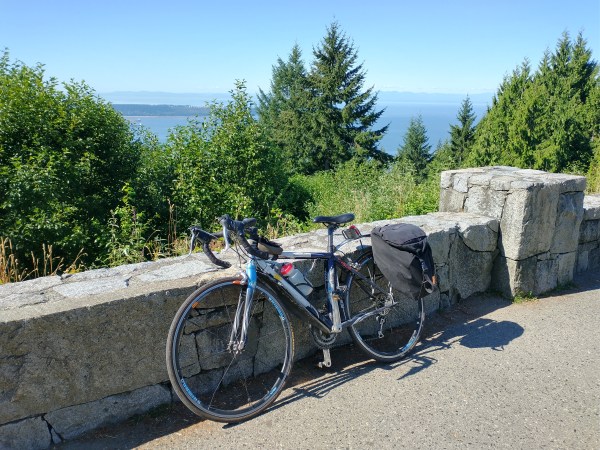
long bike rides
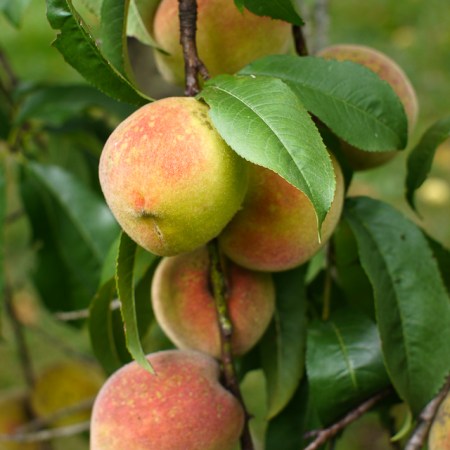
peaches and time–
lots of leisurely time 
to enjoy moments
without
conflict
deadlines
or problems to solve.

Then the rain we needed came
to put out the fires
along with the restrictions we needed
to keep us all safe.
News kept coming
from Haiti and Afghanistan
prayer requests
cancellations
dominoes toppling
dominoes

toppling me. 
Loud feelings
tight schedules.
I move too fast
knock things over.

I hope the evening’s contemplative group
will snap me out of the funk I’m in.
But nothing.
“Would anyone like to share anything?”
I shake my head.
Then I do. 
Tears come.
I sense that
God is with me
in the swirling.

I want summer back.
I crawl into bed and play Scrabble on my phone
until I can’t keep my eyes open.

But I don’t fall asleep.
I wonder if I’ve let God down again
then hear 
a gentle voice I know so well.
“You’ve had a hard day.”

The next morning. I can’t pray
and, I promised the family that just lost their son that I would.
I open my emails to find a poem
that tells me all my words are prayers.

I can’t stop my mind from thinking about
what I have to do,
what I should have done,
what I did.
Then I remember something someone said,
“When my mind gets on the crazy train,
I say to myself,
‘Come home, Sweetheart.'”

“Come home, Sweetheart,” God says.
“All your words are prayers.
I’m right here.
You’ve had a hard day.”

Is there even a little bit of love? That’s me. I’m with you. I’m there for you. Always.
Unseen, but never letting go, right here. Keep the faith.
Love, God

–from “Postcards from God” by Steve Garnaas-Holmes,
Unfolding Light, August 27, 2021

∗ ∗ ∗

Love Mischief for the World

I am grateful for the love mischief of Melody Owen, who led a SoulStream contemplative group on September 1, Steve Garnaas-Holmes for his poem “Everything you’ve said” published September 2, 2021, and Cheryl Richardson for her insights at the Tapping World Summit 2021. Thank you for helping us come home to Love.

What love mischief are you and God doing for the world?
Let me know and I will include it in an upcoming post.
Credits and References:
“Peaches” Pen Waggener. Used with permission.
“Rainy Day” by Nicholas Erwin. Used with permission.
“hug” by Bernal Saborio. Used with permission.
Melody Owen can be reached at melody@musictherapywithmelody.ca
© Esther Hizsa, An Everyday Pilgrim, 2021.
Unauthorized use and/or duplication of this material without permission from Esther Hizsa is strictly prohibited. Excerpts and links may be used provided there is a link to the original content and credit is given as follows: © Esther Hizsa, An Everyday Pilgrim 2013-2021.  http://www.estherhizsa.com
Posted in compassion, Poetry, Poverty of Spirit, Prayer, Reflections | Tagged , , , , , , , , , , , , , , | 1 Comment

Offering Kindness

“When I read your blog I hear how much you’ve changed in the past year,” my friend said. “You’re a lot kinder to yourself.”

I smiled and recalled how often I used to hear, “You’re so hard on yourself.” I suppose I believed what many do. If we aren’t hard on ourselves we won’t improve, and it’s all about improving ourselves.

Now I know that isn’t true, I’ve become a kindness evangelist. Whenever I hear someone blaming themselves, I try and offer them a kinder view.

They say, “I’m so lazy.” I say, “You sound tired.”

They say, “I’m such a failure.” I say, “You wished you’d done more.”

In spiritual direction, I hear directees say, “I don’t want to be so angry (or jealous, judgmental, impatient, etc.).”

I respond, “I hear that you’re angry.” Then I invite them to explore what they’re angry about and imagine God listening with compassion. Something beautiful often unfolds.

“Humankind. Be both,” says a bumper sticker. “Be calm. Be kind. Be safe,” says Dr. Bonnie Henry. “Be kind and compassionate to one another,” wrote Paul.

We know how important it is to be kind to others, and yet we can be so unkind to ourselves. I wasn’t even aware of it until I kept experiencing God’s kindness and the kindness of others.

Where do you experience kindness?

Perhaps it’s in a friend’s smile or in the way your dog greets you with those soulful eyes.

Perhaps it’s in a song that brings you to tears or the taste of a plump, sweet blackberry.

Our grandson likes to give us our “daily boops.” He smiles and taps us on the nose four times and says,”Boop, boop, boop, boop.”

Brené Brown offers herself FFTs. If you don’t know what that is, listen to this podcast.

Jesus said, “Love your neighbor as yourself.” That love is patient and kind.

What would it be like to offer yourself patience and kindness the next time you get down on yourself?

Talk to yourself as you would someone you love.
— Brené Brown

∗ ∗ ∗

Love Mischief for the World

Our need for loving-kindness is deep and real. God knows we didn’t get enough and wants to do something about that. Raffi says that in this song. When I listen to it, it brings me to tears because it names what’s true and gives me hope.

What love mischief are you and God doing for the world?
Let me know and I will include it in an upcoming post.

Credits and References:
“Care” by Tanti Ruwani. Used with permission.
Woman drinking tea from pxfuel. Creative commons.
© Esther Hizsa, An Everyday Pilgrim, 2021.
Unauthorized use and/or duplication of this material without permission from Esther Hizsa is strictly prohibited. Excerpts and links may be used provided there is a link to the original content and credit is given as follows: © Esther Hizsa, An Everyday Pilgrim 2013-2021.  http://www.estherhizsa.com
Posted in compassion, Reflections, Spiritual Direction | Tagged , , , , , , , , , , , | 2 Comments

The Valley of the Shadow of Blame

Twenty-four hours before leaving on a bike trip, I had two conversations in which I learned that I’d hurt people I love very much.

For the next three days, I was going to be alone with that thought for long periods of time. This could be a very uncomfortable ride through the valley of the shadow of blame.

Steep cliffs of shame towered above me on one side and on the other was a strongly defended fortress.

I’ve been undone by shame a number of times, fearing I will be abandoned. But I noticed I wasn’t undone now. Neither person pushed me away, and, for the moment, I felt less dependent on them for my security.

In my defence, I knew that what I’d done touched into a bigger story. Although I did apologize, I didn’t need to take responsibility for all they were feeling. Yet, I didn’t want to distance myself from their hurt either.

In the narrow space between shame and disconnection, I felt sad. As I rode past blackberry bushes and mailboxes, I breathed in pain and breathed out wholeness and healing–for them and for me.

Recently I listened to the Pádraig Ó Tuama read Ilya Kaminsky’s poem We Lived Happily During the War. I thought about how I live happily while forest fires consume towns and trees. I ride comfortably while others can’t get out of bed or walk to the store. I enjoy trips with my wonderful husband, the finder of routes and fixer of flats, while others die in their apartments alone.

Pádraig said, “Toward the end of the poem there is this request: ‘forgive us.’ There is tremendous tenderness in that. I don’t hate the person speaking, even though I pity them and even though, also, that person might be me. . .  The whole way throughout this poem, when someone’s saying, ‘We lived happily during the war,’ we’re hearing a voice that’s accusing itself. . . it’s begging for forgiveness for having taken a chair out to watch the sun while a country is falling all around you.” 

The poem invited me to turn from shame and move toward suffering. 

In a talk on trauma, Gabor Maté said that the space between overwhelm and numbness, where we are not shut down, is where we are able to learn and grow. 

For a long time, I rode on feeling sad and powerless. Then I began to see the power I did have. I could do things differently in my relationship with others and the earth. As I moved past what I couldn’t change, I saw what I could change.  And I was grateful for my awakening.

Awake, awake! Put on your strength!
–Isaiah 52:1 (NKJV)

∗ ∗ ∗

Love Mischief for the World

After my bike ride, I watched Breaking Boundaries on Netflix. May Love awaken each of us to notice when we are overwhelmed or numb in response to the global crisis and do what we can to restore the earth. 

What love mischief are you and God doing for the world?
Let me know and I will include it in an upcoming post.

Credits and References:
“The Valley of the Shadow of Death” by contemplativechristian. Used with permission. 
“A Tree Planting activity in celebration of the Pistang Gubat at Inosari Agro-forest Farm (7)” by Trees ForTheFuture. Used with permission.
© Esther Hizsa, An Everyday Pilgrim, 2021.
Unauthorized use and/or duplication of this material without permission from Esther Hizsa is strictly prohibited. Excerpts and links may be used provided there is a link to the original content and credit is given as follows: © Esther Hizsa, An Everyday Pilgrim 2013-2021.  http://www.estherhizsa.com
Posted in Reflections | Tagged , , , , , , , , , , , , , , | Leave a comment

Being Vulnerable

“How can you be so vulnerable?” readers have asked me over the years.

That question makes me nervous. Am I too vulnerable? What criticism have I invited?

Then I hear from these askers the most common response to my honesty: appreciation. “I read what you wrote and think, Me, too!” they say. “I’m so relieved to hear that I’m not the only one who feels this way.”

In SoulStream’s Living from the Heart course, participants and facilitators share vulnerably around the circle. I’ve often thought that if the average person walked in and saw this, they would consider it strange or woo-woo. But now I realize it’s how people talk in a group unconstrained by collective trauma.

Let me back up. Fred and I couldn’t go to Banff as planned because of the forest fires, so I happened to be home for a limited-time viewing of The Wisdom of Trauma documentary about Gabor Maté along with seventeen interviews with leading experts on the subject of trauma. In one interview, Thomas Hübl explained that collective trauma is when we all buy into a belief or behaviour that continues to traumatize us. In this case, the common cultural belief that keeps us from being real is “I can’t let you know who I am because you may judge me and the pain of shame and exclusion would be unbearable.”

That got me thinking that appropriately sharing what is really going on for us is healthy. I hear the same from my heroes in this: the founders of SoulStream, Brené Brown, Pádraig Ó Tuama, Maya Angelou, Sia, Gabor Maté, and Glennon Doyle.

In an On Being podcast, Krista Tippet said to Glennon, “You wrote somewhere [about being in recovery and going to Alcoholics Anonymous] that you thought to yourself, ‘Why is it that we can only be this honest in little dark basements of churches, one hour a week? What if we could actually be fully human and honest with each other in real life?”

Glennon explained, “I write about things that maybe other people don’t write about—all the time—but that’s because it’s a spiritual practice for me. The second I start to feel anything that has a hint of shame in it, I always think of that Maya Angelou quote that’s ‘I am human, so nothing human can be foreign to me.’ I get it out, if it’s scary inside and dark; but once I get it out and get light on it, it just shrinks. It’s not so scary anymore. A bunch of people say, ‘Me too,’ and I’m like, ‘Ah, I’m not bad. I’m just human,’ and we get on with it. So I’ve just tried to turn my entire life into one giant AA meeting.”

When I heard Glennon say that, a huge YES! rose up in me. I don’t want to live afraid of judgment and shame. If my writing can be a place of connection and healing, I’m deeply grateful.

That’s not to say that my heroes are impervious to judgment and shame. After Brené Brown’s Ted Talks on vulnerability and shame went viral, she received a lot of feedback. Most of it was great, but some was nasty and hurtful. Shame knocked her flat, and she said somewhere that she found solace in binge-watching Downton Abbey and eating peanut butter. Sia told Gabor Maté that she relapsed during Covid. However, if you follow their stories, you will know that shame did not have the last word. They rose up, talked about it, and got on with their lives.

Thankfully, those who think less of me haven’t shared their thoughts in comments, emails, or on social media. I’d be grateful if it stayed that way. Still, it could happen, and God will be with me in it. That doesn’t mean it won’t knock me flat before I rise up and find compassion for another dark part of myself.

Then, I hope, I’ll have the courage to write about it.

The only place to begin is where I am, and whether by desire or disaster, I am here. My being here is not dependent on my recognition of the fact. I am here anyway. But it might help if I could learn to look around. ― Pádraig Ó Tuama, In the Shelter: Finding a Home in the World

∗ ∗ ∗

Love Mischief for the World

I’ve been captivated by the energy and pathos in this video by Sia. I hear in it my desire to live free and in the present moment. I also hear how addiction unlocks these desires and works against them. Trapped in her world, Sia is able make it through another day with the help of what is robbing her of life. I feel compassion for her and for myself. And yet there are more feelings rumbling around in me. I feel anger and judgment towards those who have hurt me because of their addictive behaviours and also disconnected from the pain I have caused others because of my limitations. I feel helpless, hopeful, ashamed, sad and comforted that I am not the only one who feels this way. 

What love mischief are you and God doing for the world?
Let me know and I will include it in an upcoming post.

Credits and References:
“Dandelion” by Peter Ealey. Used with permission.
“Dandelion” by Catherine Singleton. Used with permission.
© Esther Hizsa, An Everyday Pilgrim, 2021.
Unauthorized use and/or duplication of this material without permission from Esther Hizsa is strictly prohibited. Excerpts and links may be used provided there is a link to the original content and credit is given as follows: © Esther Hizsa, An Everyday Pilgrim 2013-2021.  http://www.estherhizsa.com

Posted in community, compassion, Poverty of Spirit, Reflections, Stories, Writing | Tagged , , , , , , , , , , , , , , , , , , , , , , | 2 Comments

Photosynthesizing

I told my spiritual director about my compulsion to be outside, my recent episode of anxiety, and Heidi’s horticultural house call.

“I felt like I was doing so much better. People have even commented that I’m more relaxed than I used to be. So I was surprised when I had such a strong reaction to something that shouldn’t have bothered me. Surprised and disappointed,” I said.

“I wonder if I used to be anxious a lot, and now that it happens less often, I feel it more intensely,” I went on to say as tears came.

“Just like sugar tastes too sweet now that you’re eating less of it,” my director added.

“I took some time with what was going on in my body when I felt panicked. I sat by the lake and journaled about it. I heard the little girl in me say, “I’ve done something wrong and now I’ll be abandoned.'” Tears flowed freely now.

This image has an empty alt attribute; its file name is rest-stop-ambleside-2.jpg

“What would you like to say to that girl now?” my director asked.

“Oh, I would take her in my arms and say, ‘It’s okay. I’m here, and I’ll never let you go.'” I pictured her snuggling deeper into my arms, into God’s embrace. I allowed myself to stay there for a while.

I was reminded of Heidi’s visit and how she attended to my cactus. “It was exactly what I needed, and I did nothing to make that happen. In the same way, God is attending to me and my roots,” I said.

Every time I come to spiritual direction, God reassures me I’m on the right path, and every time I hear it, I cry.

“Heidi gave me some new plants. She showed me how to care for them and said that it’s important to wash off the leaves so the dust doesn’t inhibit photosynthesis. I feel like that’s what I do when I go outside. I photosynthesize.”

“What goes on for you when you think about that?” my director asked.

This image has an empty alt attribute; its file name is gracie-at-cypress-lookout.jpg

I closed my eyes and saw myself on Mt. Frosty. “I feel like I’ve stepped through a doorway into a grand vista, and then another doorway opens and the view is grander still. So much beauty. So much freedom to be who I am.”

For days after my direction session, I thought about my statement that I photosynthesize when I’m outside. Every time I’m in spiritual direction, God reassures me that I can listen to myself and trust that God is guiding me, beckoning me outside and inviting me to enjoy moving my body. Then, when I leave, I doubt it. I wonder what’s wrong with me that I can’t just rest. Am I deluding myself?

A few days later, Fred and I hiked up St. Mark’s Summit to a glorious view of Howe Sound. On the drive down, we saw cyclists riding up to the parking lot on Cypress. I’ve always wanted to do that.

What if I just trusted that this was God’s desire too? I keep vacillating between giving in to my desire to be outside and tempering it. What if I believed that what I heard in spiritual direction is true? What if I decided to see what my body can do just because I want to? What if all that’s happening to me is the way God is allowing me to be more and more myself?

The next day I was among the hundreds of cyclists on the road up Cypress.

Before I can tell my life what I want to do with it,
I must listen to my life telling me who I am.
― Parker J. Palmer, Let Your Life Speak: Listening for the Voice of Vocation

∗ ∗ ∗

Love Mischief for the World

Parker Palmer has given many of us the courage to listen to our Inner Teacher, to God in us. In this video, he describes this and the importance of community to help us give voice to what we hear. When I share vulnerably with my spiritual director or with those in a contemplative group, they “hear me into speech” as Parker Palmer says. What a gift to be heard and have my thoughts witnessed. I feel empowered to take the next step in my journey.

What love mischief are you and God doing for the world?
Let me know and I will include it in an upcoming post.
Credits and References:
Photos of Gracie on the Iron Worker’s Memorial Bridge, my rest stop at Ambleside, North Vancouver, Gracie at the Cypress Lookout, the parking lot at Cypress Bowl, and the elevation marker at Cypress by Esther Hizsa
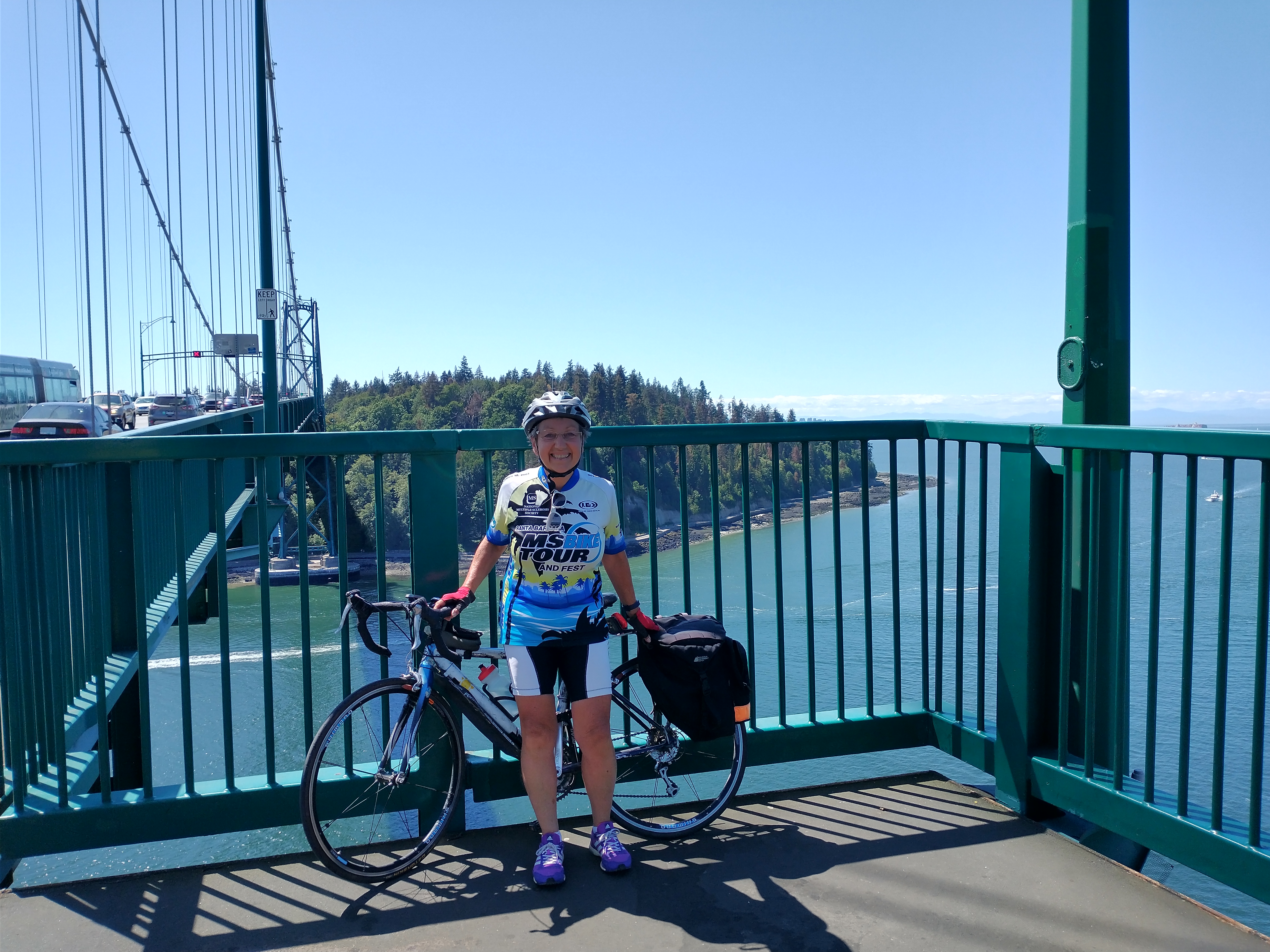
Photo of Gracie and me on the Lion’s Gate Bridge taken by a kind cyclist from Coquitlam.
© Esther Hizsa, An Everyday Pilgrim, 2021.
Unauthorized use and/or duplication of this material without permission from Esther Hizsa is strictly prohibited. Excerpts and links may be used provided there is a link to the original content and credit is given as follows: © Esther Hizsa, An Everyday Pilgrim 2013-2021.  http://www.estherhizsa.com

Posted in Reflections | Tagged , , , , , , , | Leave a comment

Root Rot

“You see these roots here? They’re brown and have no filaments on them.” My daughter, Heidi, sat on our balcony holding my poor, naked Christmas cactus and pulled away the old soil and dead roots. “No wonder the leaves are so thin. They weren’t getting the water and oxygen they needed.”

Heidi cleaned the cactus’s bald stump, then repotted the plant and returned it to its home by the window in my study. My cactus was so strong and healthy until I overwatered it. If Heidi hadn’t come to the rescue, it might have died. “It still might,” she said, touching the leaves lovingly. “We’ll see.”

In this state, my dear companion isn’t very attractive. I thought about moving the cactus out of the room where I write and offer spiritual direction, but I couldn’t do it. It’s been with me for so long, flowering in Advent and Lent when God was silent and greening with me on ordinary days. Now it was my turn to see it through tough times.

In prayer, I reflected on the damaged roots that couldn’t absorb the nutrients the large plant needed. I feel strong, even taller these days. Yet, a bit of bad news or a forced decision can disrupt my ecosystem, and it can take me a day or two to settle. My mind knows it’s no big deal, but my body remembers this story and has lived it for a long time. My roots are gasping for oxygen.

As I listen tenderly, I’m able to see and brush away the rotting certitudes that validate my fears. I take a breath and let it go down under the anxiety. I take another and let it nourish the knowing that is deeper still.

I’ve heard that there’s a place in the core of each of us that is untouched by trauma. In this place, we know that we are in God and God is in us. In this place, there is no doubt that we are good. Our hearts and bones know that we are loved, we are enough, and God will never abandon us–not in this life or the next.

I take another breath and look at my sad and drooping cactus. It will take a while for the new shoots to grow. In the meantime, life will jangle my nerves and my roots will need those reconnecting breaths.

But I am like an olive tree flourishing in the house of God;
I trust in God’s unfailing love for ever and ever.
–Psalm 52:8 (NIV)

∗ ∗ ∗

Love Mischief for the World

In this short instructive and inspirational video, Dr. Gabor Maté, explains how we can heal from trauma and reconnect with our True Self. While I would have preferred a different title which names that it is God that enables us to find and heal ourselves, I appreciate that Maté names that we have agency in this. We don’t have to be victims of our past. What Maté is proposing here aligns with what Julian of Norwich, Thomas Merton, Richard Rohr have written about the True and False Self. It also aligns with scripture (Genesis 1:31, Colossians 3:3) and the words of Jesus (Matthew 11: 28-30John 14:18-20)

What love mischief are you and God doing for the world?
Let me know and I will include it in an upcoming post.

Credits and References:
Christmas cactus photo by Esther Hizsa.
“Loneliness” by Alice Popkorn. Used with permission.
© Esther Hizsa, An Everyday Pilgrim, 2021.
Unauthorized use and/or duplication of this material without permission from Esther Hizsa is strictly prohibited. Excerpts and links may be used provided there is a link to the original content and credit is given as follows: © Esther Hizsa, An Everyday Pilgrim 2013-2021.  http://www.estherhizsa.com
Posted in compassion, Creation, Reflections, Stories | Tagged , , , , , , , , , , , , , , | 4 Comments

Creation Calls

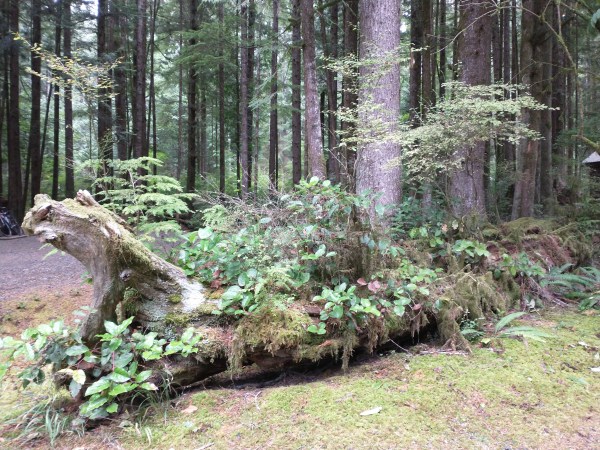
Fred retired this year and, with his unrestricted schedule and my flexible one, we’ve spent a lot of time outside. Our last camping trip was to E.C. Manning Park where we hiked into alpine meadows, kayaked on Lightning Lake, and bagged the highest peak in the park.

This image has an empty alt attribute; its file name is coprinus-comatus.jpgOn our way home, Fred dropped me off near Bridal Falls, and I biked a hundred kilometres to Fort Langley, meeting up with Fred in parks in Chilliwack and Abbotsford to refuel and rest. The ride was flat and easy until I got to Abbotsford. Then my route took me up and down city streets and into the hilly countryside past cornfields, vineyards, and the historic village of Mt. Lehman. The quiet road led my tired body up, up, up and around a bend to surprise me with an expansive view of the Glen Valley and the promised 15% downhill grade.

I’m thinking about all we saw now as I write this week’s post. Ripening blackberries on the roadside, constellations of stars in the night sky, red, blue and yellow wildflowers, thousand year old Dr. Suessish fir trees, a mother deer and two fawns ahead of us on the trail, a monkish marmot sitting on top of Mt. Frosty, fairyland mushrooms, and whiskey jacks eating bits of apple from Fred’s hand.

Creation called us each day to come and walk, sit, and wonder. It offered no words, disdained metaphors, gave no rationale. My body sang in the rhythm of movement. My heart let it lead, and my mind wandered to no place in particular.

August and September we plan to head out again to the mountains and to the sea. Our hearts follow our feet, trusting the inner voice that keeps calling us out to play.

Surely the Lord is in this place—and I did not know it!
–Jacob, Genesis 28:16 (NRSV)

∗ ∗ ∗

Love Mischief for the World

Here’s Fred’s first Youtube video of our summit of Mt. Frosty.

What love mischief are you and God doing for the world?
Let me know and I will include it in an upcoming post.
Credits and References:
Three Brothers trail by Fred Hizsa, used with permission.
Coprinus comatus (shaggy ink cap or lawyer’s wig) mushroom by Fred Hizsa, used with permission.
View from Mt. Frosty by Fred Hizsa, used with permission.
© Esther Hizsa, An Everyday Pilgrim, 2021.
Unauthorized use and/or duplication of this material without permission from Esther Hizsa is strictly prohibited. Excerpts and links may be used provided there is a link to the original content and credit is given as follows: © Esther Hizsa, An Everyday Pilgrim 2013-2021.  http://www.estherhizsa.com
Posted in Creation, Reflections, Stories | Tagged , , , , , , , , , | 8 Comments

The Full Meal Deal

Admit it.
We all want the full meal deal:
nine gifts of the Spirit, every fruit 
in a neat little package with our name printed on it
and Christ, the only ingredient listed.
We want what those people are having,

but we don't know to get it.

Wisdom tells us transformation doesn't happen quickly,
then we're fooled when it beats us to breakfast.

We can spend a life-time trying to disentangle the do/be dilemma.
God does it, but what's my part?
I still have to show up
and sometimes I can't
or won't.

If we care for others without caring for ourselves, it won't work.
Or will it?
Where's the line between rest and self-indulgence?


When it comes to attaining spiritual maturity,
there's so much I don't know,
and yet

I keep being led back to a thought
that might be true.
We can relax.
God will get us there in the end.

We just don't know
what "there" looks like.

Perhaps when I arrive
I'll open up my take-out life and say,
"This isn't what I ordered."
And God and I will have a good laugh.


If you could do it, I suppose, it would be a good idea to live your life in a straight line–starting, say, in the Dark Wood of Error, and proceeding by logical steps through Hell and Purgatory and into Heaven. Or you could take the King’s Highway past the appropriately named dangers, toils, and snares, and finally cross the River of Death and enter the Celestial City. But that is not the way I have done it, so far. I am a pilgrim, but my pilgrimage has been wandering and unmarked. Often what has looked like a straight line to me has been a circling or a doubling back. I have been in the Dark Wood of Error any number of times. I have known something of Hell, Purgatory, and Heaven, but not always in that order. The names of many snares and dangers have been made known to me, but I have seen them only in looking back. Often I have not known where I was going until I was already there. I have had my share of desires and goals, but my life has come to me or I have gone to it mainly by way of mistakes and surprises. Often I have received better than I deserved. Often my fairest hopes have rested on bad mistakes. I am an ignorant pilgrim, crossing a dark valley. And yet for a long time, looking back, I have been unable to shake off the feeling that I have been led–make of that what you will. —Wendell Berry, Jayber Crow 

∗ ∗ ∗

Love Mischief for the World

This is a song to sing when you get tired of asking “Are we there yet?” Here’s a link to see Nightbirde performing it on America’s Got Talent.

What love mischief are you and God doing for the world?
Let me know and I will include it in an upcoming post.

Credits and References:
“Take Out” by Jonas Seaman. Used with permission. 
“Road to Nowhere” by Sergio Boscaino. Used with permission.
© Esther Hizsa, An Everyday Pilgrim, 2021.
Unauthorized use and/or duplication of this material without permission from Esther Hizsa is strictly prohibited. Excerpts and links may be used provided there is a link to the original content and credit is given as follows: © Esther Hizsa, An Everyday Pilgrim 2013-2021.  http://www.estherhizsa.com

Posted in Aging, Poetry, Reflections | Tagged , , , , , , , , , , , | Leave a comment

The Gift of Self-Awareness

Lately, my self-awareness has risen to a whole new level. I swear there’s a little fellow deep inside me rummaging through all my crap and sending it up for me to look at. These “gifts” are about as attractive as the skull in the picture above. 

So far, thankfully, rather mundane things are being hurled my way. I noticed I got irritated by a comment, unsettled when someone didn’t agree with me, and frustrated when I took a wrong turn. I hear what I say sometimes and want to take it back. I didn’t remember until we opened our take-out meal in the park that I meant to ask for ketchup. 

I notice how each awareness is followed by judgment and disappointment. As my self-awareness increased, so did my discouragement. 

Listening to James Finley’s podcast on Teresa of Avila’s The Interior Castle reminded me that the way to an ever-deepening union with God involves three things: prayer, humility, and self-knowledge. God isn’t inviting us to transcend ourselves but to become ourselves. 

This gave me the courage to believe I’m not getting worse. I’m on the right path, and all this self-awareness is supposed to be helpful.

With that in mind, I was able to step back and observe this pattern of noticing, criticizing, and becoming discouraged. I began to wonder what it would be like to offer myself what I offer my directees: compassionate, non-anxious presence. What would it be like to simply notice what I was noticing without labeling it as wrong and something to fix?

I felt a quickening in my heart as I imagined a new spiritual practice evolving. Whenever a new awareness comes, instead of critiquing it, I can name what I notice without judging it as good or bad. I can simply receive what I notice as information about myself. 

I remember Valarie Kaur’s Revolutionary Love compass. She invited us to turn to others with wonder. “You are a part of me I do not yet know.” I felt invited to wonder about what I noticed in myself.

As I practiced responding to each new awareness with compassion and curiosity, I began to humbly accept things about myself I don’t like, parts of me that I used to ignore or banish. I began to ask these tender parts what they needed. 

Take my propensity to misplace things or forget what I remembered ten seconds ago. Instead of beating myself up about it or brushing it off as no big deal, I can name that this happens quite often and makes life difficult. As I hold this and the sadness it evokes, I wonder what kindness could I offer myself. 

My grandson, who is also on the autism spectrum, has the same difficulties. I think about how my daughter gently comes alongside him, going through the checklist of things he needs to take with him before he heads out the door. When I think I don’t need to do that, I end up forgetting something. Self-awareness tells me it would be kind to pause before I leave the house and go through a similar checklist. 

God isn’t inviting us to rise above ourselves but to become ourselves and find we are infinitely loved just as we are. I’m a little nervous about what that little fellow is going to send up next, but if I don’t panic (as James Finley calmly says), I might remember to immerse myself in the ocean of God’s love

I feel so much love over my soul, it is like an Ocean I immerse and lose myself in: it is my vision on earth while waiting for the face-to-face vision in light.  [God] is in me, I am in Him. I have only to love Him, to let myself be loved, all the time, through all things: to wake in Love, to move in Love, to sleep in Love, my Soul in His Soul, my heart in His Heart, my eyes in His eyes . . .
–Elizabeth of the Trinity [1880–1906]

∗ ∗ ∗

Love Mischief for the World

It was a somber Canada Day on Thursday. Canadian flags were half-mast in the wake of the discovery of hundreds of unmarked graves outside Indian residential schools in BC and Saskatchewan. EVERY CHILD MATTERS was boldly painted down the middle of a blocked-off section of Commercial Drive in East Vancouver, and the Indian Residential School Survivors Society (IRSSS) was giving out orange shirts with that phrase on it. I was grateful to join the sea of people wearing orange shirts and also grateful for the work of the IRSSS. You can learn more about them here.

What love mischief are you and God doing for the world?
Let me know and I will include it in an upcoming post.
Credits and References:
Portrait of Caravaggio looking in mirror. Creative Commons. 
Ocean by Theron Trowbridge. Used with permission.
Quote by Elizabeth of the Trinity in letter to Canon Angles, August 1903, in I Have Found God: Complete Works, vol. 2: Letters from Carmel, trans. Anne Englund Nash (ICS Publications: 2014), 123.
IRSSS Logo by Art Thompson. Used with permission.
“World-renowned Nuu-chah-nulth artist Tsaqwasupp (Art Thompson, 1949-2003), gifted this design to the Indian Residential School Survivors Society as a symbol of how our culture helps us move beyond the traumas suffered in Indian Residential School. Each tribal group on the coast has creation stories; most of them involve the Raven as the supernatural creator. Every tribal group has stories with in the tribe or family about the shaman. Almost every tribal group has stories about a shaman re-installing lost souls back into human beings who have suffered a traumatic experience of one kind or another. This would happen with the usage of a ‘soul catcher’ in which the shaman would capture the soul then ‘blow it’ back into the mouth of the victim.” (from IRSSS)
“What I have done with the arts is to put three elements together (in a Ditdaht style) to signal hope of restoring some of our inherent strengths. Strengths drawn from our history and the strengths we will have today. We have an incredible history as Native people of this country; we have suffered through many disadvantages and elimination. We have become well-adjusted in most respects. Not only have we survived, we are moving beyond survival into a new era of native awareness once dreamed of by our ancestors. We are truly becoming a strong people.
“Through the arts, I have woven my future. something that is important for all of us. For me it defines in one aspect who we are it helps define our space in the world.” –Tsaqwasupp (Art Thompson)
© Esther Hizsa, An Everyday Pilgrim, 2021.
Unauthorized use and/or duplication of this material without permission from Esther Hizsa is strictly prohibited. Excerpts and links may be used provided there is a link to the original content and credit is given as follows: © Esther Hizsa, An Everyday Pilgrim 2013-2021.  http://www.estherhizsa.com
Posted in autism, compassion, Prayer, Reflections, Spiritual Direction | Tagged , , , , , , , , , , , , , , , | 2 Comments