And now we welcome the new year. Full of things that have never been. –Rainer Maria Rilke
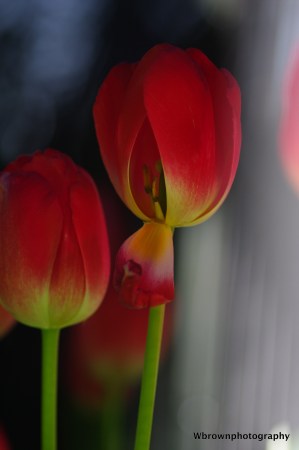
It seemed like a good idea at the time. Even afterwards I could see the gift in it
until I saw it through another person’s eyes.
Then I knew what I could have done what I should have done if I had waited a little longer talked it over allowed for the possibility that I can’t see all there is to see and wisdom arrives slowly.
But all that came after it was already done. Now, there is only now and the swirling of regret and shame.
This is not how I want to enter the new year– so aware that what I do impacts others so afraid of making a mess of things.
But as You sing over me –sing of the goodness I cannot see and the hope that’s hard to find– I am a little more at ease, a little more open to compassion and forgiveness, a little more able to welcome humility.
The Lord your God will rejoice over you with singing. –Zephaniah 3:17 NIV (adapted)
Credits and References: Image “Mistake” by W Brown. Used with permission. Mistake by Esther Hizsa, 2024
When this year began, we lived in dappled light and shadows.
Then life thrust us into a darkness so bright we saw each other, we liked what we saw and loved each other.
Once that love was born, it became so precious to us that now the moments when we may not like what we see don’t overshadow the light in each of us which grows brighter by the day.
We have come to love one another the way God has loved us.
And so, as I begin a new year, I pray that I may be given the light to see everyone the way my sister and brothers see me.
Anyone who loves their brother and sister lives in the light, and there is nothing in them to make them stumble. –1 John 2:10 (NIV)
Credits and References: “Tea candle in the dark” by Markus Grossalber.Used with permission. “The Light Has Come” by Esther Hizsa, 2023. “A long stare” by -JosephB-. Used with permission.
It comes as a fireball of glory and, when it meets resistance, is not stopped but spills –yellow, orange, and purple– all over the sky, land, and sea.
Christmas may not come as expected. Dare I say, it likely won’t. You may have a list of all the things the season should be but isn’t. You may name all you’ve done to make Yuletide special, but it wasn’t.
Look again, my friend. My love cannot be contained. Somewhere in your life love has been born. Just ask Me and I will show you where.
Credits and References: Shifting Skies at Sunset over the Salish Sea by Mike Lathrop. Used with permission. Uncontainable Love by Esther Hizsa, 2023 “The Adoration of the Shepherds” by Gerard van Honthorst 1592–1656. Wikipedia Creative Commons.
In the second week of Advent, You showed up as promised, giving me the poem I needed for the Wednesday Lunch Club Christmas cards, an idea for the last gift, conversations to settle ruffled feathers, and pockets of rest.
“The Lord is my shepherd,” sang Paul Zach over and over, and I felt a tear come.
The Lord is my shepherd and a good one. I am found, held, and rejoiced over.
And so are you, my friend. So are you.
Jesus told them this parable: “Which one of you, having a hundred sheep and losing one of them, does not leave the ninety-nine in the wilderness and go after the one that is lost until he finds it? And when he has found it, he lays it on his shoulders and rejoices. And when he comes home, he calls together his friends and neighbours, saying to them, ‘Rejoice with me, for I have found my lost sheep.’ ” –Luke 15:1-6
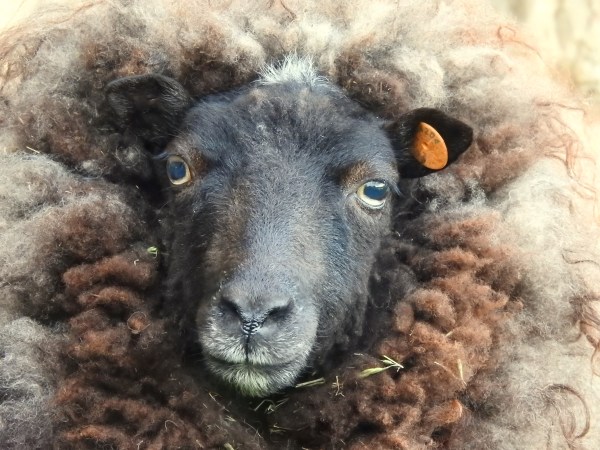
Credits and References: “Ciboulette” by myri_bonnie. Used with permission. The Lord Is My Shepherd by Esther Hizsa, 2023 “The Good Shepherd” by RosaryTeam CC0, via Wikimedia Commons
I’m waiting for the peace that comes when I know what to do, do it, and nothing goes wrong (or at least the unforeseen is manageable).
It doesn’t take much to keep me awake at night, weighing the same options over and over and longing for sleep.
I’ve heard that life is not a problem to be solved but a mystery to be lived. I know that I should let go and let God.
I wish. I wish it were that easy.
I wish it were different but this is where I am right now.
This is where Peace finds me.
When our kids were teenagers and began thinking for themselves, worry threatened to consume me. I had a mantra that held my hand and got me through. They’ll figure it out, and they’ll be alright.
Now, Peace comes again, takes my hand and looks into my eyes. You’ll figure it out and you’ll be alright.
Then Peace stays and watches my furrowed brow relax, my shoulders settle and my breathing deepen enough to inhale a little bit of sky.
Credits and References: “Silent Night” by liz west. Used with permission. Where Peace Finds Me by Esther Hizsa, 2023
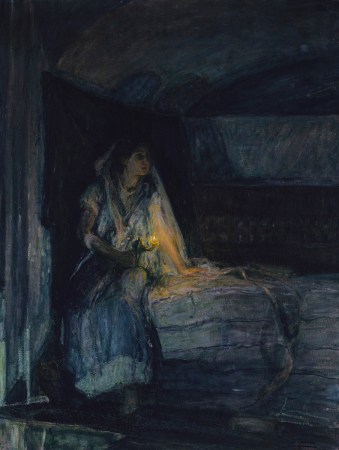
The Angel Gabriel appeared to me again this year and announced, “You will conceive and bear the Christ Child.”
Hardly containing his exuberance, he went on. “Beloved and cherished one, you have been chosen to participate in God’s grand project to save the cosmos and everything in it!”
And then, when he didn’t get the response he was hoping for, he said, “Don’t be afraid.” He knew I was and why.
It’s the how.
Thank you, Mary, for naming the question that makes it hard not to fear. How can this be? How will it happen? What am I supposed to do, and how am I supposed to do it? Not knowing winds me up like a top and sends me spinning around the room.
But Gabriel, sat down and, like Mary, patted his hand on the bed, making space for me and all my fears to sit down with him.
Then, once again he explained (as if this was the first time I ever heard this), “God will do it. And it will be amazing.”
Credits and References: Mary by Henry Ossawa Tanner. 1914 Creative Commons The Question That Makes It Hard Not to Fear by Esther Hizsa, 2023
Jesus replied, “When evening comes, you say, ‘It will be fair weather, for the sky is red,’ and in the morning, ‘Today it will be stormy, for the sky is red and overcast.’ You know how to interpret the appearance of the sky, but you cannot interpret the signs of the times. –Matthew 16:2-3 (NIV)
The tide comes in and goes out so predictably that a chart can tell us exactly when it will turn and how high or low the water will be.
Seasons come and go right on time.
We’re never surprised that the sun has risen, nor do we suddenly feel abandoned when it sets.
Yet, we’re surprised by consolations and befuddled by desolations.
Even though we have no calendar for their coming and going, no chart to tell us how high or low, how long or short their turn will be,
one thing is for certain: desolation follows every consolation and consolation is sure to follow every desolation.
The atmosphere of our lives– our situation, memories, hormones and emotions– in a given moment in time produces a weather system of highs or lows. It is the rhythm of earthlings.
It is the delight of the Divine to accompany earthlings through these turnings
and, together, we marvel. It is the highs that have us climbing over rocks and logs and fording streams, and the lows that open up the beaches to reveal the gifts that have washed ashore.
Let the morning bring me word of your unfailing love, for I have put my trust in you. –Psalm 143:4 (NIV)
Credits and References: “Long Beach Vista” by Adam Jones. Used with permission. Tides by Esther Hizsa, 2023 Wild Pacific Trail, Ucluelet by Esther Hizsa, 2022. Used with permission.
People were eating, drinking, marrying and being given in marriage up to the day Noah entered the ark. Then the flood came and destroyed them all. … It will be just like this on the day the Son of Man is revealed. … I tell you, on that night two people will be in one bed; one will be taken and the other left. –Luke 17:27, 30, 34
What if Jesus wasn’t talking about end times but the end of life as we thought it would be?
We’re going along doing what we do– eating, drinking, and making plans for the future– then a diagnosis, artillery fire, or a flood destroys it all.
One is taken by dementia or death; another is left by the one they thought would love them forever.
One day, we celebrate and pick baby names, and the next, we’ve lost our hair and the chemo’s rendered us barren.
One day, we’re clearing our schedules and exploring retirement, and the next, we’re cleaning our parents’ dentures and picking up prescriptions.
Other people live in war zones, are struck by lightning, or are robbed and vandalized. Other people are marginalized and beaten but not us.
Then “on that day,” we became the ones pitied. On that day, we no longer said, “I’m glad I’m not them.”
This is the coming of the kingdom?
Yes. That’s exactly how the kingdom comes– not as a flood but as a force, grounding us in the flood.
In the middle of Jesus’ doom and gloom speech, he offered hope. “Whoever tries to keep their life will lose it, and whoever loses their life will preserve it.”
We have a choice about whether or not we will try and hold onto the life we’ve lost, but we don’t have a say in how we lose it.
“It’s okay,” the Son of Man says gently. “You can let go. Feel the earth beneath your feet. You’re on kingdom soil. On this day, the Son of Man will be revealed to be even more than you hoped for or imagined.”
For the Son of Man came to seek and to save the lost. –Luke 19:10
Credits and References: Bangladesh, 2020. Houses are nearly submerged due to flooding in Sirajganj, Bangladesh. Credit: Moniruzzaman Sazal / Climate Visuals Countdown, Creative Commons “On That Day” by Esther Hizsa, 2023. “Barefoot on red dirt” FrankOWeaver, CC BY-SA 3.0 <https://creativecommons.org/licenses/by-sa/3.0>, via Wikimedia Commons
I fill my cart and don’t have the right card. I arrive at the door, and the key isn’t in my pocket. I remember the question I needed to ask on my way back from the pharmacy.
Every day I face new problems, design strategies, make decisions, and second-guess them.
This train doesn’t stop. I can’t walk a straight line without banging into walls.
If I wasn’t so disorganized, if I wasn’t so attached to money, outcomes, and what people think, if I were more grounded, calm, generous, and patient, this wouldn’t be so hard.
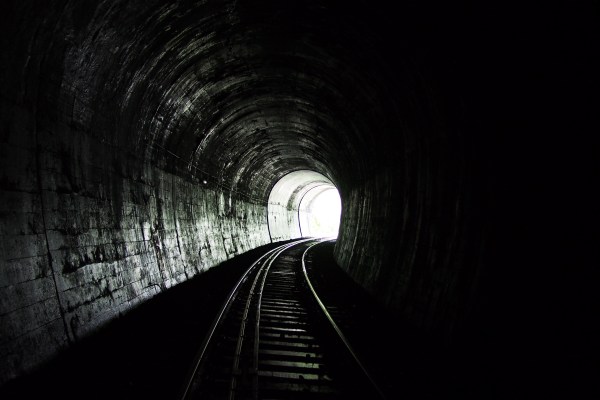
These thoughts badger me until I lose it and enter the dark tunnel of shame and fear.
I see it all so clearly: my sinful patterns and why I would be abandoned.
“But you are not,” You say in my deepest darkness. “Not even if you lose it again and again and again. Not even if you can’t stop and never do it right.”
Then I see You clearly, how You buffer the rattling and the jarring, hold my hand through the long dark tunnels, and bring me into the light.
I will not fear, for you are ever with me, and you will never leave me to face my perils alone. –Thomas Merton
*A colloquy, according to Ignatius of Loyola, is a conversation with God, friend to friend, from the heart.
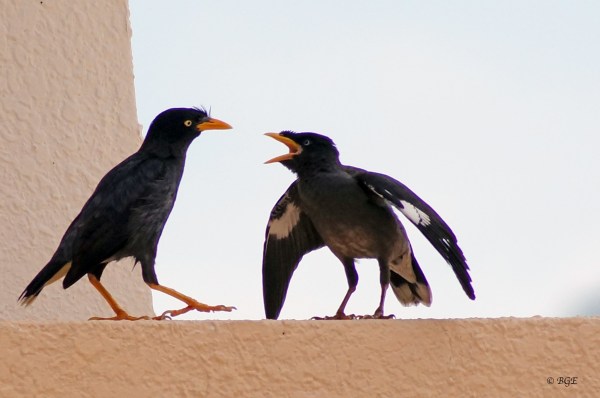
“You went out for lunch without me?” I blurted, unable to contain my hurt and anger.
“Don’t get me wrong. I’m glad you did,” I added. I meant it, too. But that awful feeling of being left out and forgotten wouldn’t subside.
That morning, I’d just finished writing last week’s blog post. It was about choosing to sacrifice my needs for the needs of another. One minute, I felt content and at peace; the next, I was furious and resentful.
I didn’t let go of blame easily. But eventually, it subsided. I went to sleep that night disappointed with the reality that being the self-sacrificing daughter has its shadow side.
It wasn’t until the next morning that this question came to me: How did I think God would open my eyes to see how my needs were being met?
I’d assumed God would do it beautifully and seamlessly, the way flowers bloom and the sun comes from behind the clouds.
But what if my anger and resentment were the ways God was helping me see what I needed? I didn’t like it, but it worked well. After my outburst, I knew what I needed and when and how I could get it.
So often I expect God to make me like cool-as-a-cucumber, emotionally evolved Jesus. He sacrificed without complaining and never thought about his needs or whined about others not caring for him.
But it isn’t true.
Jesus complained to God in the Garden of Gethsemane. He chastised the disciples when they fell asleep and forgot about him. And maybe the reason Jesus was late getting to Bethany to raise Lazarus from the dead was because he needed some alone time.
When we read the limited details of Jesus’ life we can forget to fill in the blanks with Jesus’ humanity. I bet there were some deep sighs and eye-rolling at times for our fully human Saviour.
As Rich Mullins discovered, surrender doesn’t come naturally to us. The high of altruism wears thin, and the guilt of not doing enough is heavy. I am grateful that Jesus meets me in the shadows of my desires with loving compassion. His “I know” helps me pick up my cross and carry on.
Be strong and courageous. Do not be frightened, and do not be dismayed, for the Lord your God is with you wherever you go. –Joshua 1:9 (ESV)
Credits and References: “That’s one angry bird” by Brian Evans. Used with permission “Together” by Susanne Nilsson. Used with permission.












 An Everyday Pilgrim