
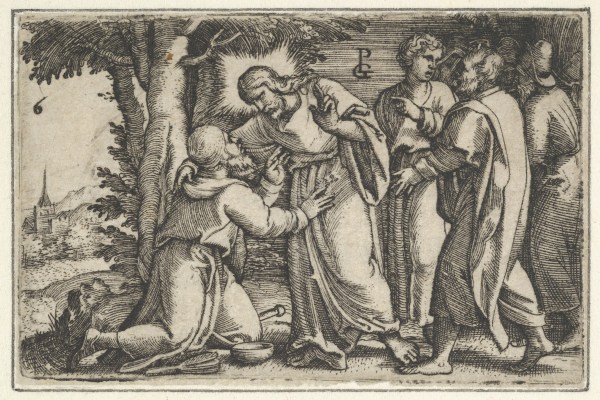
A leper came to him begging him, and kneeling he said to him, “If you choose, you can make me clean.” Moved with pity, Jesus[stretched out his hand and touched him, and said to him, “I do choose. Be made clean!” Immediately the leprosy left him, and he was made clean. After sternly warning him he sent him away at once, saying to him, “See that you say nothing to anyone; but go, show yourself to the priest, and offer for your cleansing what Moses commanded, as a testimony to them.” But he went out and began to proclaim it freely, and to spread the word, so that Jesus could no longer go into a town openly, but stayed out in the country; and people came to him from every quarter.
–Mark 1:40-45 (NRSVCE)
I’ve thought about this story
and many times wondered the divine reason
Jesus warned the man with leprosy
not to tell anyone.
Surely Jesus, being God, knew the man
would spread the word.
Then, I entered the story
and saw the human reason.
Jesus was exhausted.
He hoped that if the man didn’t tell anyone
until after he’d seen the priest,
Jesus would get a break–
a day or two of rest.
But no.
Now, there were ten,
twenty,
thirty–
a whole leper colony
gathered at his door.
I saw the disappointment in Jesus’ eyes,
the sense of betrayal in his sigh.
After all I did for this man,
Couldn’t he do this one thing for me?
I watched him close the door,
seethe with anger,
sink into despair,
and wrestle with forgiveness.
I stood there,
heart beating in my ears.
Was Jesus going to turn them all away?
Of course, you know he didn’t.
He prayed,
poured it all out to God.
There, in his Father’s loving arms,
Jesus received
the compassion he needed
to be moved with pity for himself,
the freedom he needed
to forgive,
the sight he needed
to see each person as beloved
until once more,
he was moved with pity
for the precious ones
who’d come to him to be healed.
The sun rose
as Jesus remained with them,
asleep on the door step.
The healed didn’t do what Jesus asked.
They didn’t go,
but watched over their Lord,
so no one disturbed his rest.

He comes, the Lord, as one of us.
–Kate Bluett and Paul Zach, He Comes


 An Everyday Pilgrim